Sep 3, 2026Services Overview
Why Architects Choose PET Felt for Modern Interiors | PET Felt Panel
PET felt gives architects a practical combination of acoustic performance, design flexibility, color options and easy customization for modern interior projects.
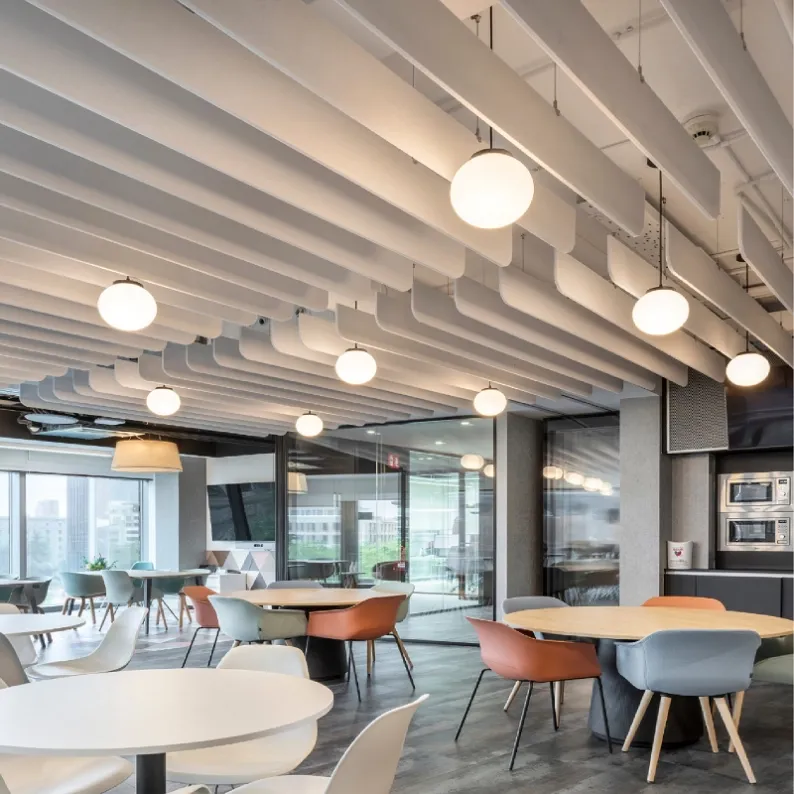
Why Architects Choose PET Felt for Modern Interior Projects
Why Are Architects Looking at PET Felt?
When architects choose a material for an interior project, they are rarely looking at only one thing.
A material may look good, but be difficult to work with.
It may have good acoustic performance, but very limited design options.
It may be easy to install, but not give the visual result the project needs.
This is one reason PET felt has become an interesting material for interior applications.
It can combine several practical requirements in one material:
Acoustic control + visual design + customization + relatively simple processing.
While PET felt offers many advantages, we always recommend evaluating its suitability based on the specific acoustic and fire rating requirements of each project.
But for many modern interior spaces, it gives architects and designers more freedom than they may expect from an acoustic panel.
1. It Can Be More Than Just an Acoustic Panel
When people hear "acoustic panel", they may imagine a flat rectangle attached to a wall.
PET felt can certainly be used this way.
But that is only one possibility.
The material can also be used for:
- Wall panels
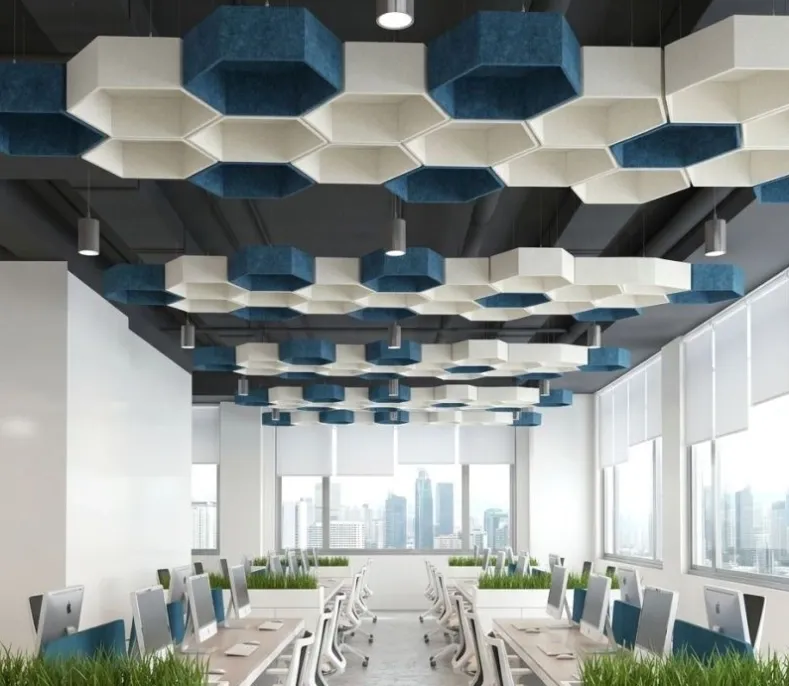
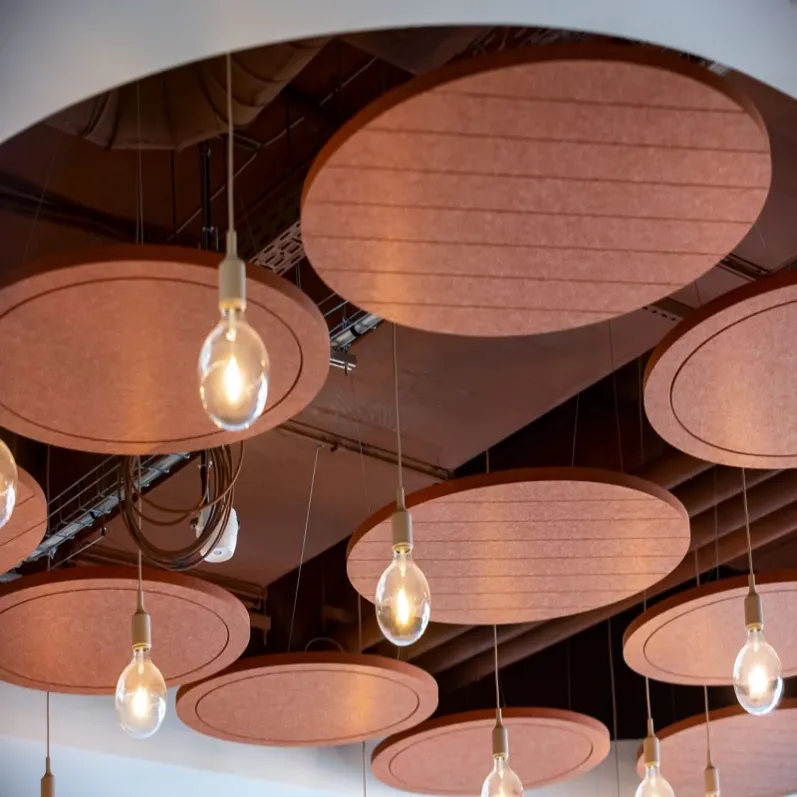
- Ceiling elements
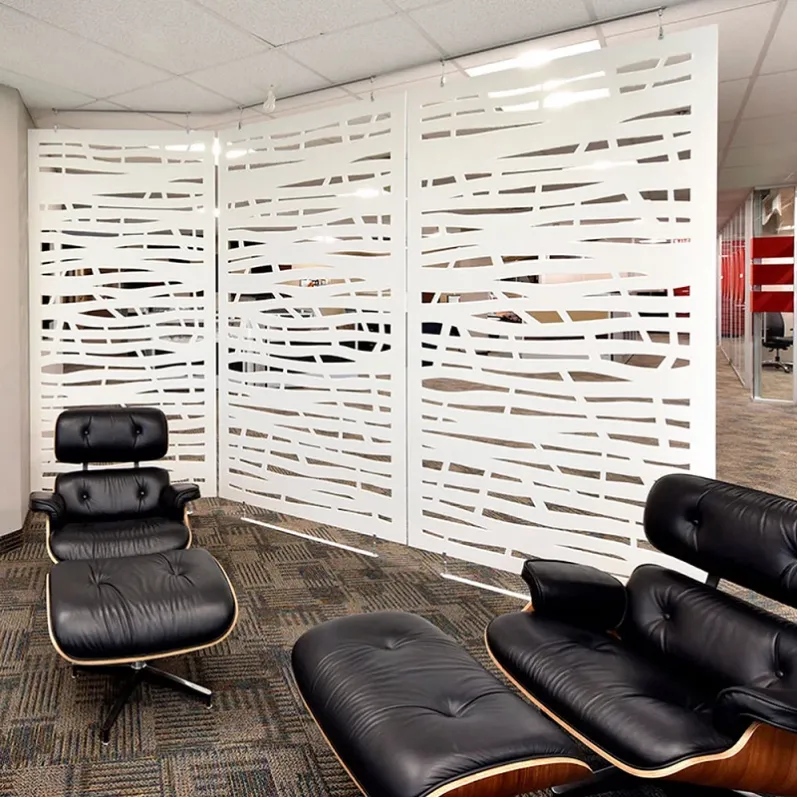
- Acoustic screens
- Room dividers
- Hanging panels
- Decorative features
- Furniture components
- 3D acoustic elements
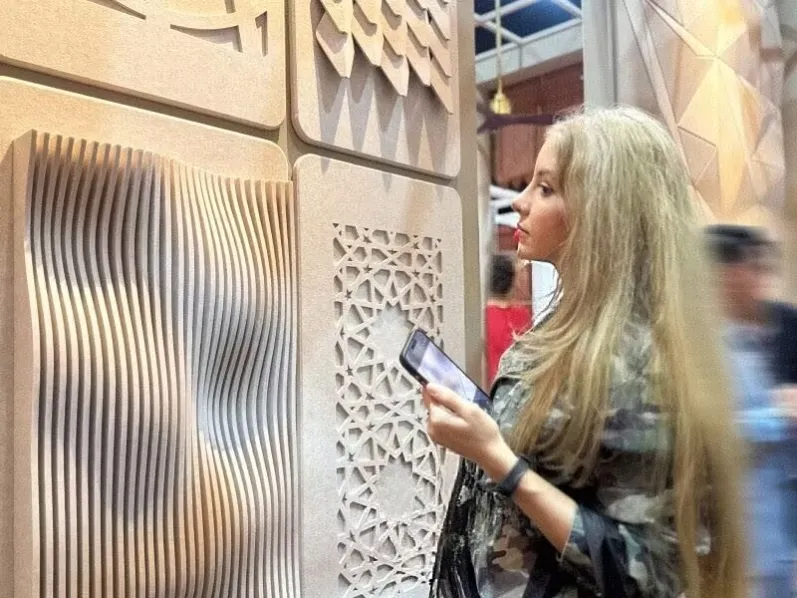
- CNC-cut decorative panels
This is important for architects because the acoustic treatment does not always need to look like something added to the room afterward.
It can become part of the interior design itself.
For example, instead of putting a simple acoustic panel on an otherwise finished wall, a designer may use different shapes, patterns, colors or three-dimensional elements to make the acoustic treatment part of the visual concept.
That is a very different way of thinking about acoustic materials.
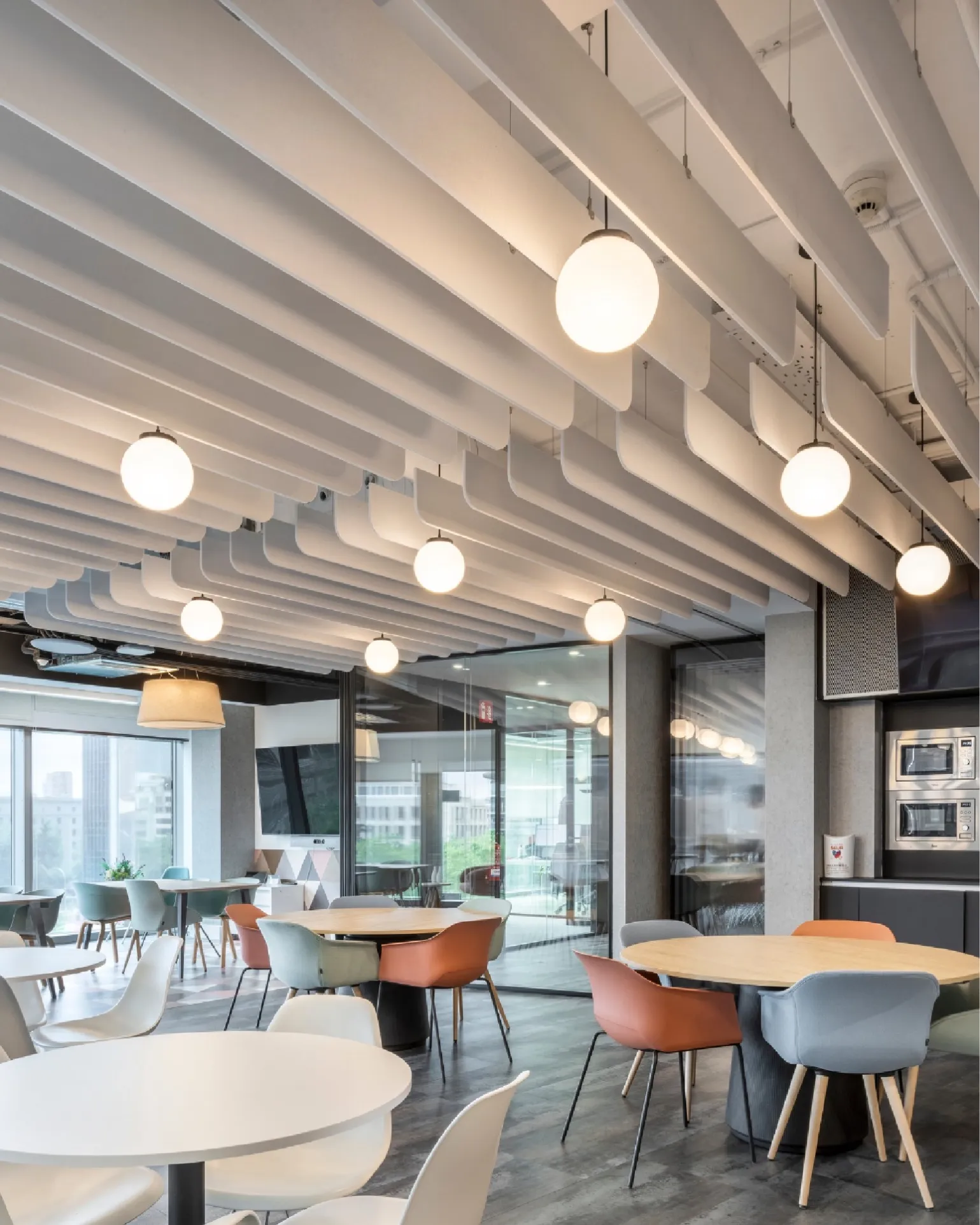
2. Architects Can Work With Shape
One of the biggest advantages of PET felt is its ability to be processed into different shapes.
A standard flat panel is only the starting point.
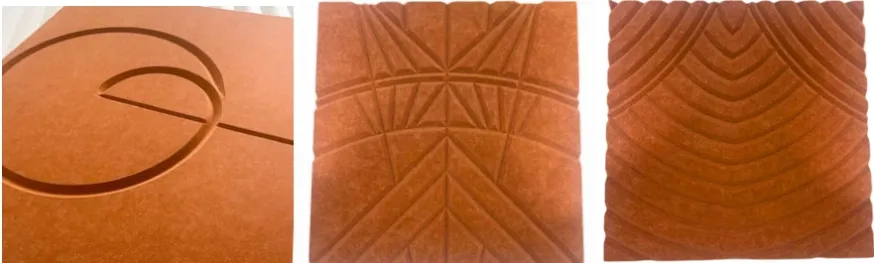
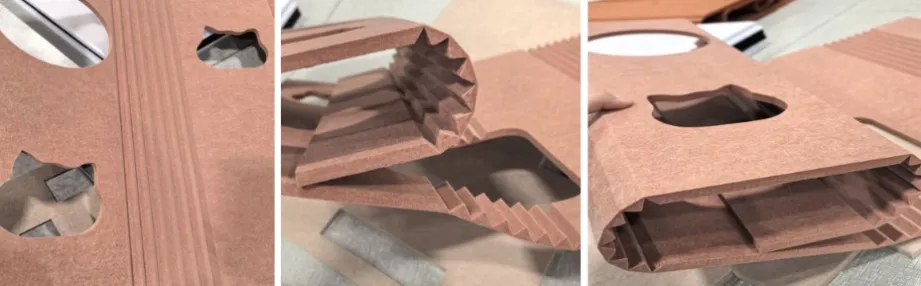
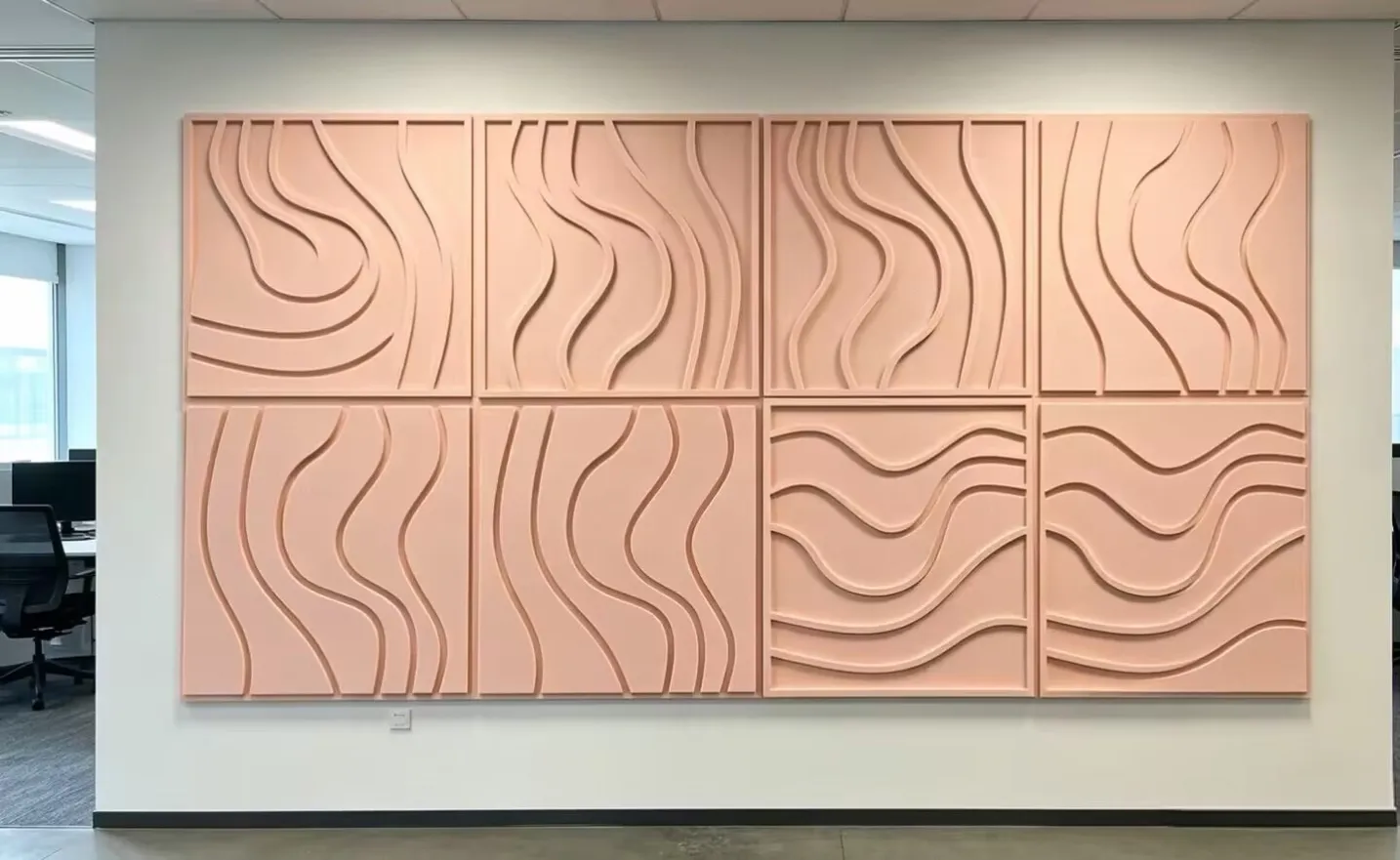
Depending on the design and production method, PET felt can be CNC cut into patterns, slots, curves and other shapes.
It can also be used for thermoformed or 3D applications when the design and material specification are suitable.
This gives architects more room to work with geometry.
For example:
Straight lines → geometric patterns → organic shapes → 3D surfaces
The acoustic material does not have to remain visually flat.
This is one reason we often receive drawings rather than simple product specifications.
A designer may already have a very specific idea.
Our job is then to understand the drawing and see how it can be translated into a manufacturable PET felt product.
3. Color Can Become Part of the Design
Another reason PET felt is interesting for interior projects is color.
Acoustic treatment does not always have to be hidden.
It can become part of the color scheme of the space.
For example, a project may use:
- Neutral grey for a calm office environment
- Dark colors for a more understated interior
- Several colors to create a pattern
- A strong accent color for a feature wall
- Different shades to separate different areas
This is particularly useful in offices, education spaces, hospitality interiors and other commercial environments where the material needs to work together with the overall interior concept.
But there is an important point here.
Having many colors does not mean color matching is automatic.
For a large project, samples should still be checked and approved before mass production.
And if the same color needs to be ordered again after a long period, it is better to compare a new sample with the previous reference.
I wrote more about this in my article:
That is a small production detail, but it can become very important in a real project.
4. It Gives Designers More Freedom With Customization
Architectural projects are rarely made entirely from standard sizes.
A wall may have a column.
A ceiling may have lighting openings.
A furniture manufacturer may need a special component.
A feature wall may require a specific pattern.
This is where customization becomes important.
With PET felt, the supplier can work with different:
- Panel sizes
- Thicknesses
- Colors
- Cutting patterns
- CNC designs
- Shapes
- Grooves
- Openings
Of course, customization does not mean everything is automatically easy.
A design that looks simple on a computer may be more complicated during production.
The thickness of the material, remaining sections after cutting, panel size and cutting method can all affect the final result.
This is why we prefer to check the drawing before production rather than simply say:
"Yes, we can cut it."
Sometimes one small change in the design can make production much easier.
5. PET Felt Is Relatively Easy to Process
For architects, the final design is important.
For manufacturers and installers, how the design can actually be produced is just as important.
PET felt can be processed using CNC cutting equipment, which makes it suitable for many custom patterns.
One practical advantage is that CNC knife cutting can produce clean, controlled cuts without using a thermal cutting process.
The actual cutting result still depends on the panel specification, tool, machine settings and design.
But when the production parameters are properly matched, the process can produce neat edges and detailed patterns.
This is especially useful when a project has many repeated decorative elements.
The same digital drawing can be used as the production reference, helping connect the designer's idea with the manufacturing process.
6. It Can Help Acoustic Treatment Become Part of the Architecture
This is perhaps the most interesting point.
Architects are not only designing walls.
They are designing the experience of a space.
In an open office, for example, people may need better control of reverberation and background noise.
In a meeting room, speech intelligibility can matter.
In a restaurant or public space, excessive reflected sound can make the environment uncomfortable.
Acoustic panels can help control reflected sound, but the acoustic treatment also needs to fit the architecture.
PET felt gives designers the possibility to combine the two.
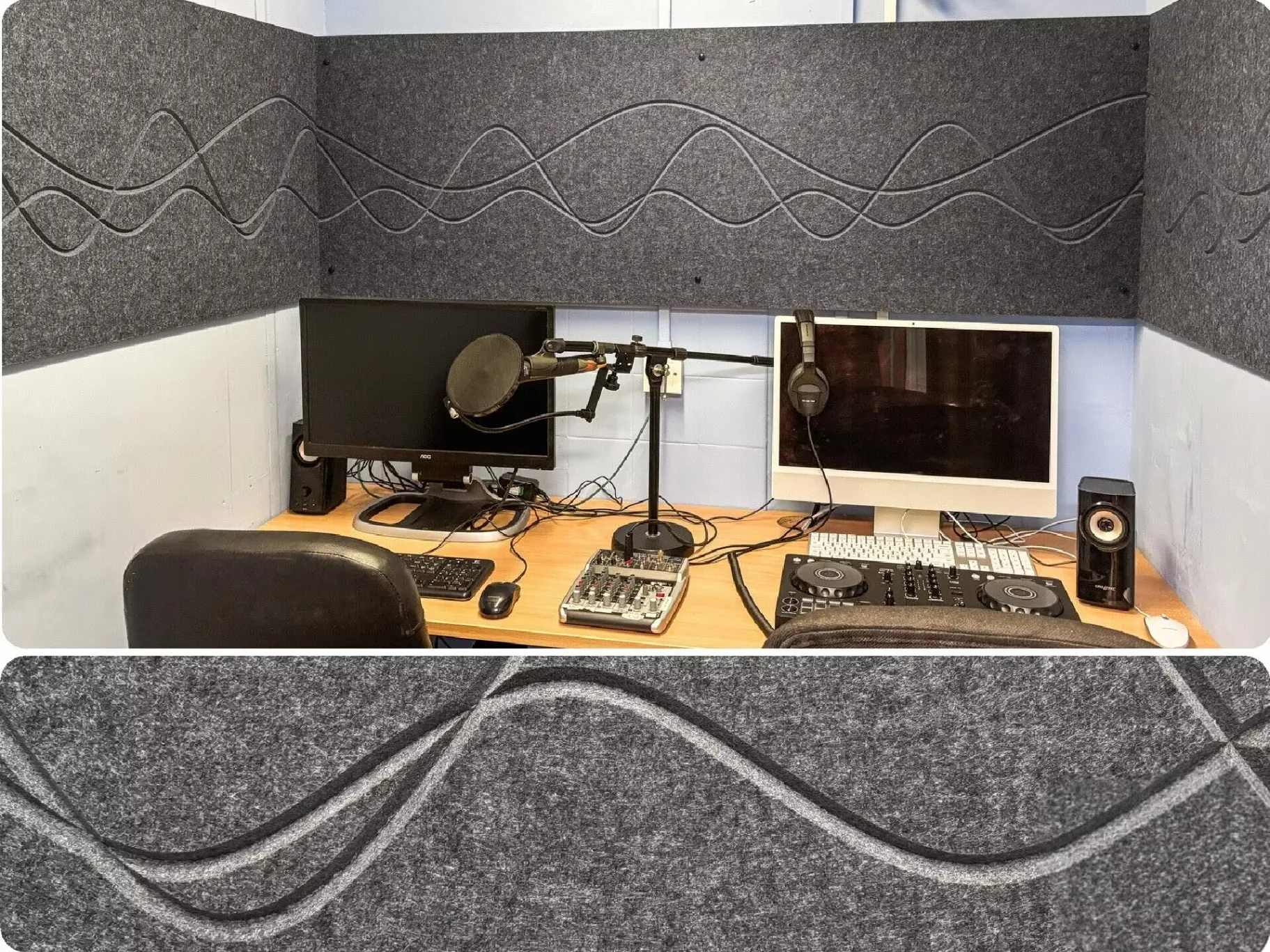
A panel can have an acoustic function while also creating:
- Texture
- Pattern
- Rhythm
- Color
- Depth
- Visual separation
This is why I think it is more useful to think of PET felt as an interior material with acoustic functionality, rather than simply calling it an acoustic product.
7. It Can Be Used in Different Parts of a Project
Another practical advantage is that PET felt is not limited to one type of application.
The same basic material can be developed into different products for different parts of a project.
For example:
Walls
Flat panels, decorative patterns, grooves and CNC-cut designs can be used to create acoustic wall treatments.
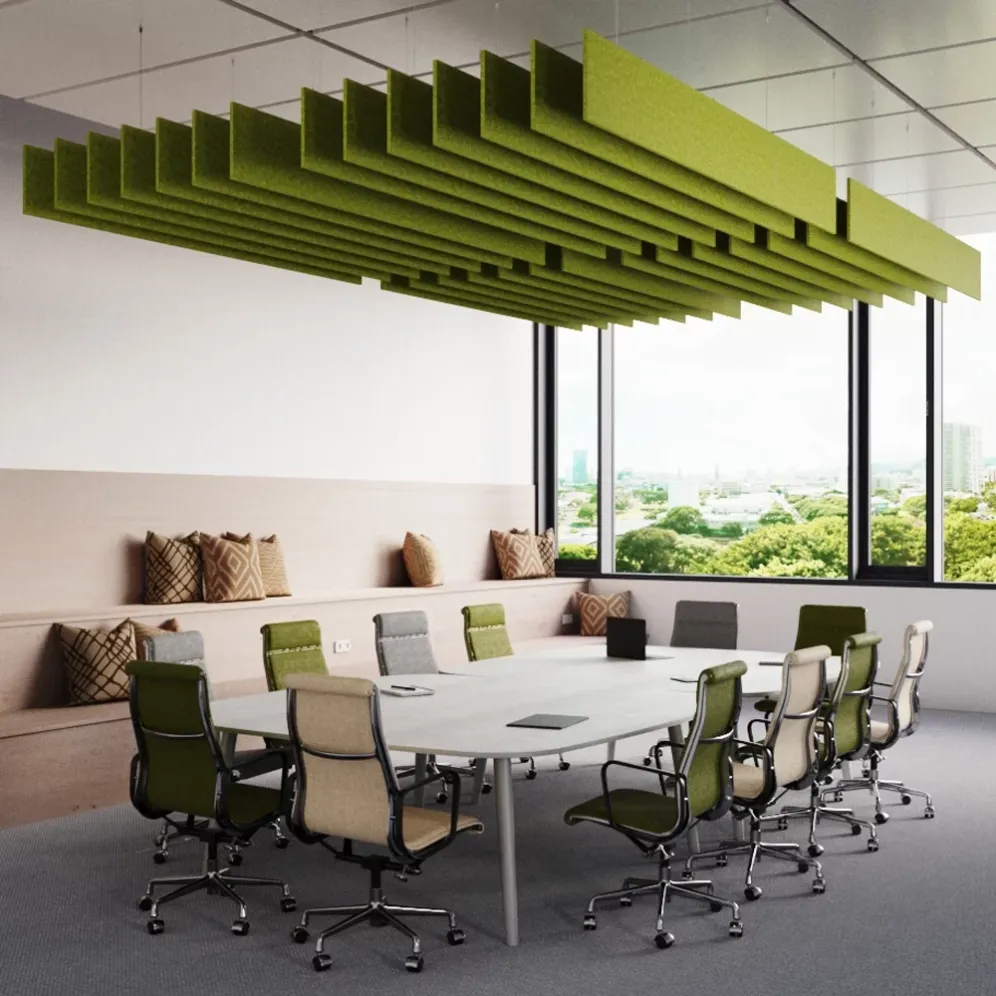
Ceilings
Panels can be suspended or incorporated into ceiling concepts, depending on the system and project requirements.
Partitions
PET felt can be used for screens and space-dividing elements where acoustic and visual separation are both needed.
Furniture
Some furniture manufacturers use PET felt for screens, panels and decorative components.
3D Features
When the design and material are suitable, thermoforming or other forming processes can create more dimensional shapes.
This flexibility means architects do not always need to think about acoustic treatment as one standard product.
They can think about how the material can work within the whole space.
8. Recycled Content Is Part of the Conversation — But Not the Whole Conversation
Sustainability is now an important consideration in many interior projects.
PET felt is often made partly or largely from recycled PET material, depending on the product and manufacturer.
There are already commercial PET acoustic products on the market that specify recycled PET content and provide environmental documentation.
But I would not say:
"Architects choose PET felt only because it is recycled."
That would be too simple.
In a real project, architects and project teams may need to consider many things together:
Acoustics + appearance + material properties + fire requirements + emissions + documentation + installation + cost.
Sustainability can be one part of that decision.
It is rarely the only part.
For buyers, this also means that asking only:
"How much recycled PET is in the panel?"
is not enough.
You should also ask for the relevant technical and environmental documentation for the actual product being supplied.
9. It Is Lightweight Compared With Many Traditional Board Materials
Another practical consideration is handling.
PET felt panels are relatively lightweight compared with many rigid interior board materials.
This can make transportation, carrying and installation easier in some applications.
But lightweight does not mean the panels can be handled without care.
Large panels still need proper support during transportation and installation.
This is something we pay attention to when packing large-format PET felt panels for overseas shipment.
For example, if the loading arrangement requires a carton to stand vertically, we may add additional support to reduce unnecessary movement during the long journey.
These details are not visible in a finished interior.
But they are part of getting the material to the project in good condition.
10. Architects Can Start With a Design — Not Just a Product
This is one difference I notice when working with project customers.
Some buyers start with a product:
"I need 12mm PET felt panels."
Others start with a design:
"Here is the drawing. Can you make this?"
The second type of project usually requires more communication.
We need to understand:
- Overall dimensions
- Thickness
- Density
- Color
- Cutting pattern
- Quantity
- Installation method
- Final application
Sometimes the drawing can be produced exactly as it is.
Sometimes we recommend changing one detail.
A large unsupported area may need to be reconsidered.
A complicated shape may create more waste than the designer expected.
These are not reasons to reject a design.
They are reasons to discuss it before production.
What Should Architects Check Before Specifying PET Felt?
If you are an architect or designer considering PET felt for a project, I would recommend checking more than the color and appearance.
Acoustic performance
Ask for the actual acoustic test data for the product and installation condition you are considering.
Do not assume that two panels with the same thickness will have the same acoustic performance.
Material specification
Check:
- Thickness
- Density
- Panel size
- Composition
- Recycled content, if required
Fire performance
If the project requires a specific fire classification, confirm the actual test report for the product being supplied.
Do not assume that one PET felt product's certification automatically applies to another.
Color
Request physical samples, especially for large projects.
Processing
If the project requires CNC cutting, provide the drawing early.
This allows the supplier to check whether the design is suitable for the material and production process.
Installation
The same panel may behave differently depending on whether it is directly fixed, suspended, framed or used as part of another system.
The installation method should therefore be considered during specification, not at the very end.
PET Felt Is Not the Answer to Every Project
I think this is worth saying clearly.
As a PET felt supplier, I could simply say:
"PET felt is the best material for modern interiors."
But I don't think that is useful.
There are many acoustic materials available.
Depending on the project, architects may choose mineral fiber, wood-based products, fabric-wrapped panels, perforated metal, timber systems or other solutions.
The right material depends on the project.
What makes PET felt interesting is that it can offer a practical balance between acoustic function, visual design and customization.
And for some projects, that combination is exactly what the architect is looking for.
Final Thoughts
I don't think architects choose PET felt because it is simply "an acoustic panel."
They choose it when the material can solve several requirements at the same time.
It can be cut into different patterns.
It is available in different colors.
It can be developed into customized shapes.
And for projects that require recycled content, PET-based materials can also fit into a broader material strategy, provided the actual product has the required documentation.
But the most important point is this:
Good design still needs good manufacturing.
A beautiful drawing is only the beginning.
The final result also depends on material selection, production, cutting, quality control, packaging and installation.
That is why, when a customer sends us a PET felt drawing, we don't only ask:
"What color do you need?"
We also want to understand:
"What are you trying to make?"
Because once we understand the application, it becomes much easier to find the right way to produce it.
Need PET Felt for an Architectural Project?
If you are an architect, interior designer, furniture manufacturer or project supplier working on a customized acoustic project, you can send us your drawings or basic requirements.
We can help you review:
- PET felt thickness and density
- Panel size
- Color options
- CNC cutting requirements
- 3D / thermoforming possibilities
- Estimated quantity
- Packaging requirements
- Production considerations
You don't need to have every detail finalized before contacting us.
If you have the design idea or drawing, send it to us. We can first look at whether the PET felt material and production process are suitable for your application.
Sometimes the best time to solve a manufacturing problem is before the drawing becomes a finished product.
More related pages:
📩 Send us your project drawings or specifications, and we will respond with a clear quotation and production suggestion within 24 hours.
Email: info@hengmy.com