Jun 26, 2026News & Insights
PET Felt Acoustic Panels: Absorption Is Not Soundproofing
PET felt acoustic panels improve echo control and speech clarity, but they are not soundproofing systems. Learn the real difference before your next project.
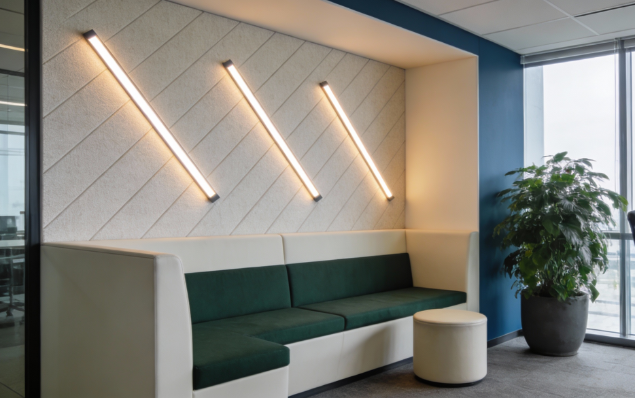
PET Felt Acoustic Panels: Sound Absorption vs Soundproofing – What You Really Need to Know
Last year, a client contacted us for a new open office project, around 280㎡.
They told us:
“We installed acoustic panels already, but the space is still noisy.”
When we checked the drawings, we found:
9mm PET felt panels were glued directly to drywall, with no cavity behind.
The expectation was “soundproofing”.
The real need was echo control.
This difference changes everything.
Sound Absorption vs Sound Insulation
Many people use the word “soundproofing” for everything.
But technically, they are different systems.
Sound insulation:
- Prevents sound passing between rooms
- Requires mass, sealing, structure
- Usually involves double walls, insulation, air gaps
Sound absorption:
- Reduces echo inside a room
- Controls reverberation time (RT)
- Improves speech clarity
PET felt panels are porous absorbers.
They improve internal acoustic comfort.
They do not block sound transmission through walls.
When this expectation is clear from the beginning, projects go much smoother.
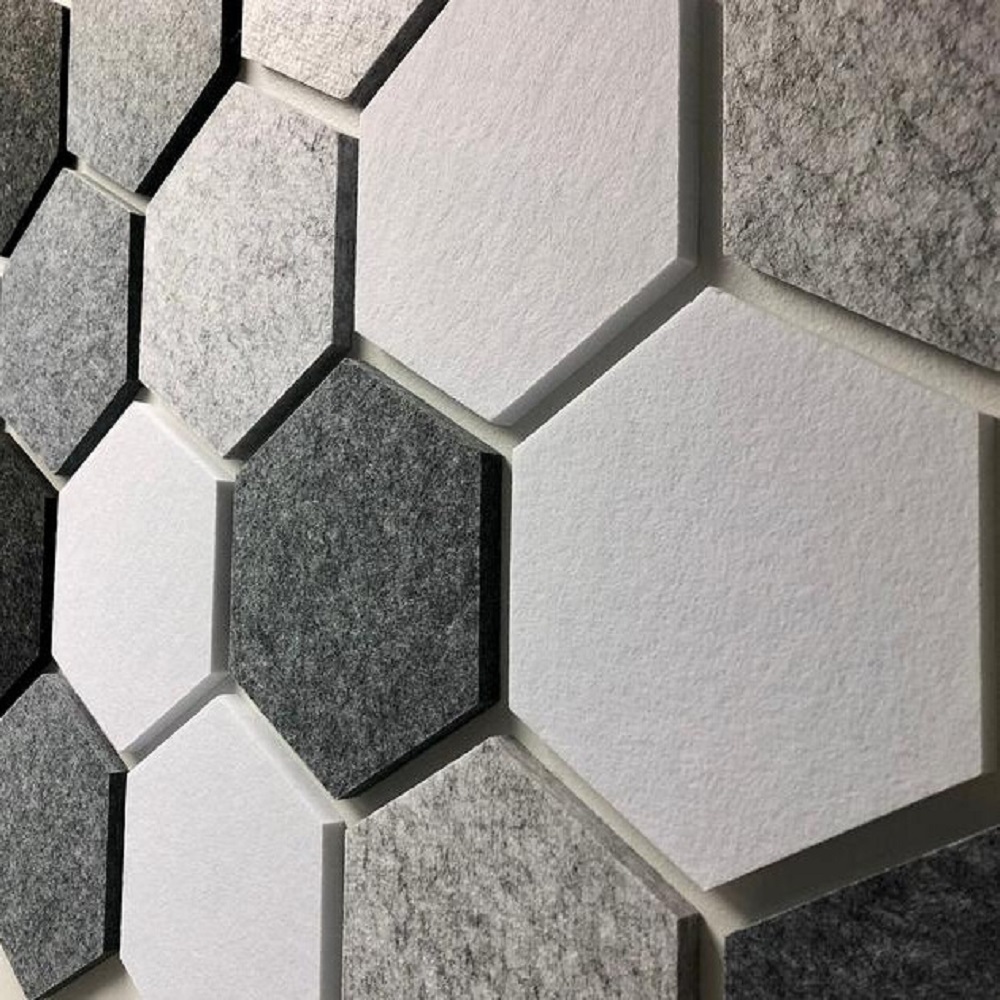
Real Project Example: What Changed the Result
In the 280㎡ office mentioned above, the original RT was about 1.1–1.2 seconds (measured at mid frequencies).
After adjustment:
- Panel thickness increased to 12mm
- 30mm air cavity added behind panels
- Coverage increased on reflective wall area
The RT dropped to around 0.65–0.7 seconds.
The space felt immediately different:
- Less echo
- Clearer speech
- Less fatigue in meetings
Same material category.
Different installation logic.
Very different result.
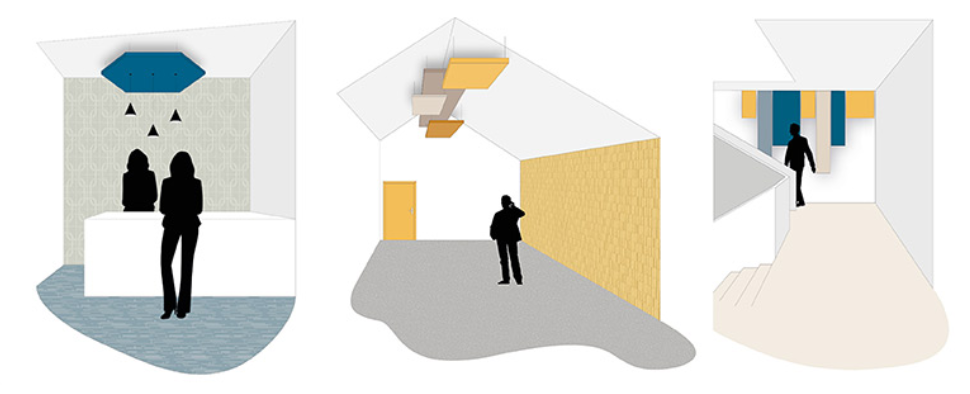
Where PET Felt Panels Perform Best
From our manufacturing and project experience, polyester acoustic panels work best in:
1. Open Offices & Meeting Rooms
Large hard surfaces create reflection loops.
Concrete, glass, gypsum — all reflect sound.
PET felt panels reduce high-frequency reflections effectively.
With cavity design, mid-frequency performance improves.
2. Ceiling Baffles or Suspended Systems
Flat wall installation works.
But when panels are:
- Suspended
- Installed with framing
- Combined with cavity
Absorption efficiency increases.
Many projects focus only on thickness.
Installation method is equally important.
3. Areas Near Glass
Glass reflects sound strongly.
In rooms with glass partitions, even high coverage on one wall may not solve echo completely.
Strategic placement near reflective surfaces makes a noticeable difference.
Technical Behavior of PET Felt Panels
Polyester fiber acoustic panels are porous absorbers.
General behavior:
- Higher absorption at high frequencies
- Improved mid-frequency absorption with air gap
- Lightweight and easy to process
- Suitable for CNC cutting and decorative patterns
They are effective for echo control.
They are not structural sound barriers.
Comparison: Absorption vs Insulation
Feature | PET Felt Panel | Double Drywall + Insulation |
|---|---|---|
Echo Control | Yes | Limited |
Speech Clarity | Improved | No effect |
Sound Transmission Blocking | No | Yes |
Installation Complexity | Low–Medium | High |
Structural Requirement | No | Yes |
Choosing the wrong system leads to wrong expectations.
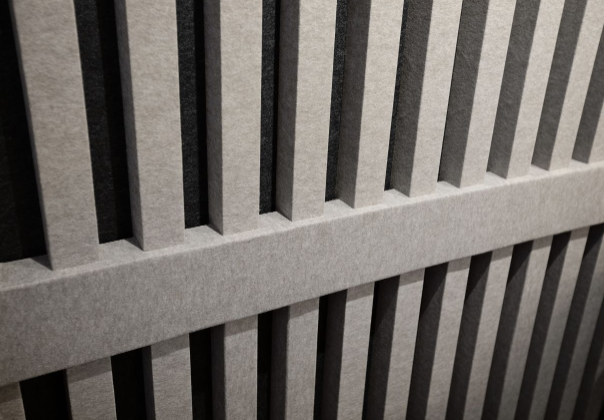
Installation Still Matters
In our factory, we often see problems not from material — but from installation.
Important details:
- Flat and dry substrate
- Stud spacing ≤ 400mm
- Proper adhesive application
- 1–3mm expansion gap
- Avoid relying only on air nails
A well-installed 12mm panel can outperform a badly installed 15mm panel.
The Most Important Question
When someone says:
“We need soundproof panels.”
We always ask:
Do you want:
- Less echo?
- Better speech clarity?
- Or real sound isolation between rooms?
Different goals require different systems.
PET felt acoustic panels are excellent for improving internal acoustic comfort.
For sound insulation, structural systems are required.
Clear understanding at the beginning saves time, cost, and redesign.
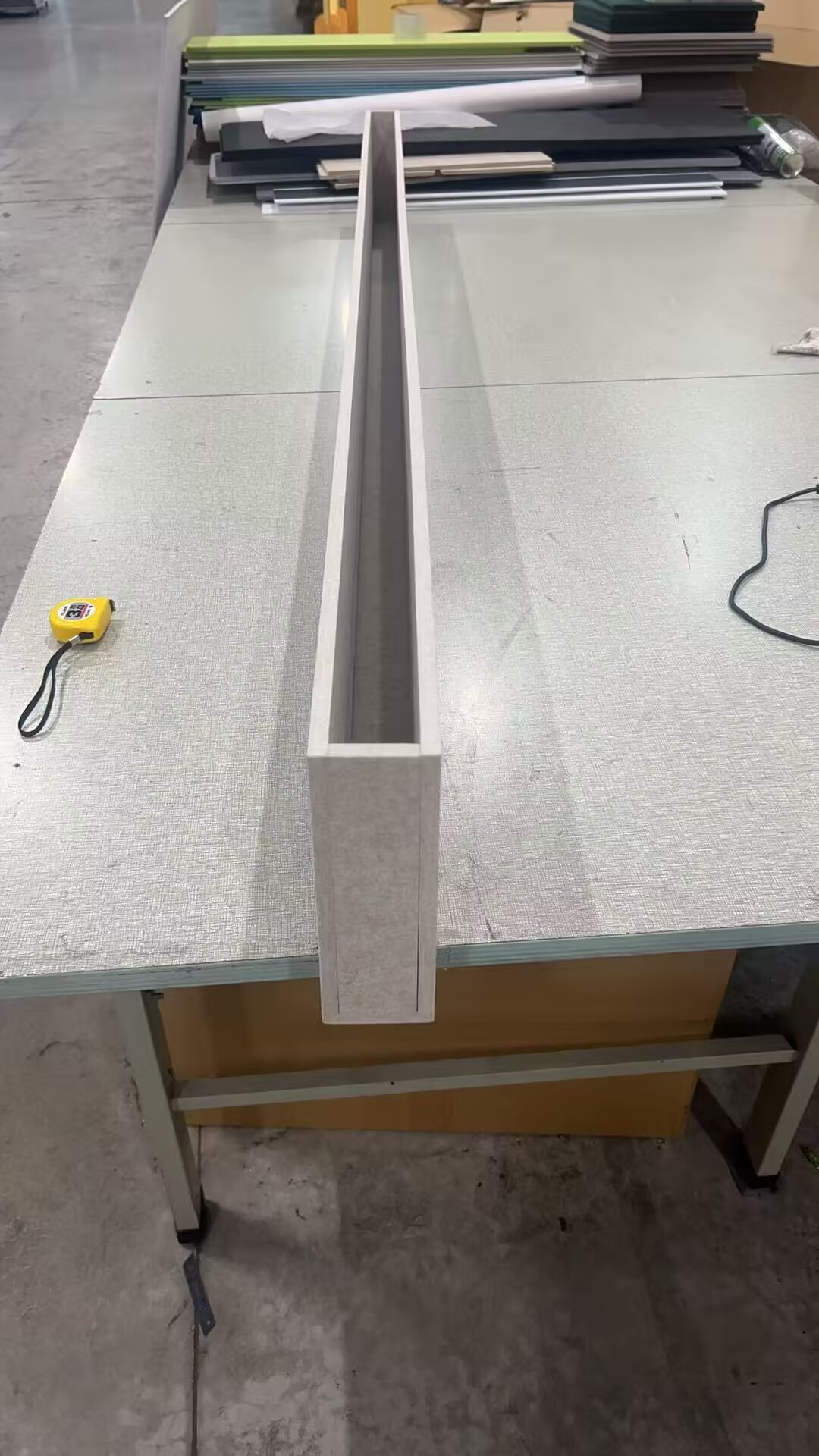

FAQ
Are PET Felt Acoustic Panels Good for Offices?
In open offices, PET felt panels reduce reverberation and improve meeting clarity, especially when installed with air gaps.
Do PET Acoustic Panels Reduce Noise Between Rooms?
No. They improve sound absorption inside a space but do not block sound transmission through walls.
What Thickness of PET Felt Acoustic Panel Is Best?
- 9mm: light echo control
- 12mm: standard commercial application
- 15mm+: improved performance when combined with cavity
How to Install PET Felt Panels for Better Acoustic Performance?
Adding a 20–50mm air gap behind the panel significantly improves mid-frequency absorption.
If you are planning a project and unsure whether you need absorption or insulation, we are happy to discuss technical details before material selection.