Jun 26, 2026News & Insights
How to Package PET Acoustic Panels for Safe International Shipping and Damage Prevention
Learn how PET acoustic panels are packaged for safe international shipping. Discover carton, pallet, and protective packaging methods to reduce transport damage in LCL and FCL shipments.
How to Package PET Acoustic Panels for Safe International Shipping and Damage Prevention
When PET acoustic panels are shipped internationally,
packaging becomes a critical part of product quality.
In many real projects, the product itself is not damaged during production —
but during transportation.
This is why packaging design is not just a finishing step.
It is part of the product responsibility.
Why Packaging Matters More Than the Product Price
At factory level, one PET acoustic panel may cost around 20 USD.
But the real cost is not just the product price.
After:
- Ocean freight
- Inland trucking
- Customs clearance
- Warehouse handling
The landed cost of one panel can easily become 40–60 USD or more.
So when damage happens during shipping,
the real loss is multiplied.
This is why packaging must be designed with logistics in mind, not only production.
Standard Carton Packaging for PET Acoustic Panels
For full-size PET acoustic panels, standard packaging is:
- 9mm thickness → 10 panels per carton
- 12mm thickness → 8 panels per carton
This is the most common export packaging method.
However, carton packaging alone is not always enough for long-distance transport.
Extra Protection for International Shipping
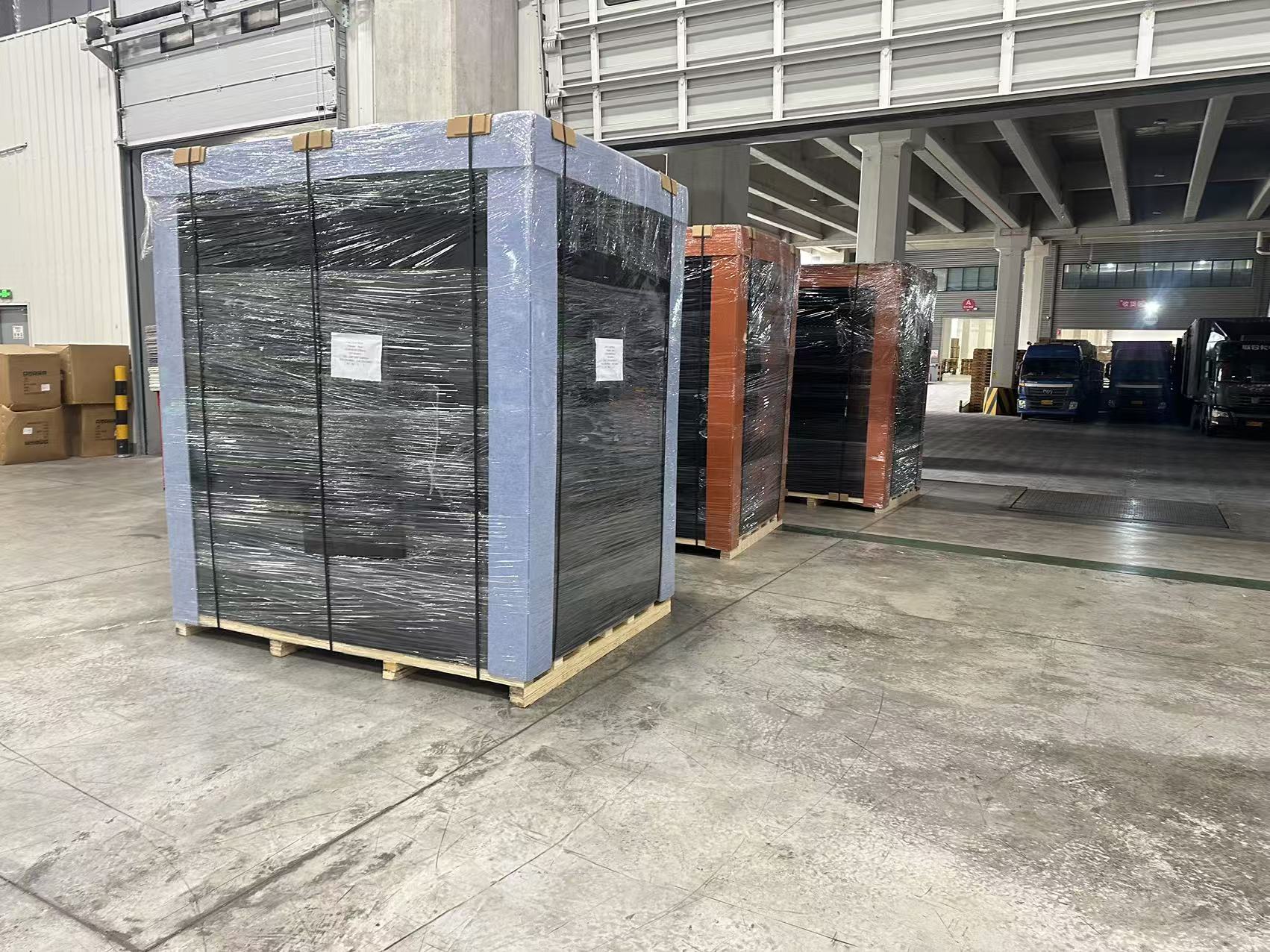
For export shipments, especially sea freight, we usually add extra protection layers.
Typical protection methods:
- Plastic film wrapping before carton packing
- Internal fiberboard corner protection
Purpose of these materials:
- Plastic film → moisture protection during long transit
- Corner protection → impact resistance and compression reduction
This is especially important for LCL (Less than Container Load) shipments,
where goods are handled more frequently.
Even for FCL (Full Container Load) shipments,
we apply the same standard.
Because transportation risk does not disappear in full containers.
Low-Density PET Panels Require Higher Packaging Standards
Packaging requirements become more critical
when PET panels have lower density.
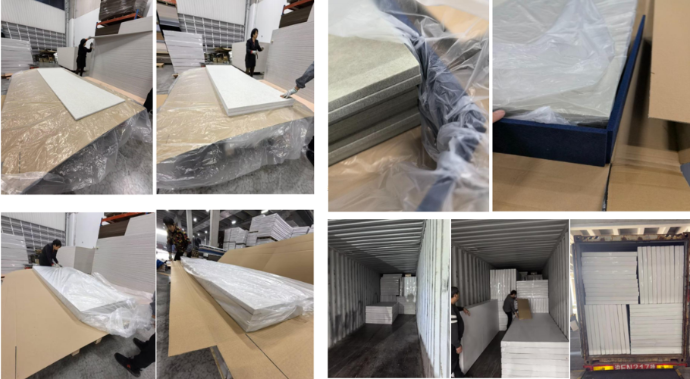
For example, some customers use 1350gsm PET panels
as backing material for wooden slat wall systems.
Compared to standard 2000gsm panels,
this material is softer and more sensitive to pressure.
In such cases, packaging is not only protection —
it also becomes structural support.
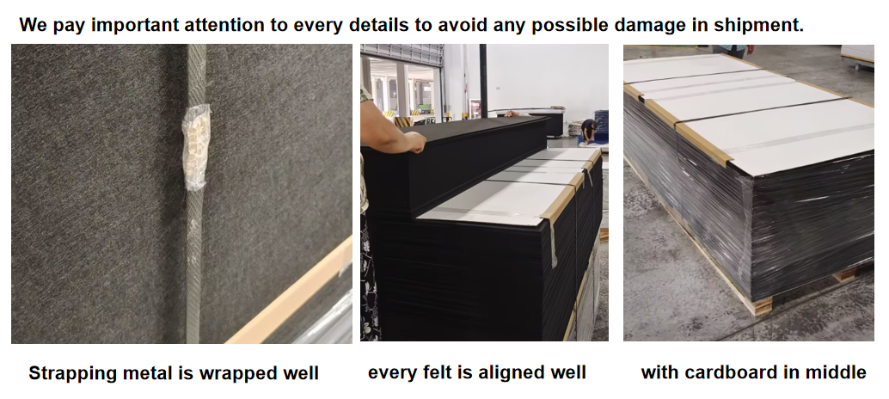
Pallet Packaging for Large Orders
For European customers, pallet packaging is often preferred
because labor cost is high and unloading efficiency is important.
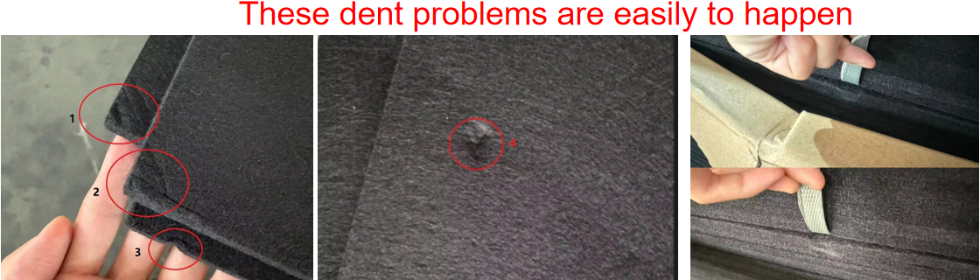
Our pallet packaging process includes:
- Custom pallet size designed for 40HQ container optimization
- Different stacking methods depending on panel structure (vertical, horizontal, or side placement)
- Divider boards added when stacking height increases to distribute weight evenly
- Full pallet wrapping with plastic film
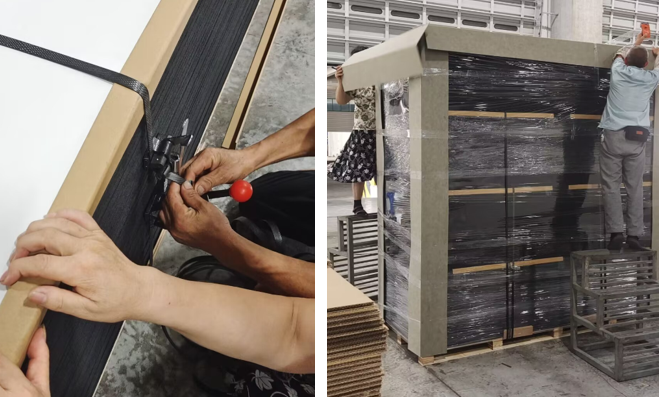
- Strapping belts for structural stability
Important detail: Strapping control
Strapping is not simply “tight is better”.
- Too tight → edge damage risk
- Too loose → load instability
So we control:
- Fixed stacking height
- Fixed strapping tension process
This ensures consistency across all shipments.
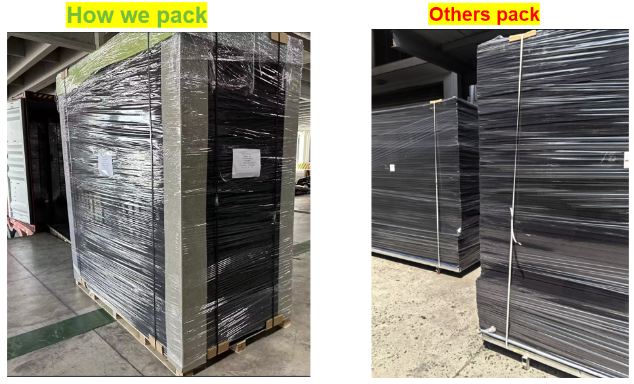
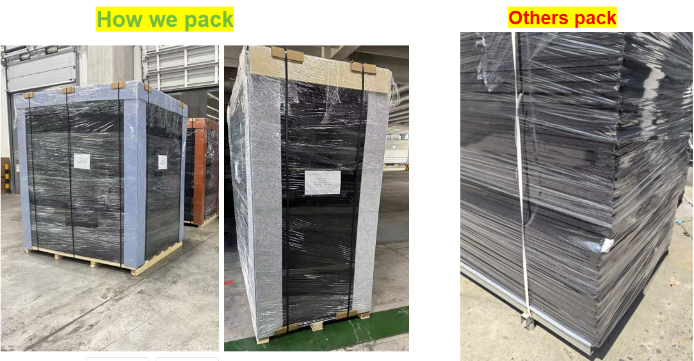
Edge protection
All 8 outer edges of the pallet are protected
using PET-based corner guards.
Because most transport damage happens during handling,
not during storage.
Internal Quality Control Before Shipping
Before shipment, we also perform:
- QC inspection during packing
- Third-party inspection when required
- Verification of pallet stability before loading
The goal is simple:
reduce risk before the container even closes.
Frequently Asked Questions (FAQ)
Q1: Why is packaging important for PET acoustic panels?
Because transport cost and handling increase the real value of each panel. Damage leads to multiplied loss, not just product cost.
Q2: What is the safest packaging method for international shipping?
A combination of plastic film, carton protection, and pallet packaging with corner reinforcement is the most stable solution.
Q3: Is LCL shipping more risky than FCL?
Yes. LCL shipments involve more handling and mixing with other goods, which increases impact risk.
Q4: Can packaging be customized for different projects?
Yes. Packaging can be adjusted based on density, shipment method, and destination requirements.
Final Thought: Packaging Is Part of Product Quality
PET acoustic panels travel long distances before reaching the project site.
The product is only one part of the journey.
Packaging ensures the product arrives in the same condition
as it leaves the factory.
This is why we treat packaging not as an option,
but as part of the product standard.
For more pages, please go to: