Aug 24, 2026Services Overview
PET Felt CNC Cutting: How Much Panel Area Can You Actually Use?
A 1220 × 2440 mm PET felt panel is a standard sheet size, but the usable CNC cutting area is usually smaller after edge trimming. Here is what buyers should consider before ordering.
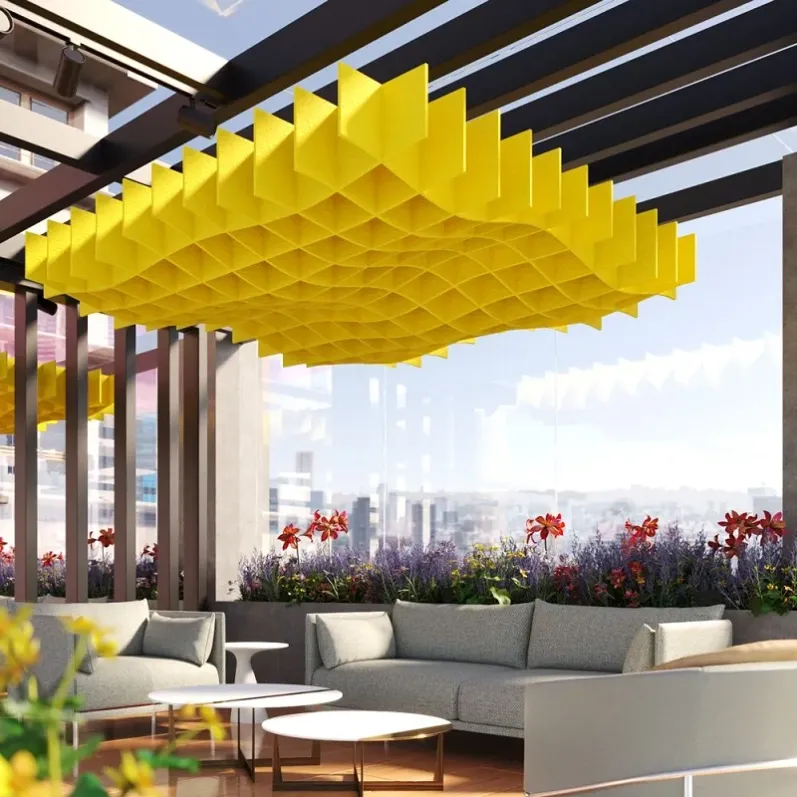
How Much of a 1220 × 2440 mm PET Felt Panel Can You Actually Use for CNC Cutting?
If you buy PET felt panels, you may already know that 1220 × 2440 mm is one of the common sheet sizes.
For a normal wall panel, there is not much to discuss.
If you order 1220 × 2440 mm panels, you get 1220 × 2440 mm panels.
But what if these panels are not going directly onto the wall?
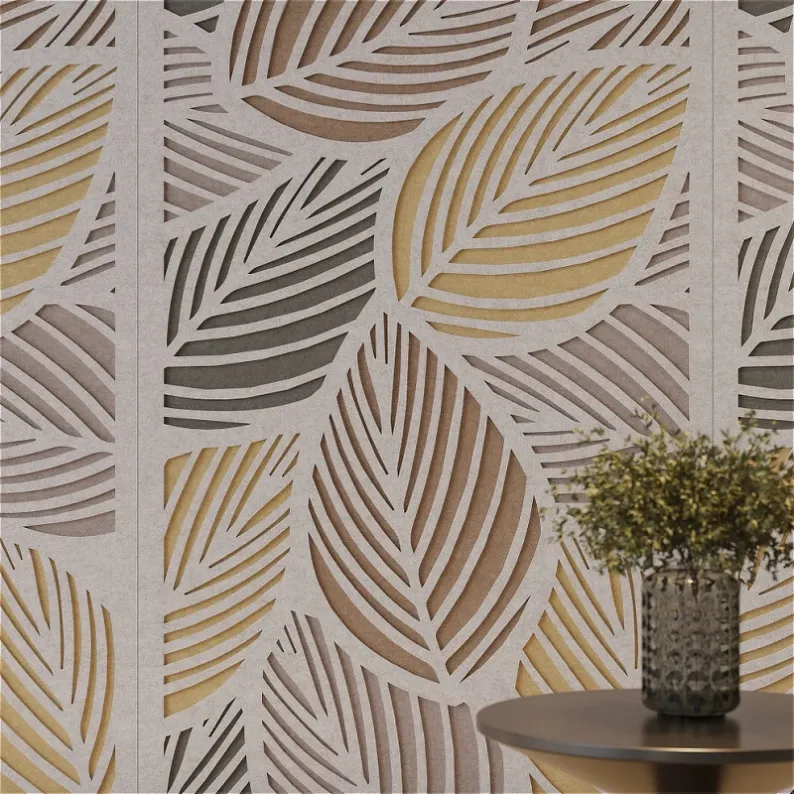
What if you are going to put them on a CNC machine and cut them into furniture components, acoustic screens, decorative shapes, or other finished parts?
This is where one small detail becomes important:
The full panel size is not necessarily the same as the area we use for CNC cutting.
It does not mean the panel is smaller than the specified size.
It means we normally prepare the panel before CNC cutting.
Why Do We Trim the Edges Before CNC Cutting?
Before putting a PET felt sheet into CNC processing, it is common to remove a small amount from the four edges.
In our production, this is normally around 5–10 mm from each side, depending on the panel condition and the actual cutting requirement.
Why?
The outside edge of a large PET felt sheet is not always the best reference for CNC cutting.
There can be small edge conditions from production, handling, or storage. The edge may also not be exactly what we want to use as the reference point for a finished CNC-cut component.
So, instead of starting the cutting directly from the outside edge, we normally clean up the edges first and then work from the prepared area.
For example, a 1220 × 2440 mm sheet may have an effective working area that is closer to approximately 1200 × 2400 mm, depending on how much is removed from each side.
The exact usable area should be confirmed according to the actual project.
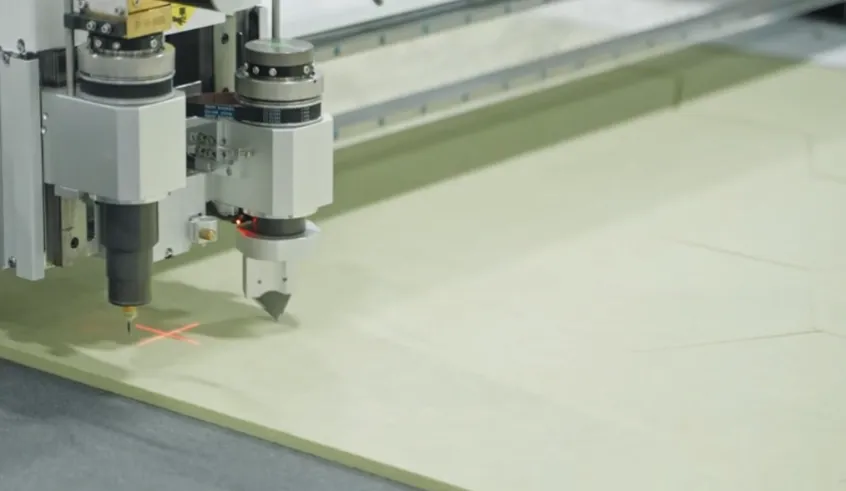
This Is Not the Same as Panel Tolerance
I think this distinction is important because these two things are sometimes confused.
When we talk about the dimensional tolerance of a PET felt panel, we are talking about the normal manufacturing variation around the agreed panel size.
If the agreed size is:
1220 × 2440 mm
the production target is still 1220 × 2440 mm.
We try to control the dimensional tolerance as tightly as possible during production with strict standards, lower than the industry normal tolerance range.
Edge trimming is different.
It is not because the panel failed to reach 1220 × 2440 mm.
It is because we are preparing the panel for another manufacturing process.
That process is CNC cutting.
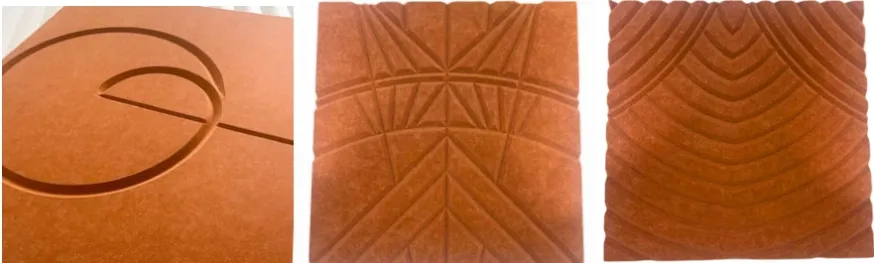
If You Use the Full Panel, This Is Not an Issue
If your customer is installing the PET felt panel directly as a full sheet, there is normally no reason to remove 5–10 mm from each side just for the sake of it.
The panel remains:
1220 × 2440 mm
This is particularly common for wall and ceiling applications where the full sheet is part of the design.
The situation changes when the sheet becomes raw material for further processing.
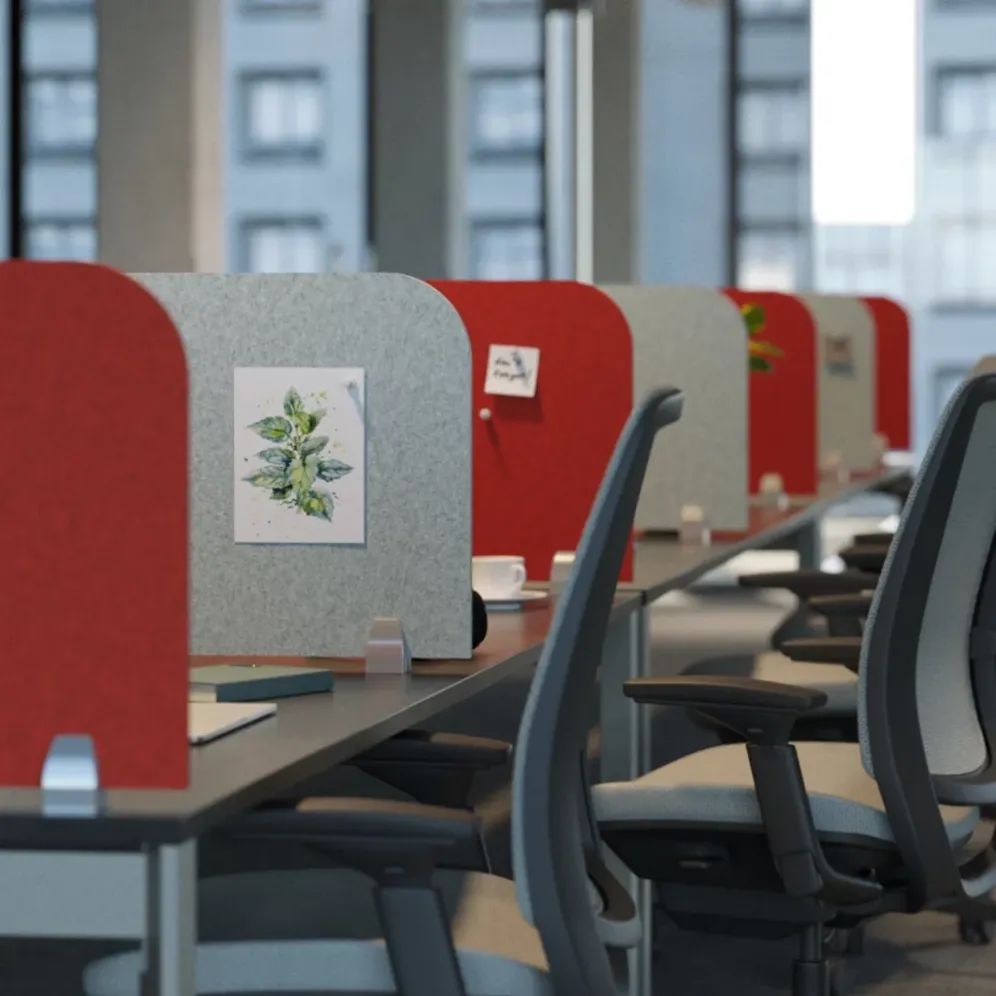
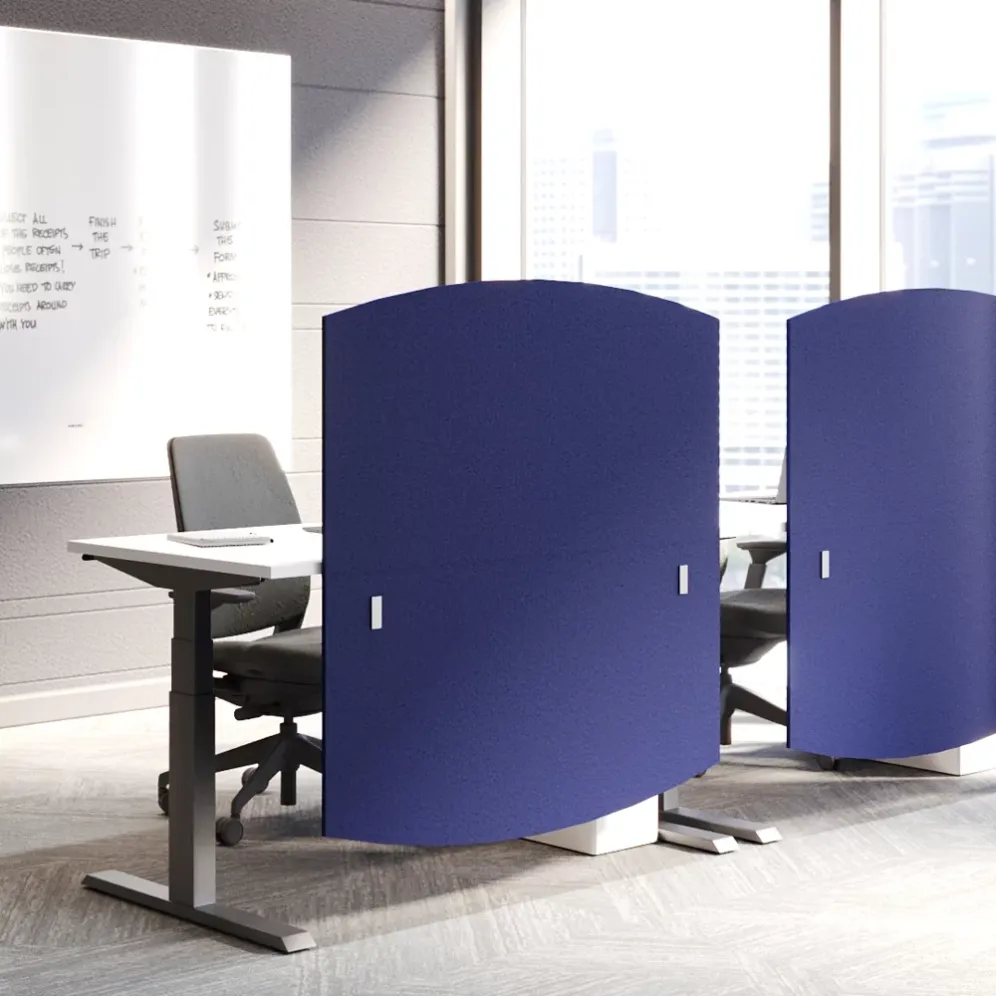
For example, a furniture manufacturer may buy 1220 × 2440 mm PET felt panels and turn them into:
- Desk screens
- Acoustic dividers
- Furniture components
- Decorative panels
- Small acoustic elements
- Custom CNC-cut shapes
In these cases, the sheet is not the final product.
It is the starting material.
And material utilization becomes more important.
Why Does This Matter for CNC Nesting?
Suppose you have a CNC drawing with many different parts.
Some are 600 × 300 mm.
Some are long and narrow.
Some have holes or curved edges.
Some may need to be rotated to fit better on the sheet.
The CNC operator needs to arrange these parts on the PET felt panel. This is generally called nesting.
The purpose is simple:
Get as many finished parts as possible from each sheet.
But the nesting area should not be calculated by simply taking the full 1220 × 2440 mm and assuming every millimeter is available.
The edge preparation needs to be considered first.
The same applies to the cutting gaps between parts and the shape of the parts themselves.
This is why a simple calculation based only on square meters can sometimes give a different result from the actual production quantity.
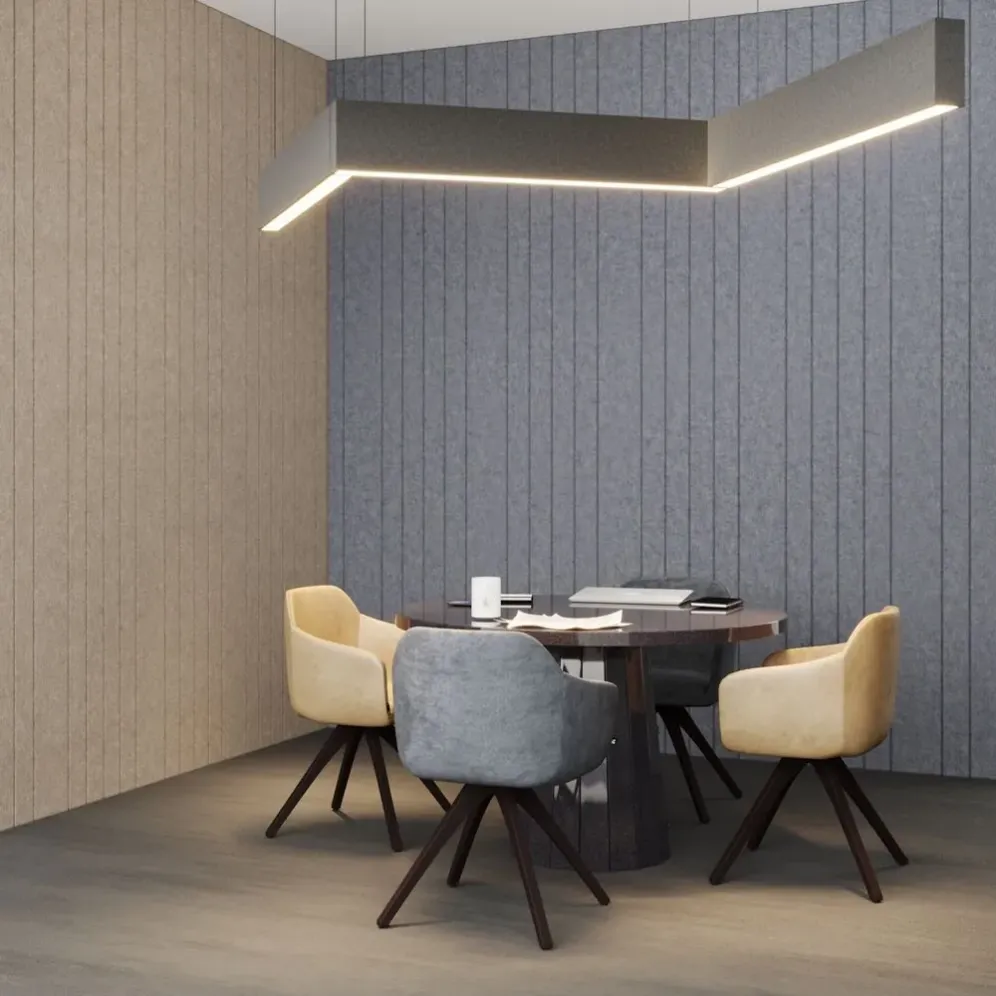
A Bigger Sheet Does Not Always Mean Better Material Use
This is also worth considering when comparing suppliers.
A buyer may look at:
PET felt panel price per sheet
or
price per square meter
and use this as the main comparison.
For a standard full-sheet project, this may be enough.
For CNC production, I would look at something else as well:
How many finished pieces can I get from one sheet?
For example, if you need 1,000 finished components, the important number is not only how much one 1220 × 2440 mm panel costs.
You also need to know how many panels are required to produce the 1,000 pieces.
The cutting layout can make a difference.
This is especially true when the parts are large, irregular, or have a lot of empty space between them.
Send the CNC Drawing Before Finalizing the Material Quantity
If you already have a CNC drawing, I recommend sending it to your PET felt supplier before confirming the final material quantity.
The supplier can then look at:
- Panel size
- Finished part size
- Number of parts
- Cutting layout
- Edge trimming
- Material utilization
- Required quantity
This is much more useful than simply saying:
“We need 500 square meters of PET felt.”
For a CNC project, the finished part is what matters.
The raw material is only the beginning.
A Simple Example
Let's say you need a batch of acoustic furniture components.
You have already calculated the total area of the finished components.
On paper, the calculation looks simple:
Finished component area ÷ PET felt panel area = required number of sheets
But the real production calculation may need to consider:
Edge trimming + cutting layout + part shape + spacing between parts + nesting efficiency.
This does not mean there is a fixed percentage of material waste for every project.
There isn't.
A simple rectangular design may use the material very efficiently.
A complicated design with many curves and small pieces may use it less efficiently.
The actual drawing is the better way to estimate the requirement.
What Should Buyers Ask Their PET Felt Supplier?
If you are buying full sheets for direct installation, the basic specification is usually enough:
Size + thickness + density + color + quantity
If you are buying for CNC processing, I would add a few more things:
What is the finished part?
Do you already have a CNC drawing?
How many finished pieces do you need?
Will the edges be visible?
What thickness and density are you planning to use?
These questions help the supplier understand the project instead of only quoting a sheet.
For CNC projects, the material specification and the cutting plan should really be considered together.
One Small Detail Before You Place the Order
A 1220 × 2440 mm PET felt panel is still a 1220 × 2440 mm panel.
But if you are going to CNC cut it, you should not assume that the entire surface is your practical cutting area.
After preparing the four edges, the usable area can be smaller.
That small difference may not matter for one or two panels.
For a large production run, however, it can affect the nesting and the total number of sheets you need.
This is why I prefer to check the CNC drawing before confirming the final material quantity.
It is a simple step, and it can make the purchasing calculation much more realistic.
Have a CNC PET Felt Project?
If you are planning to use PET felt as a raw material for CNC cutting, you can send us your drawing before placing the order.
Please include the panel size, thickness, density, quantity and finished application if you already have them.
We can look at the cutting requirement together and help you estimate the material requirement based on the actual project, rather than only calculating by square meter.
If you already have a CNC drawing, send it to us. We are happy to take a practical look before you finalize the material order.
More related pages:
📩 Send us your project drawings or specifications, and we will respond with a clear quotation and production suggestion within 24 hours.
Email: info@hengmy.com