Aug 30, 2026Services Overview
PET Felt Acoustic Solutions for Meeting Rooms & Open Offices
Practical ways to use PET felt acoustic panels in meeting rooms and open offices, from wall panels and screens to suspended elements and customized designs.
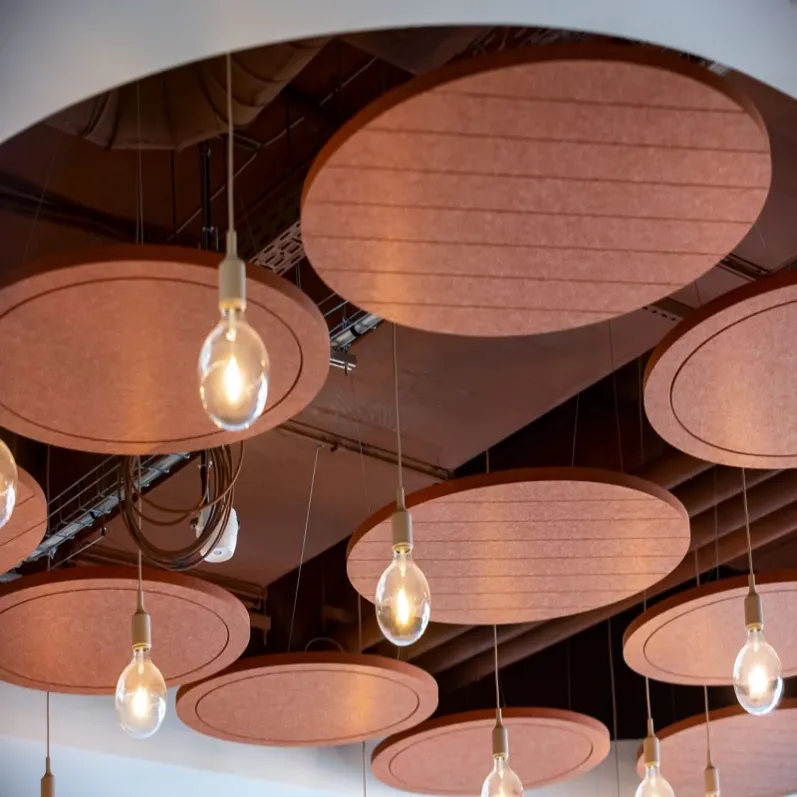
PET Felt Acoustic Solutions for Meeting Rooms and Open Offices
When people talk about office acoustics, meeting rooms and open offices are often put into the same category.
But they do not always have the same acoustic problems.
As a supplier working with office project managers for several years, I’ve seen many designs look great on paper but fail in actual acoustics...
A meeting room may sound too “empty” or echoey when several people are speaking.
An open office may have a different problem: conversations, phone calls and everyday activity can spread across the space and become a constant background noise.
For project designers and contractors, this means that simply adding “some acoustic panels” is not always enough.
The location, amount and type of acoustic treatment need to match the space.
This is where PET felt acoustic panels can become a practical part of the overall design.
Start With the Actual Problem
Before choosing a PET felt panel, I think it is better to look at what is happening in the room.
Is the problem mainly echo?
Is speech difficult to understand during meetings?
Are phone calls disturbing people nearby?
Are there many hard surfaces such as glass, concrete, plasterboard or hard flooring?
Or is the main requirement to create some visual separation between different working areas?
These questions can lead to different solutions.
PET felt is mainly used as a sound-absorbing material. It can help reduce reflected sound and reverberation inside a room, but it does not replace walls, doors or other measures when the project requires true sound isolation.
This is an important difference to understand at the beginning of a project.
PET Felt for Meeting Rooms
Meeting rooms often contain many hard surfaces.
Glass walls, tables, screens, floors and ceilings can all reflect sound.
When several people are talking, these reflections can make the room feel uncomfortable and make conversations or video calls harder to follow.
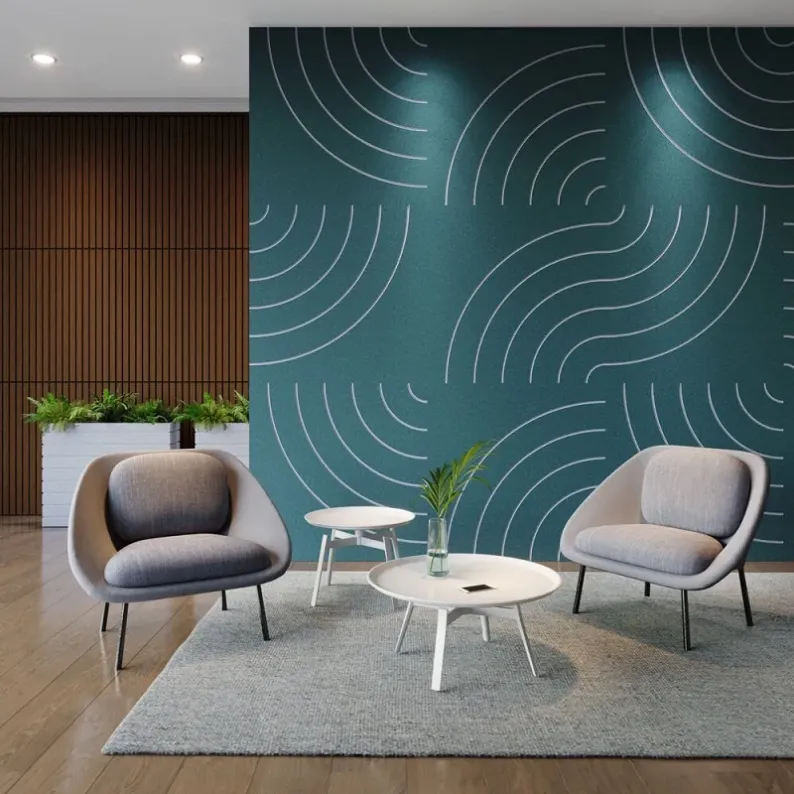
PET felt wall panels can be used to add sound absorption to suitable surfaces.
For example, panels can be installed on the wall behind or near the meeting table, depending on the room layout and the overall acoustic design.
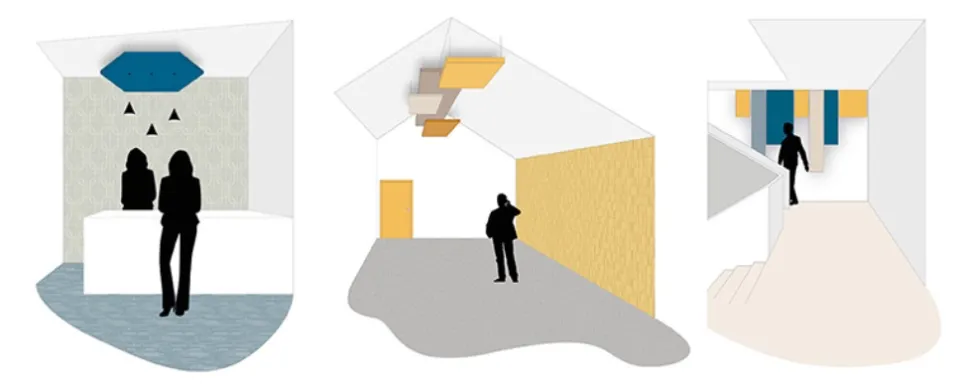
Ceiling-mounted or suspended PET felt elements can also be considered when the ceiling is a major reflective surface.
The exact solution depends on the room.
A small meeting room with a lot of glass may need a different treatment from a larger conference room with a different ceiling and wall construction.
So I would not recommend choosing a fixed number of panels before looking at the actual space.
Open Offices Need a Different Approach
Open-plan offices are more complicated.
There may be many people working at the same time, with conversations, phone calls, meetings and movement happening in different areas.
The goal is usually not to make the whole office silent.
That is not realistic for an open workspace.
Instead, the project may focus on reducing excessive reverberation, making the environment more comfortable and helping different activities coexist in the same space.
PET felt can be used in several ways.
Wall panels can add absorption to large reflective surfaces.
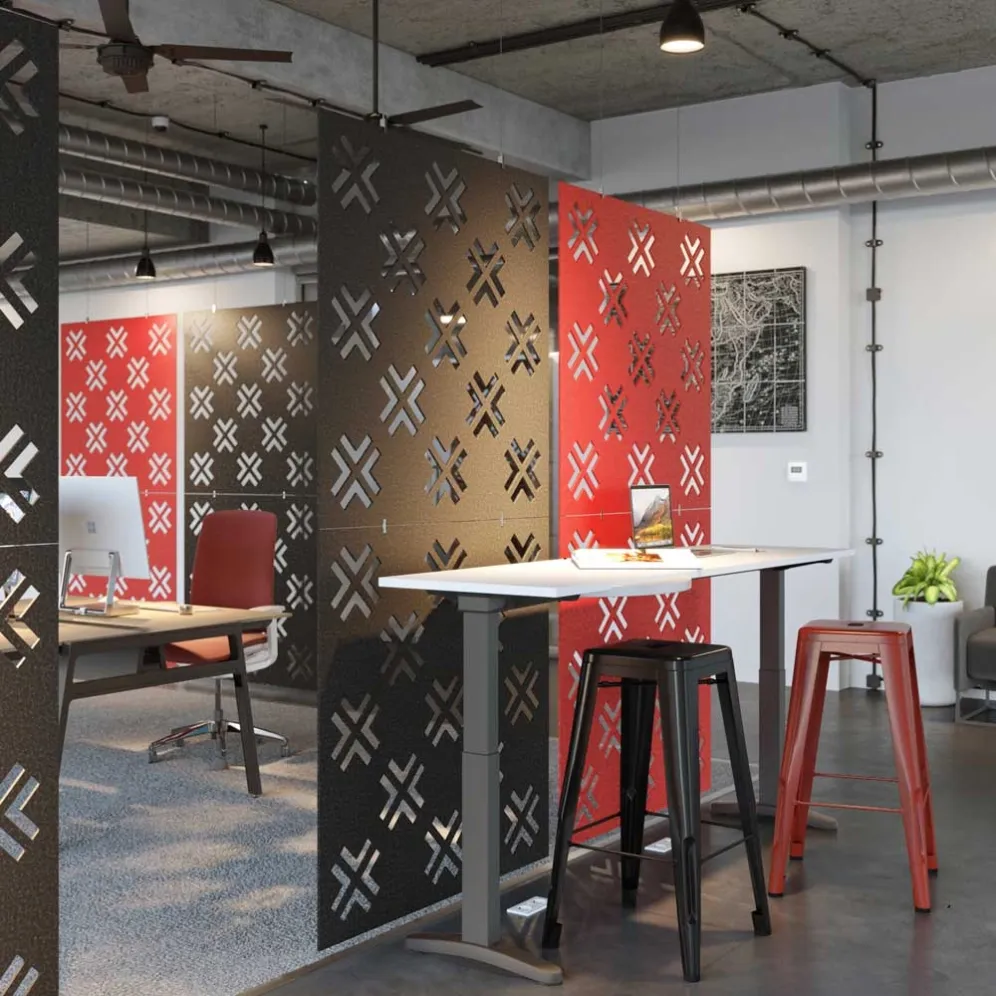
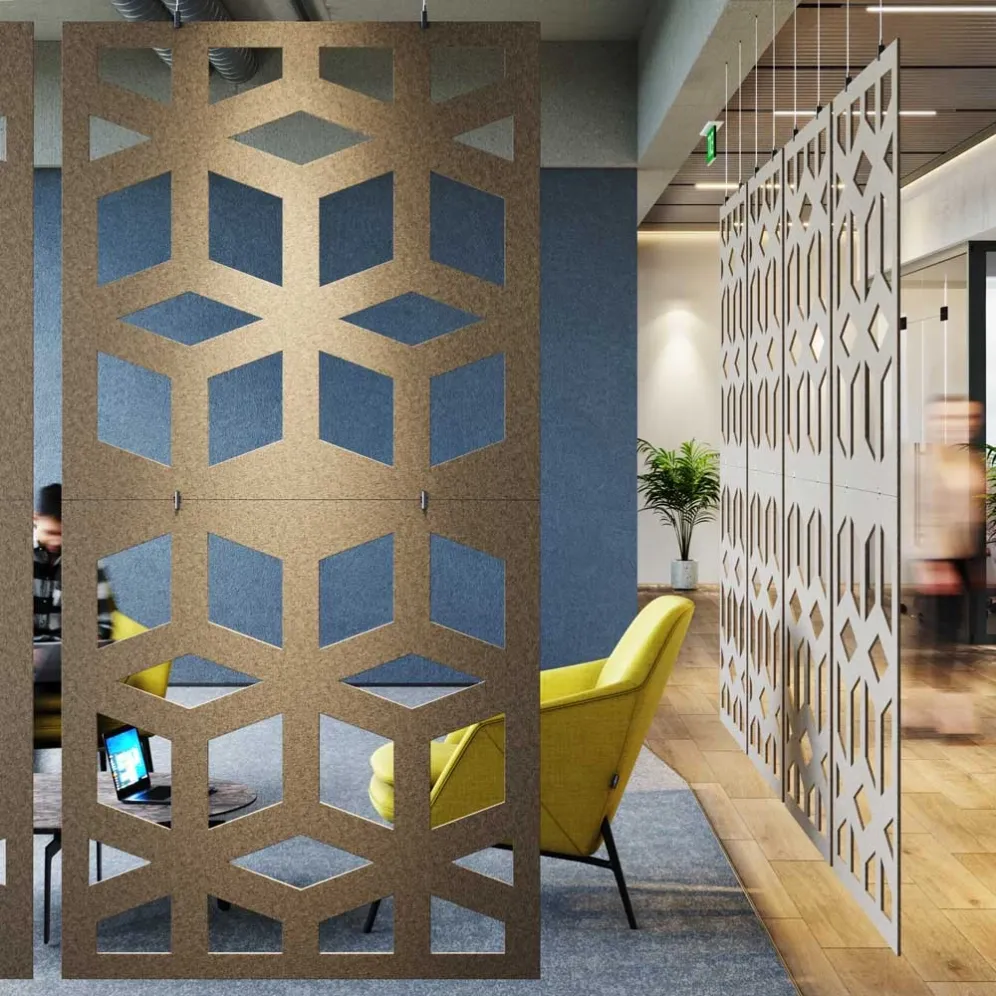
Desk screens and workstation dividers can create some visual separation while also providing an additional absorbing surface.
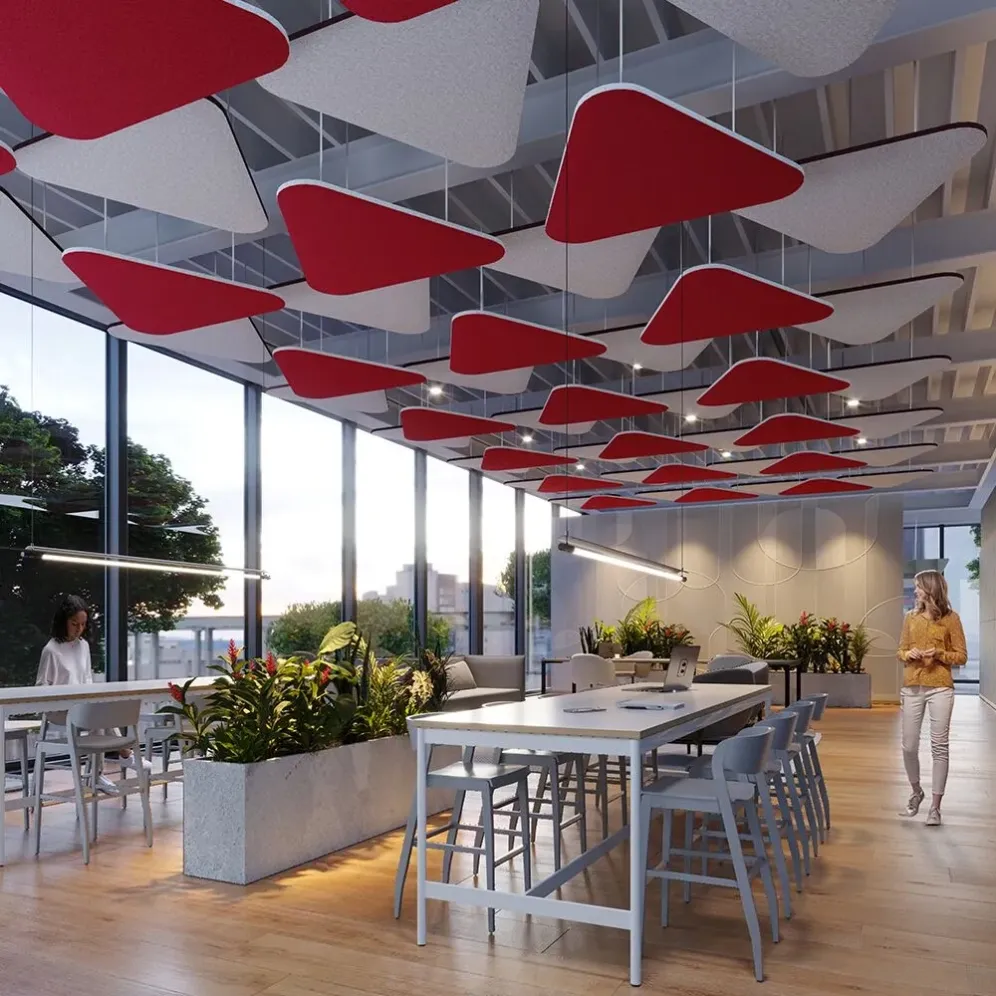
Suspended panels or ceiling elements can be useful when there is a large open ceiling area.
The best result often comes from using different elements together rather than expecting one product to solve everything.
The Ceiling Can Be Important
In many modern offices, the walls may already have furniture, glass or other finishes.
The ceiling can provide another opportunity for acoustic treatment.
PET felt can be made into suspended panels, clouds or other shapes depending on the design.
This can be useful in open areas where there is a large amount of exposed ceiling surface.
For project designers, this also creates another design opportunity.
The acoustic treatment does not have to look like a technical installation.
Different colours, shapes and layouts can make the ceiling treatment part of the interior design.
But the final construction still needs to consider the ceiling structure, installation method, panel size and weight.
These details should be discussed before production.

PET Felt Can Also Help Define Different Zones
Open offices are not always one large working area.
There may be focus workstations, collaboration areas, informal meeting spaces and phone areas.
PET felt panels can help create visual boundaries between these zones.
For example, a workstation divider can provide a clearer personal working area without building a permanent wall.
A suspended PET felt element can visually define a meeting area while keeping the space open.
This is one reason PET felt is often interesting for office projects.
It can combine acoustic function and visual separation in the same material.
Colour and Shape Matter in Project Design
For a project, acoustic performance is important, but the panels also need to fit the interior.
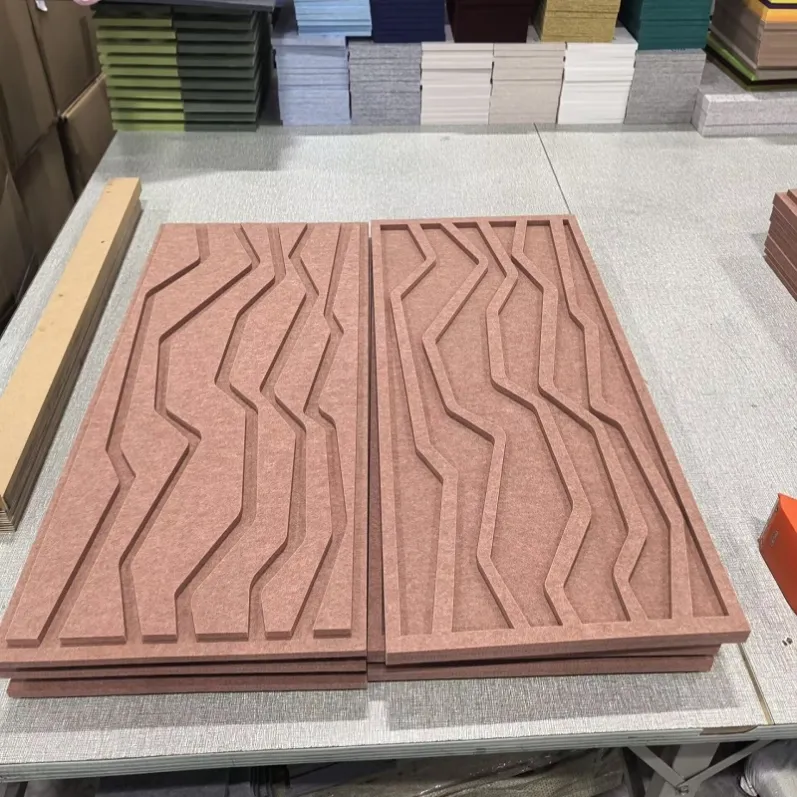
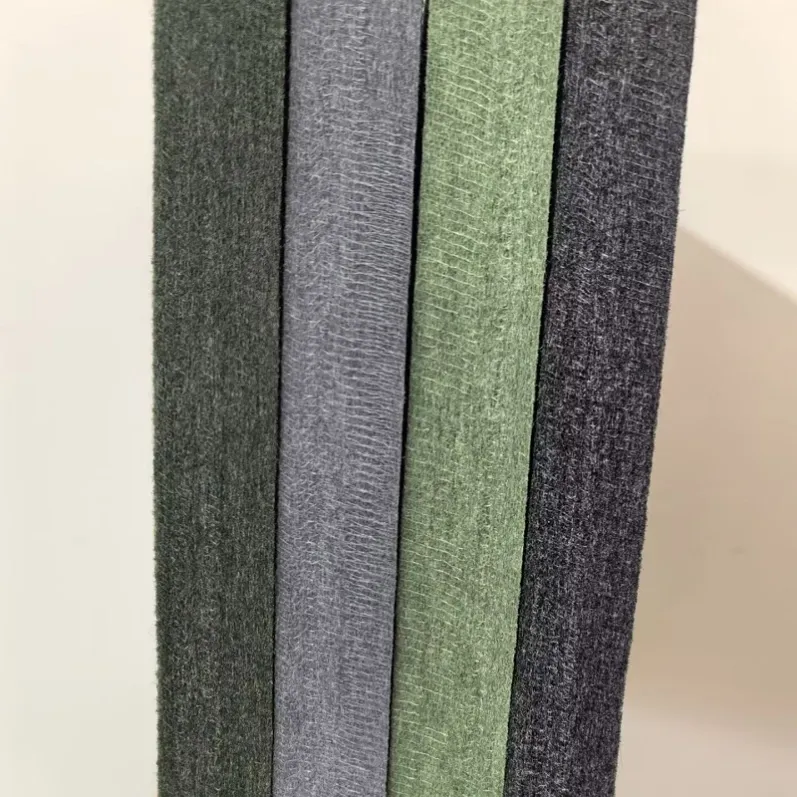
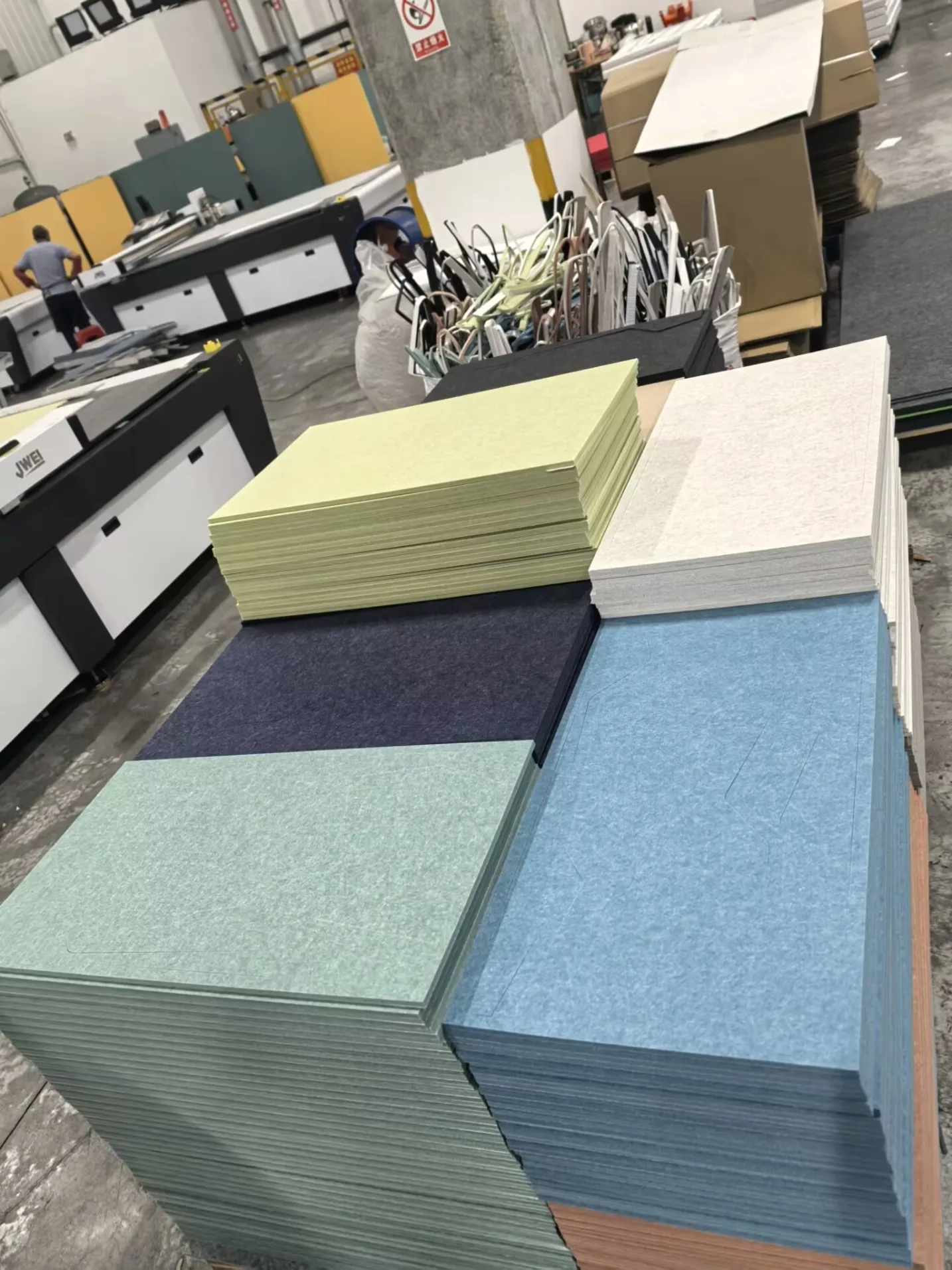
PET felt is available in many colours and can be CNC cut into different shapes and patterns.
This gives designers more freedom when developing a meeting room or open-office concept.
The same material can be used for a simple flat wall panel, a decorative screen, a geometric ceiling feature or a customized acoustic element.
But I recommend testing the actual colour and design before confirming a large order.
A rendering may look perfect on a screen, while the real PET felt can look different under the project's lighting.
A physical sample can help the designer, contractor and client make the decision with the actual material in front of them.
Think About the Project Before Ordering the Material
For project customers, material selection should happen early.
If the design already includes custom shapes, large panels, CNC cutting or 3D elements, the supplier should understand these requirements before production.
The required thickness, GSM, panel size and colour may depend on the final application.
For example, a simple wall panel and a large customized suspended element may not need exactly the same material specification.
This is why we prefer to see the project requirements before simply giving a standard panel recommendation.
A drawing, rendering, floor plan or even a few project photos can already be useful.
There Is No Single Acoustic Solution for Every Office
This is probably the most important point.
A meeting room is different from an open-plan office.
A small phone area is different from a large collaboration space.
A glass meeting room is different from a room with more absorptive surfaces.
So I would be careful with any supplier who tells you that one acoustic product can solve every office acoustic problem.
PET felt can be a useful part of an acoustic solution.
But the material, location, quantity and installation method all need to work together with the room.
For project customers, this is where early communication can save time.
If you are working on a meeting room, open office or commercial interior project, send us your floor plan, rendering, panel size, preferred colour or even just some photos of the space.
We can discuss the PET felt material with you and check the suitable thickness, GSM, size and processing method for the project.
You do not need to have every detail finalized before contacting us.
If you already have a project in progress, feel free to send me the basic information. We can start with the material requirements and discuss what may be practical before you place a large order.
More related pages:
📩 Send us your project drawings or specifications, and we will respond with a clear quotation and production suggestion within 24 hours.
Email: info@hengmy.com