Aug 19, 2026Services Overview
1800gsm vs 2400gsm PET Felt Panels: Which Density Should You Choose?
1800gsm and 2400gsm PET felt panels can suit different applications. Compare firmness, cutting, surface, cost and practical use before choosing the right PET felt specification.
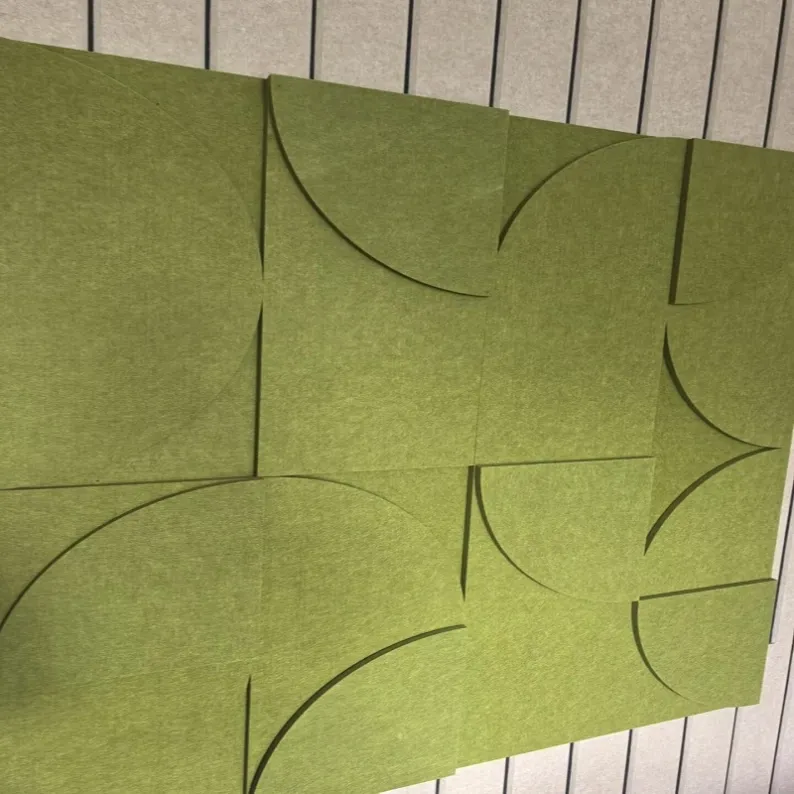
1800gsm vs 2400gsm PET Felt Panels: Which Density Should You Choose?
When buying PET felt panels, one question comes up quite often:
“Should I choose 1800gsm or 2400gsm?”
At first, it sounds like a simple question.
A higher number may look like a better product. But in real production, it is not that simple.
Different PET felt panels are designed for different applications. A lower GSM panel may be a practical choice for one project, while a higher GSM panel may be more suitable for another.
There is also something many buyers do not know:
Different factories do not necessarily keep the same PET felt specifications in stock.
Their available GSM, thickness and stock levels can be influenced by their production equipment, manufacturing process, customer base and historical orders.
So instead of asking only:
“Which GSM is better?”
It is more useful to ask:
“Which GSM is suitable for my application?”
First: What Does GSM Mean for PET Felt?
In the PET felt industry, buyers often use GSM to describe the material “density”.
Strictly speaking, GSM means grams per square meter, or the weight of the material per unit area.
For example:
- 1800gsm = approximately 1800 grams per square meter
- 2400gsm = approximately 2400 grams per square meter
When comparing PET felt panels with the same thickness, a 2400gsm panel contains more material per square meter than an 1800gsm panel.
This normally makes the panel feel firmer and heavier.
However, GSM should not be considered separately from thickness.
A 9mm 2400gsm panel and a 24mm 2400gsm panel are obviously not the same product.
So when discussing PET felt specifications, it is better to consider:
thickness + GSM + application
together.
1800gsm vs 2400gsm: What Is the Practical Difference?
Here is a simple comparison.
| 1800gsm PET Felt | 2400gsm PET Felt |
|---|---|---|
Firmness | Generally softer | Generally firmer |
Weight | Lower | Higher |
Handling | Easier and lighter | More substantial |
CNC processing | Suitable for many designs | Often provides a firmer material for processing |
Surface feeling | Softer | More compact and firm |
Material cost | Lower | Higher |
Suitable applications | Projects where flexibility and cost matter | Applications requiring a firmer, more substantial panel |
Best choice | Depends on the project | Depends on the project |
This is a general comparison.
The actual result still depends on the PET felt manufacturing process, thickness, fiber structure and cutting method.
1. Is 2400gsm Better Than 1800gsm?
Not automatically.
This is probably the most important point of this article.
A common purchasing habit is:
Higher GSM = higher quality.
But this is not always correct.
If a customer needs a lightweight and more economical PET felt panel for a specific application, using 2400gsm may simply add material cost without providing a meaningful benefit.
On the other hand, if the panel needs to feel firmer, maintain its shape better, or be processed into a more substantial finished product, 2400gsm may make more sense.
The right specification is the one that matches the application.
Higher GSM is not a replacement for proper material selection.
2. What About Hardness and Panel Firmness?
When comparing PET felt panels with the same thickness, 2400gsm will generally feel firmer than 1800gsm.
This can be useful when the panel needs to:
- maintain a stable shape
- be handled frequently
- be CNC cut
- become part of a furniture component
- have a more substantial surface feeling
For example, if a PET felt panel will be used as a furniture component, the manufacturer may prefer a material that feels firm enough during processing and assembly.
But if the final product does not require this level of firmness, a lower GSM may be more economical.
Again, the application should come first.
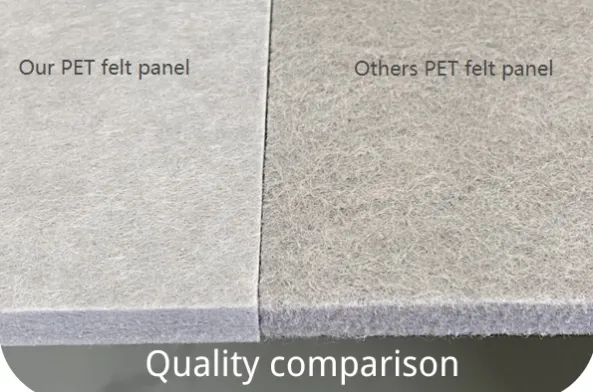
3. Does Higher GSM Make CNC Cutting Better?
Not necessarily.
CNC cutting performance depends on several factors:
- thickness
- GSM
- material structure
- blade condition
- cutting design
- panel positioning
- machine setup
A firmer PET felt panel can sometimes be easier to control during certain cutting processes.
But this does not mean that every 2400gsm panel will automatically produce a better CNC result than every 1800gsm panel.
For a custom CNC project, the actual material should be tested with the final design.
This is especially important when the design contains:
- narrow slots
- small holes
- detailed patterns
- repeated cuts
- deep or partial cuts
4. Does 2400gsm Have a Better Surface?
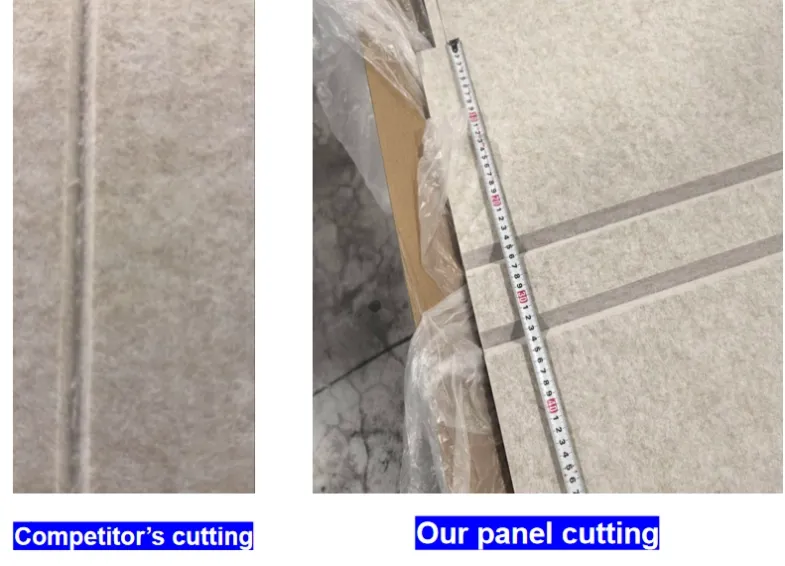
A higher GSM panel can have a firmer and more compact feeling, but surface quality is not determined by GSM alone.
Surface appearance can also be influenced by:
- fiber quality
- manufacturing process
- pressing conditions
- thickness
- material handling
- production consistency
This is important because sometimes a buyer compares two PET felt samples and assumes that the heavier one must have the better surface.
That is not always the case.
A good PET felt panel should have a suitable combination of material structure, surface appearance and dimensional stability for the intended application.
5. What About Acoustic Performance?
This is another area where it is easy to oversimplify.
2400gsm does not automatically mean better sound absorption than 1800gsm.
Acoustic performance depends on more than GSM.
Important factors include:
- panel thickness
- material structure
- installation method
- air gap
- coverage area
- frequency range
For example, installation with an air gap can change the acoustic performance compared with direct mounting.
So if the main purpose of the project is acoustic treatment, buyers should not choose a panel only by comparing GSM.
The complete acoustic solution needs to be considered.
You can also read our detailed guide on PET acoustic panel NRC performance and installation impact for more information.
6. Why Do Different Factories Stock Different GSM?
This is something we often find confusing for buyers.
One factory may tell you:
“This is our standard GSM.”
Another factory may offer a completely different specification.
This does not necessarily mean one factory is wrong.
Different manufacturers may have different:
- production equipment
- production processes
- material structures
- customer requirements
- historical order patterns
For example, one factory may regularly produce 9mm PET felt at 1400gsm and 12mm at 2000gsm.
Another factory may mainly produce 9mm at 1800gsm and have little demand for 12mm.
Their inventory strategy can therefore be very different.
The specifications they keep in stock often reflect what their customers buy most frequently.
A factory's standard stock should not automatically be treated as the industry standard.
7. Why We Keep Different Specifications in Stock
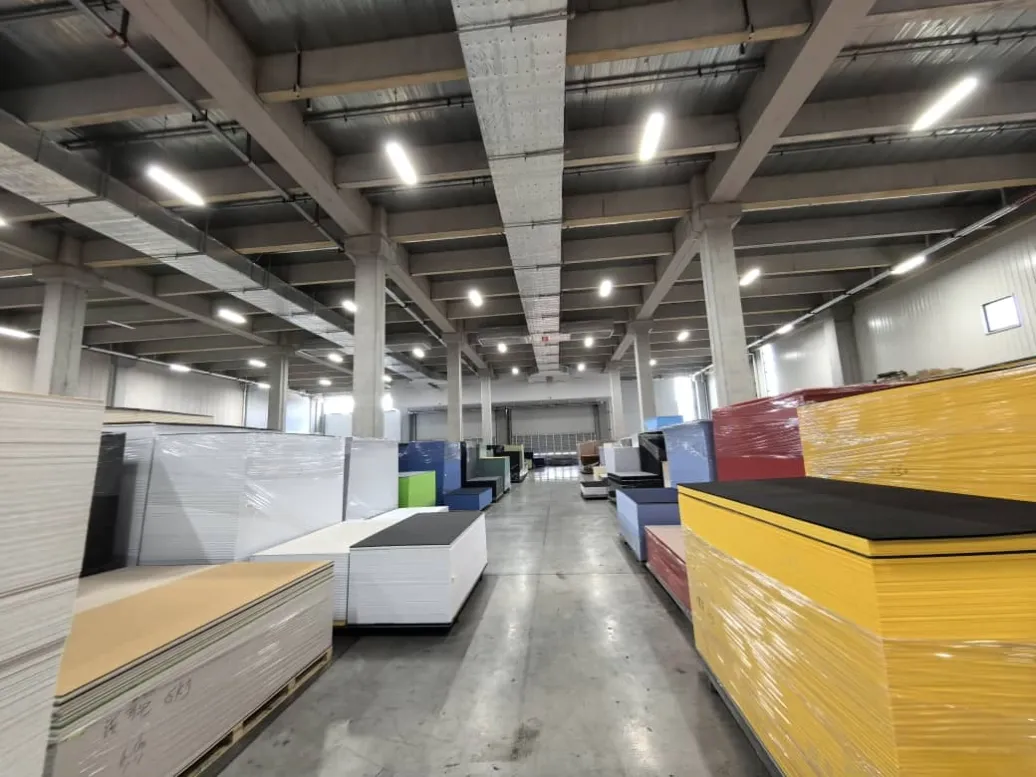
For our production, we have developed our regular stock based on the products and applications we have supplied over time.
For 9mm PET felt panels, we regularly keep 1500gsm and 2000gsm specifications in stock.
For 24mm PET felt panels, 2400gsm is a regular stock specification.
This is not because we believe these are the only correct GSM options.
It is mainly because these specifications have been useful for a wide range of applications and have been ordered regularly by our customers.
For us, keeping these materials available also makes it easier to respond to regular orders and some customized projects without producing every specification from zero.
This is one reason why it is useful for buyers to ask a supplier:
“What do you normally keep in stock?”
rather than only:
“What is your highest GSM?”
8. Why 2000gsm and 2400gsm Can Be Practical Choices
For many applications, buyers are looking for a balance.
They do not necessarily want:
- the lightest material
- the heaviest material
- the cheapest material
- the most expensive material
They want something that works well enough while keeping the overall project cost reasonable.
This is where commonly used specifications such as 2000gsm and 2400gsm can make sense.
They can provide a useful balance between:
- material firmness
- processing
- surface appearance
- handling
- cost
For example, 24mm PET felt at 2400gsm is a regular specification we keep in stock because this combination has broad practical use.
But again, this does not mean 2400gsm should be used for every project.
9. When Might 1800gsm Make More Sense?
1800gsm can be worth considering when:
- the application does not require a very firm panel
- lower material weight is preferred
- cost needs to be controlled
- the design does not require a substantial board feeling
- the selected thickness and application work well with this GSM
For some decorative or acoustic applications, there may be no practical reason to move to a higher GSM simply because the number is higher.
If the lower GSM already meets the application requirements, it can be the more economical choice.
10. When Might 2400gsm Make More Sense?
2400gsm may be a better option when:
- a firmer panel is preferred
- the panel will be handled or processed frequently
- the application needs a more substantial material feeling
- CNC processing is involved
- the project requires a balance between material performance and cost
It can be particularly practical when a customer wants a specification that is widely used and relatively easy to source from an experienced manufacturer.
But we still recommend checking the actual application before confirming the material.
11. Don't Compare GSM Without Comparing Thickness
This point is easy to overlook.
Suppose one supplier offers:
9mm – 1800gsm
and another offers:
24mm – 2400gsm
It would not make much sense to say:
“The 2400gsm panel is better.”
They are different thicknesses and may be designed for completely different applications.
Even when two panels have the same thickness, other factors can still affect the final result.
When comparing suppliers, try to compare:
same thickness + same GSM + same application
before making a conclusion.
This makes the comparison much more meaningful.
12. What Should You Ask Your PET Felt Supplier?
If you are not sure whether 1800gsm, 2000gsm, 2400gsm or another specification is suitable, you do not need to guess.
You can simply tell your supplier:
- panel thickness
- final application
- whether CNC processing is required
- approximate quantity
- whether the panel will be visible
- whether cost or firmness is more important
The supplier can then recommend a suitable specification based on the actual application.
This is especially useful for furniture manufacturers and acoustic brands developing a new product.
1800gsm or 2400gsm: Which One Should You Choose?
There is no universal answer.
If you need a lighter and more economical specification, 1800gsm may be worth considering.
If you need a firmer and more substantial panel, 2400gsm may be a better fit.
But if you are choosing PET felt for an acoustic project, do not look at GSM alone.
Consider:
thickness + GSM + application + processing + installation
together.
And remember:
The best PET felt specification is not the one with the highest number. It is the one that works for your actual product and keeps the project cost reasonable.
Need Help Choosing the Right PET Felt GSM?
If you are comparing 1800gsm, 2000gsm, 2400gsm, or another PET felt specification, send us your thickness, application, quantity, and processing requirements.
We can check the specification with you and explain which option is more practical for your project.
If you are developing a custom acoustic panel or furniture component, you can also send us your drawing or product requirement.
Sometimes choosing the right material before production can save more cost than simply choosing the lowest unit price.
Contact us to discuss your PET felt specification or request samples.
More related pages: