Aug 28, 2026Services Overview
How to Use PET Felt Panels in Interior Design: Color, Shape, and 3D Form
Discover how interior designers use PET felt panels for custom acoustic designs. Explore 58+ colors, CNC-cut shapes, and 3D textures for your next project.
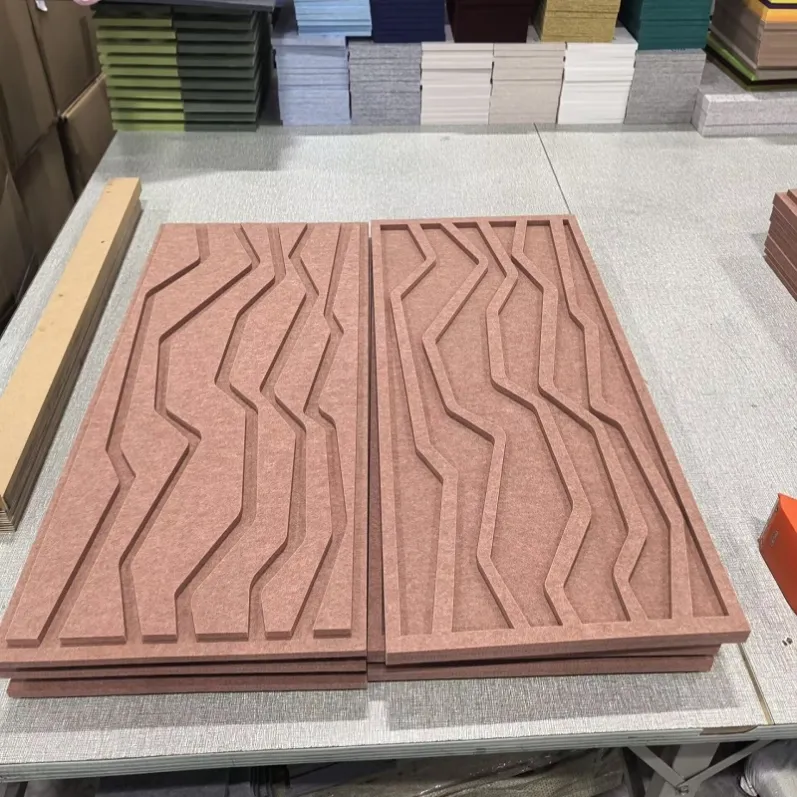
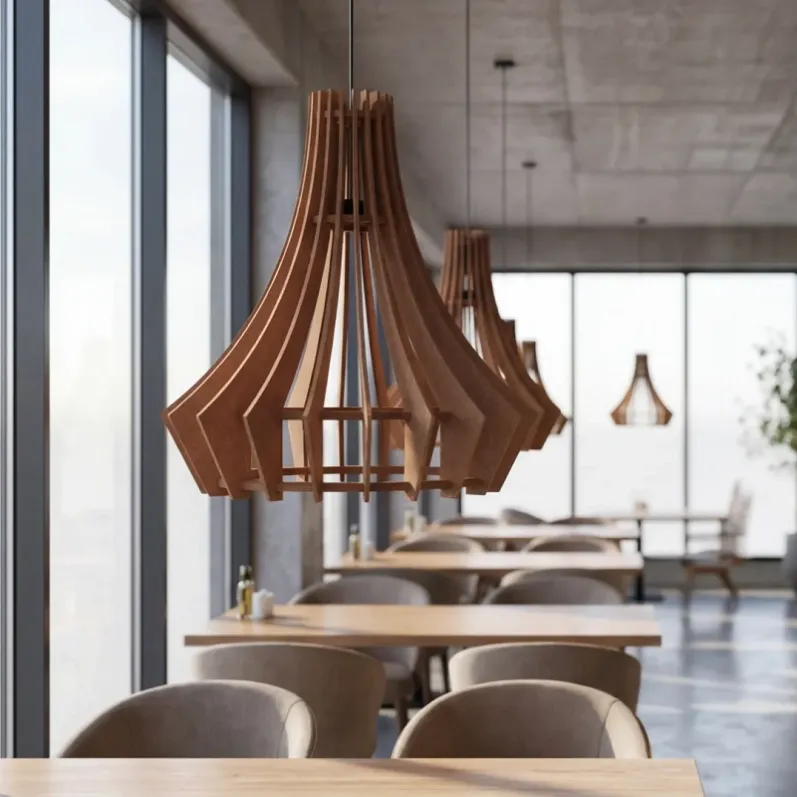
PET Felt Panels for Interior Designers: From Acoustic Function to Visual Design
When people talk about PET felt acoustic panels, the first thing that usually comes to mind is sound absorption.
This is understandable.
PET felt is widely used to help improve the acoustic environment in offices, meeting rooms, restaurants, schools and other interior spaces.
But for interior designers, acoustic performance is only one part of the story.
The material also becomes part of the visual design.
The colour, shape, thickness, surface and three-dimensional form can all change how a space looks.
This is where PET felt becomes more interesting than simply putting a flat acoustic panel on a wall.
Colour Can Become Part of the Design
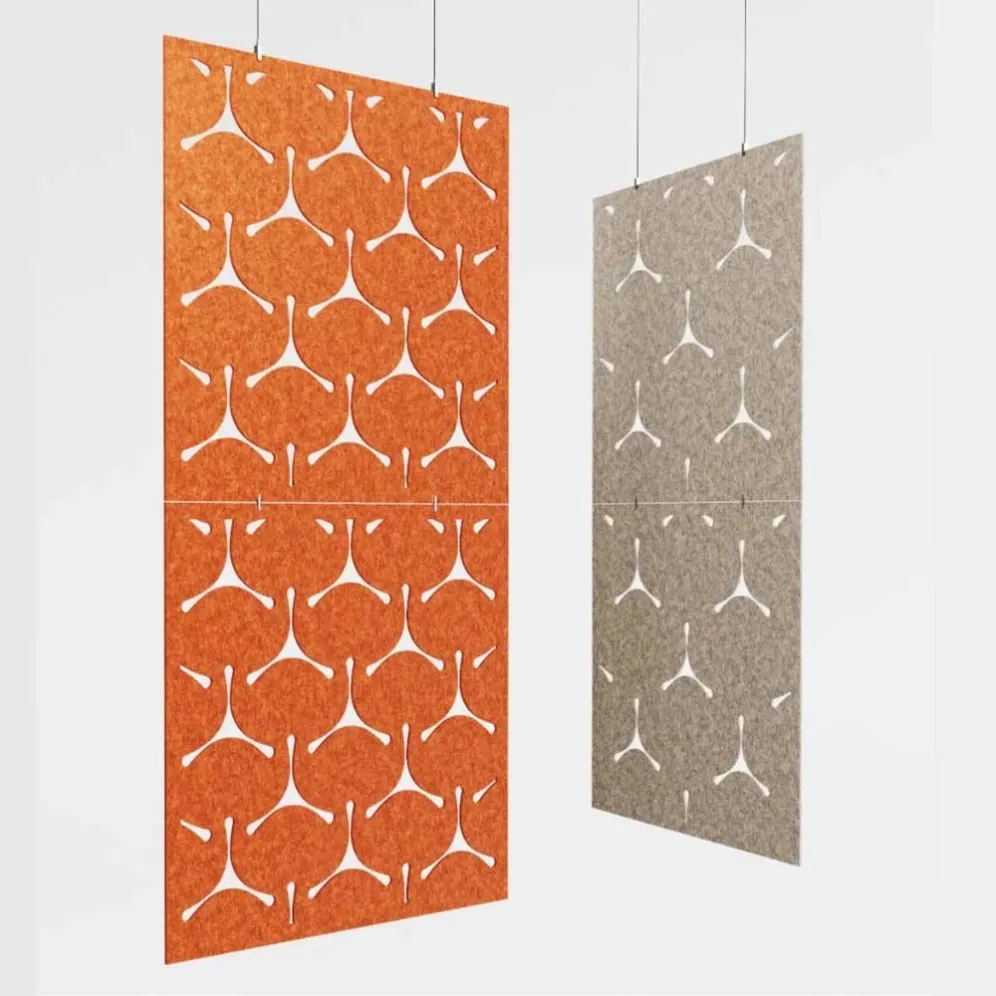
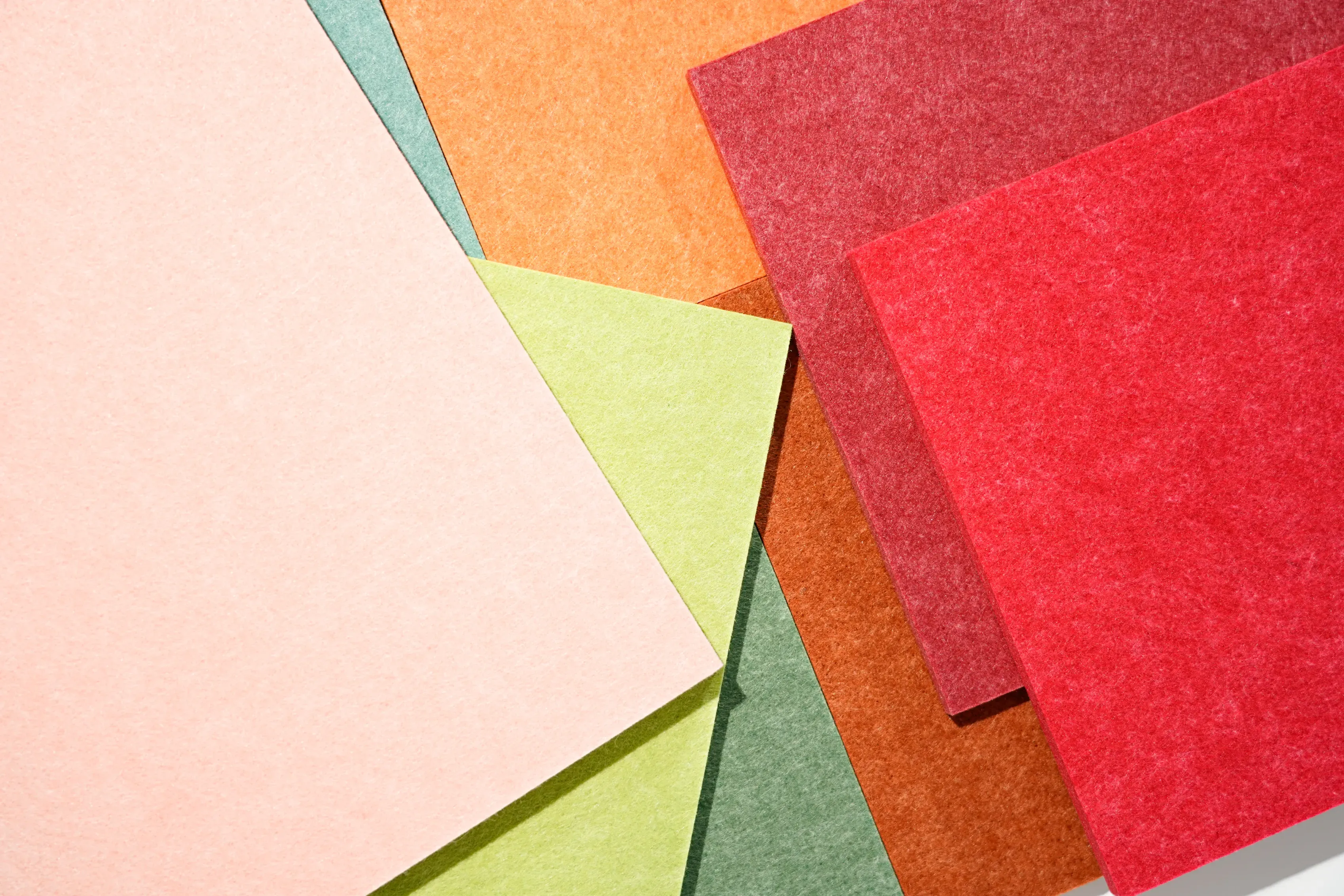
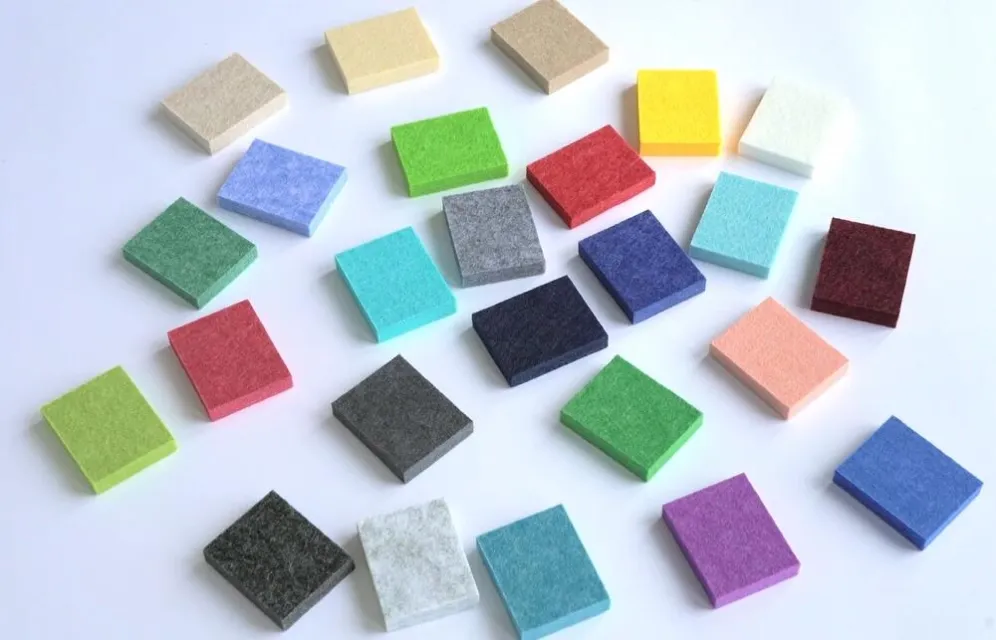
With a range of 58 standard colours, PET felt gives designers a broad palette to work with.
A grey acoustic panel may be suitable for one office project, while another project may need a stronger colour to match the furniture or brand identity.
But I think colour selection should be practical as well.
If you are working on a large project, it is better to check the actual physical colour sample before confirming the final design.
Colours can look different on a computer screen compared with a real PET felt panel.
For repeated projects, colour consistency is also important.
A design may look good on a sample, but the same colour needs to work when many panels are installed together.
So for designers, I would always recommend choosing from a physical colour card or sample rather than relying only on a digital image.
Shape Can Change a Simple Panel
A flat rectangular panel is only one option.
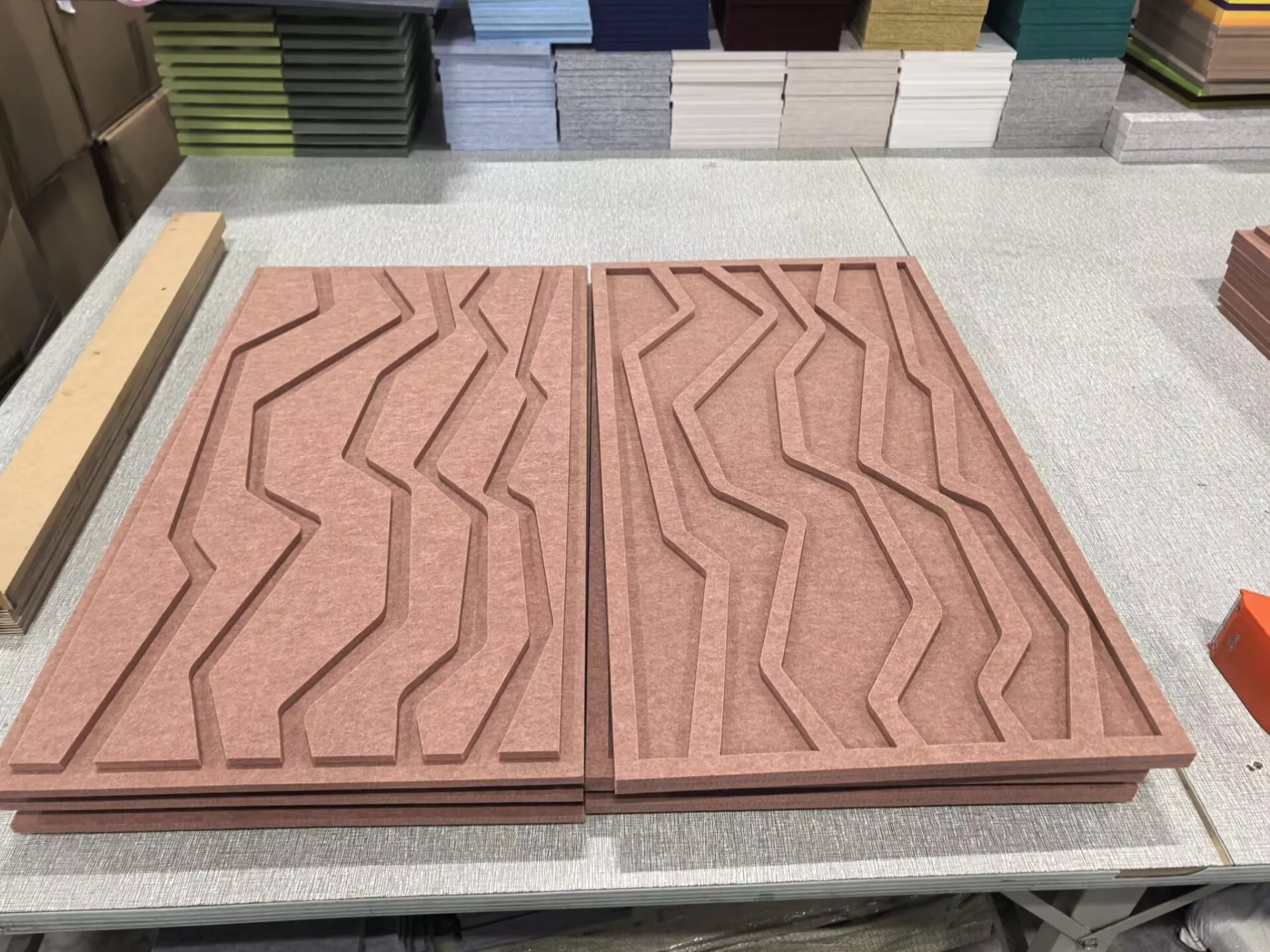
PET felt can be cut into different shapes according to the design.
For example:
- curved shapes
- geometric patterns
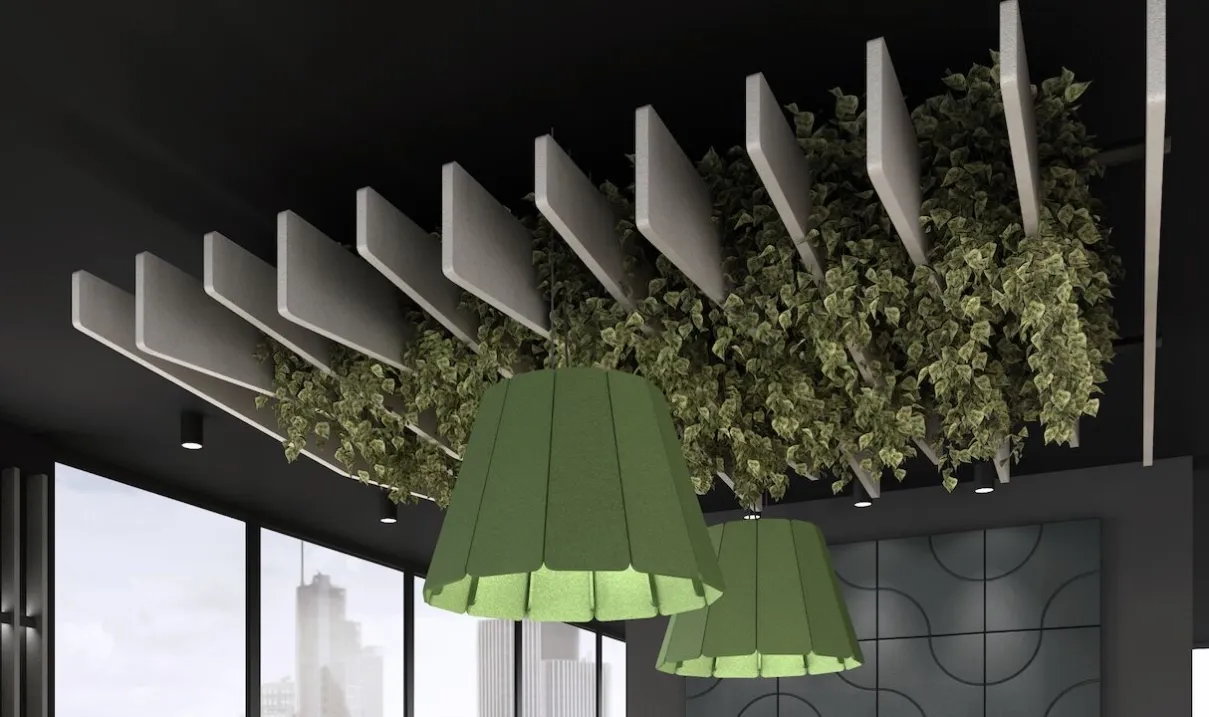
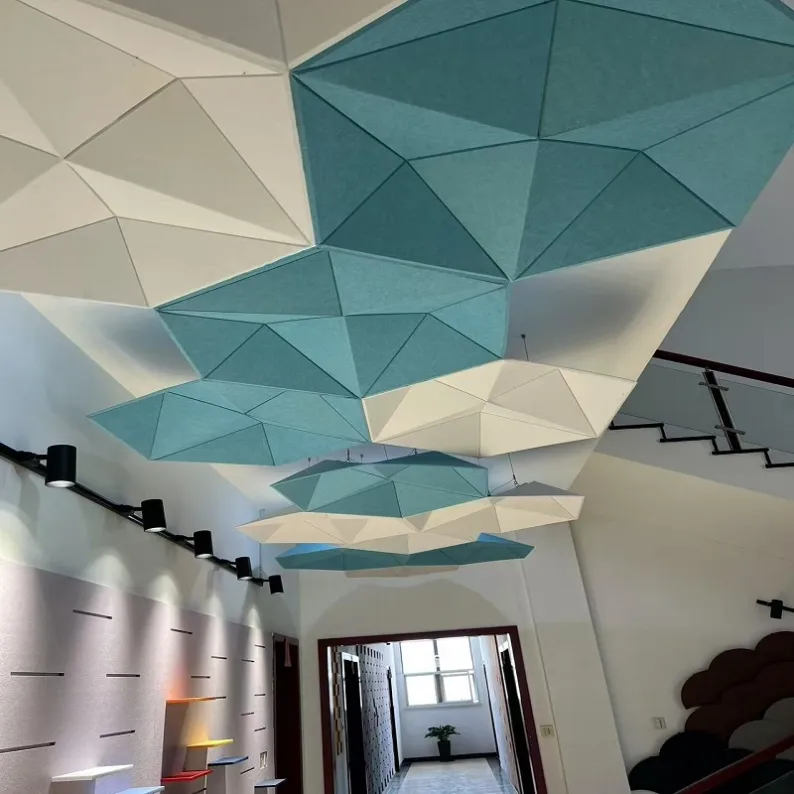
- acoustic clouds
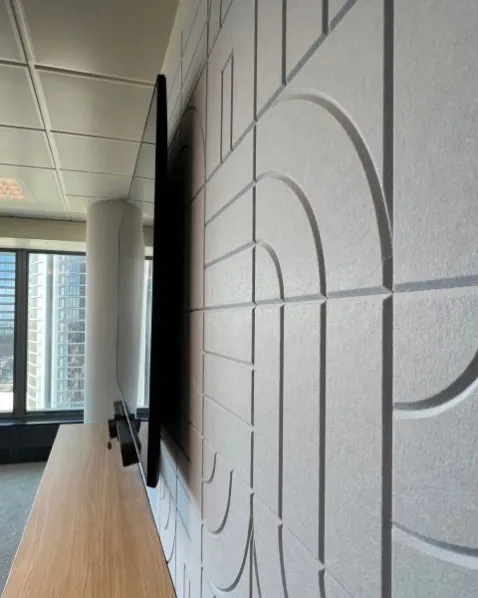
- wall features
- decorative screens
- ceiling elements
- custom graphic patterns
For interior designers, this means the acoustic treatment does not always have to look like a separate technical product.
It can become part of the interior concept.
A designer may use repeated shapes to create a pattern, combine several colours, or use different panel sizes to create a more visual wall or ceiling feature.
The acoustic material becomes part of the design instead of something that needs to be hidden.
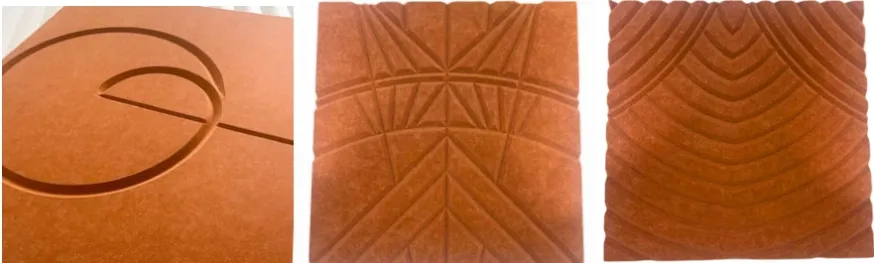
3D PET Felt Can Add More Visual Interest
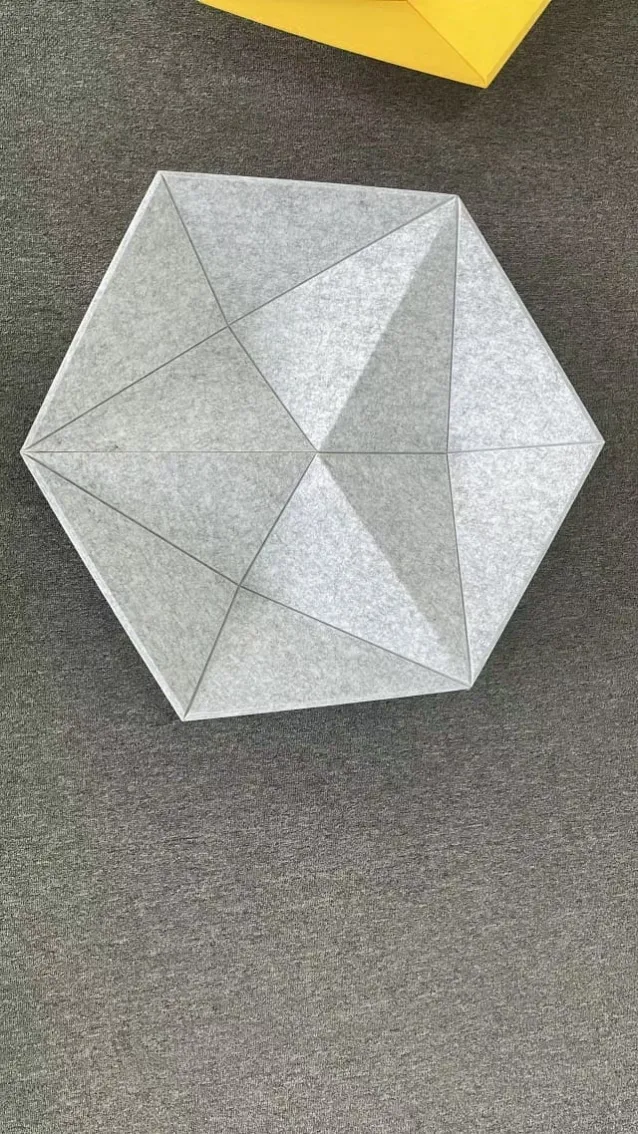
Another direction is three-dimensional PET felt.
Instead of using a completely flat surface, the panel can be shaped, folded, layered or combined with other components to create depth.
This can make a wall or ceiling more visually interesting.
3D designs can also create different surface forms and shadows as the light changes.
The material needs enough flexibility for some shapes, while other designs may require a thicker or more rigid panel.
This is why I recommend discussing the design with the supplier before finalizing the material specification.
A beautiful 3D drawing is a good starting point.
Customization Is More Than Custom Colour
When a designer asks for a customized PET felt panel, it does not always mean a special colour.
Customization can include:
- panel size
- thickness
- shape
- edge design
- V-groove
- layered construction
- 3D form
Some projects may use a standard PET felt panel with customized cutting.
Others may require a completely different shape or combination of colours.
This is why it helps to discuss the project at an early stage.
If the supplier understands the final design, it becomes easier to check whether the requested size, thickness and processing method are realistic before the project goes into production.
While focusing on shape and color, we also ensure the material meets the necessary safety standards, such as ASTM E84 Class A or EN 13501-1 B-s1,d0 fire ratings.
Design Should Start With the Material
Sometimes a designer has a very clear visual idea but has not yet selected the exact material.
This is a good time to talk with the PET felt supplier.
For example, if you know that you want a large curved acoustic feature, a 3D wall design or a complicated CNC pattern, the material thickness and processing method should be considered early.
It is much easier to make small changes to a design before production than after the panels have already been ordered.
This is especially important for large projects.
A design that works well as a small sample may need some adjustment when it becomes a large installation.
The final result depends on both the design and the material.
Don't Forget the Acoustic Function
Although this article focuses more on visual design, the original purpose of PET felt acoustic panels should not be forgotten.
A beautiful panel still needs to work for the space where it will be installed.
The required acoustic treatment depends on the room, the amount of hard surfaces, the layout and the type of noise problem.
For some projects, the designer may need more sound-absorbing surface.
For others, the PET felt may be used mainly as a decorative acoustic element.
So I think the best approach is to consider acoustic function and visual design together.
The material should look right, but it should also make sense for the space.
A Note on Sustainability
As a designer, you likely care about the environment as much as the aesthetics. Our PET felt panels are made from recycled plastic bottles (rPET). It’s a sustainable choice that helps your project meet green building standards without compromising on design.
A Sample Is Still the Best Starting Point
For customized interior projects, I strongly recommend starting with a physical sample.
You can check the real colour.
You can touch the surface.
You can see how the panel looks under actual lighting.
You can also test the proposed shape or cutting method if needed.
This can help designers and suppliers identify problems before the project moves to larger quantities.
It also makes communication easier.
Sometimes a designer says “dark grey”, but the supplier may understand a different colour.
Sometimes a drawing looks simple, but the actual panel needs a different thickness or cutting method.
A physical sample can make these differences clear very quickly.
PET Felt Gives Designers More Freedom
For interior designers, I think the most interesting part of PET felt is not only that it can absorb sound.
It is that the material can also become part of the visual language of the interior.
Colour can create a mood.
Shape can create a pattern.
3D forms can create depth.
Customized cutting can turn a standard sheet into something specific to the project.
At the same time, good design still needs to respect the actual properties of the material.
That is why I prefer to discuss a project before production rather than simply quote a price from a specification list.
If you are an interior designer or design company working on a project that includes PET felt acoustic panels, send us your design, preferred colour, thickness, panel size or even a simple sketch.
We can review the requirements with you and discuss what can be produced from the PET felt material.
You do not need to have every detail finalized before contacting us.
Sometimes, an early discussion about the material can help make the design easier to produce.
If you have a wall, ceiling, screen or 3D acoustic concept in mind, feel free to send it to us. We are happy to look at the idea with you and discuss the practical PET felt solution.
More related pages:
📩 Send us your project drawings or specifications, and we will respond with a clear quotation and production suggestion within 24 hours.
Email: info@hengmy.com