Sep 14, 2026Services Overview
How to Compare PET Felt Suppliers When the Price Is Different
Comparing PET felt suppliers? Learn which specifications, quality, processing and total costs to check before choosing the lowest quotation.

How to Compare PET Felt Suppliers When the Price Is Different
When a customer says:
“Your price is higher than another supplier.”
I think this is a very normal question.
If I were the buyer, I would ask the same thing.
For PET felt panels, two suppliers may quote different prices for what looks like the same product.
Both may say:
- 12mm PET felt
- 2400gsm
- same sheet size
- same color
- similar appearance
So why is one quotation higher?
And more importantly:
Are you really comparing the same material?
Price is only one part of the comparison
When purchasing PET felt, it is easy to put two prices next to each other.
Supplier A: $XX per sheet
Supplier B: $XX per sheet
The lower number naturally looks better.
But before making the decision, I would suggest checking a few more things.
For example:
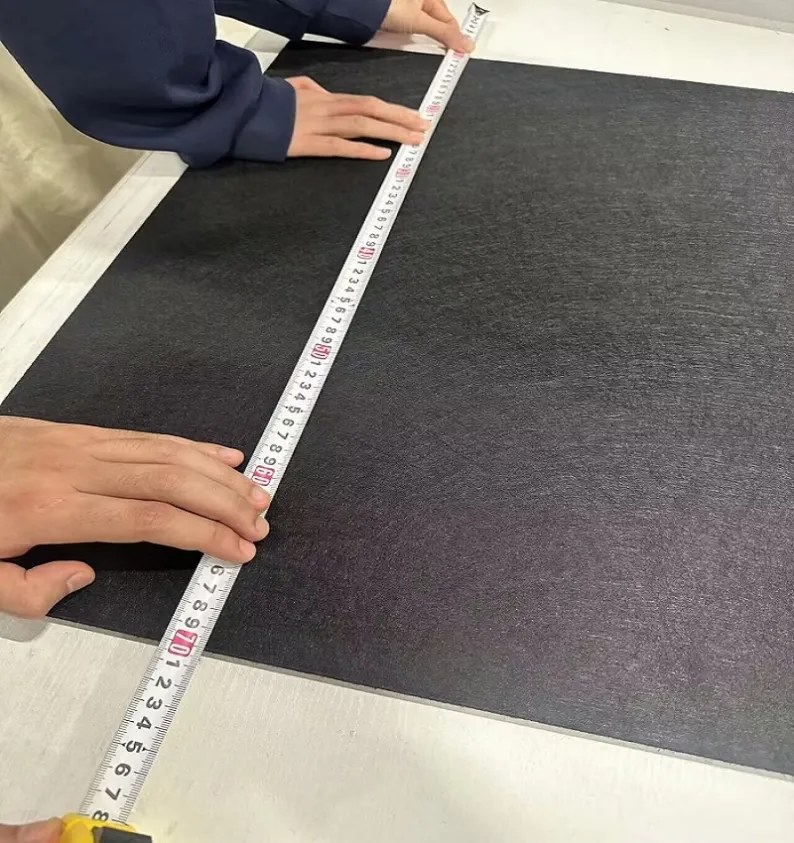
- Is the actual thickness the same?
- Is the GSM the same?
- Is the sheet size exactly the same?
- Is the construction the same?
- Is the material hardness suitable for your application?
- Is the quality consistent from batch to batch?
- Does the supplier have the test documentation you need?
- Can the material be supplied within your required lead time?
- Will the material work well with your CNC or other processing?
These details may not be obvious from a quotation.
But they can affect the real cost after you receive the material.
Thickness and GSM should be checked together
A supplier may tell you:
“Our PET felt is 2400gsm.”
But GSM should not be considered alone.
Thickness and GSM need to be looked at together.
For example, 2400gsm is one of our regular PET felt specifications for many applications, including 12mm material.
But it does not mean that 2400gsm is automatically suitable for every thickness.
For a 24mm panel, for example, construction becomes important.
A laminated 24mm panel made from two 12mm / 2400gsm layers has a different structure from a single-layer 24mm PET felt panel.
Our regular single-layer 24mm specification is around 4300gsm.
So if two suppliers quote “24mm PET felt”, it is worth asking:
Is it single-layer or laminated?
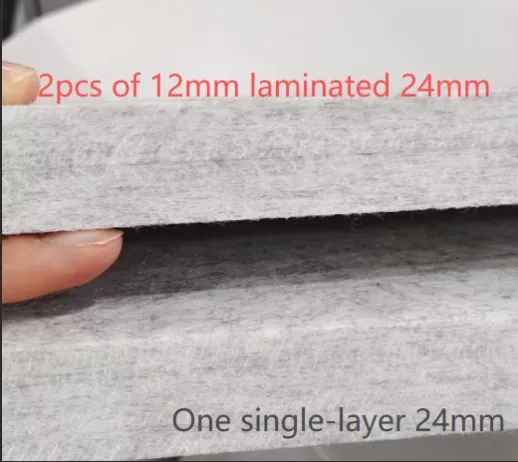
This is a small question, but it can make a big difference when comparing quotations.
The cheapest material may not be the cheapest solution
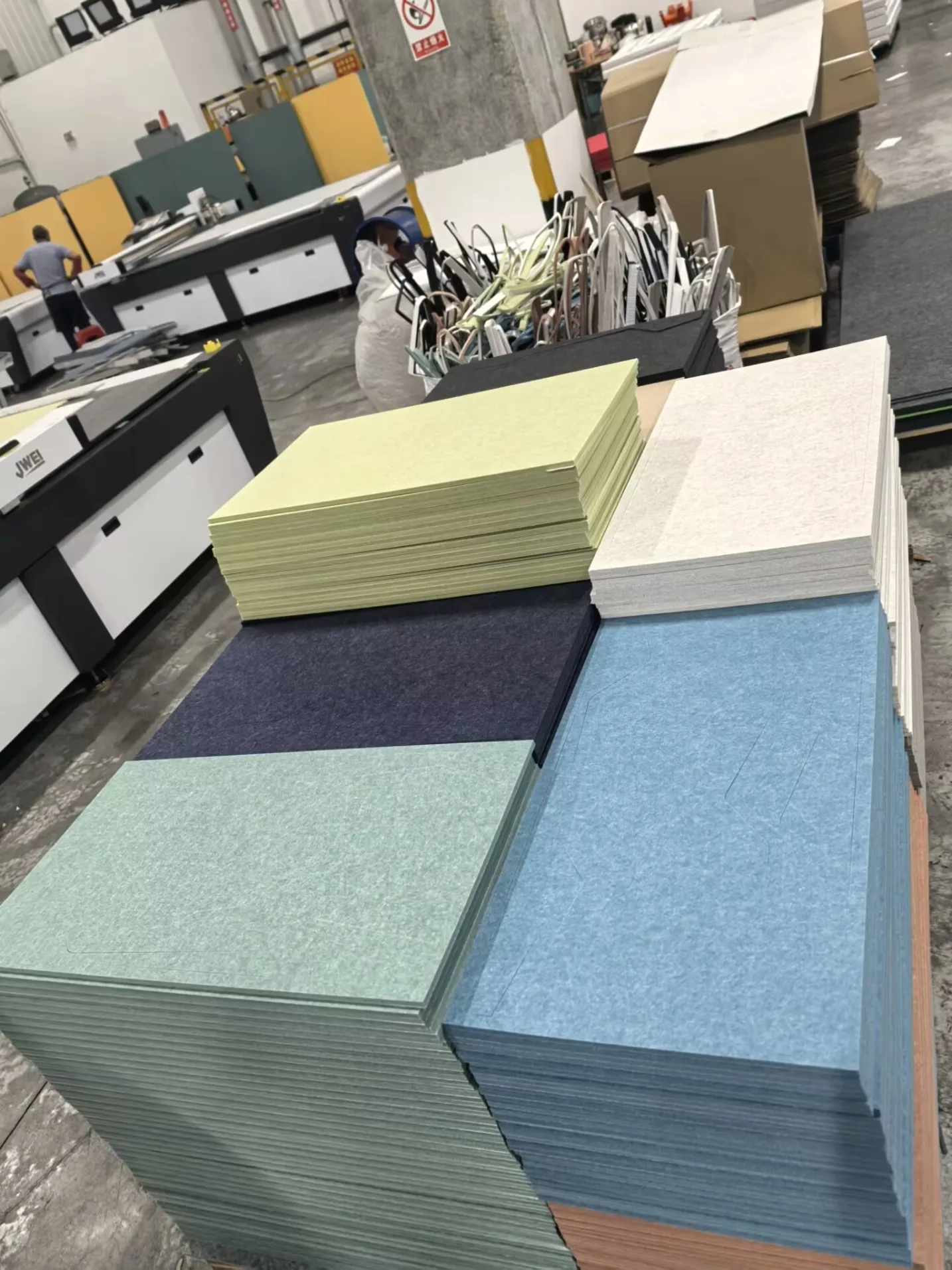
For example, some customers buy large PET felt sheets and then use CNC machines to make:
- acoustic panels
- desk screens
- room dividers
- furniture components
- decorative shapes
- custom acoustic products
In this situation, the material is not the finished product.
The customer also needs to process it.
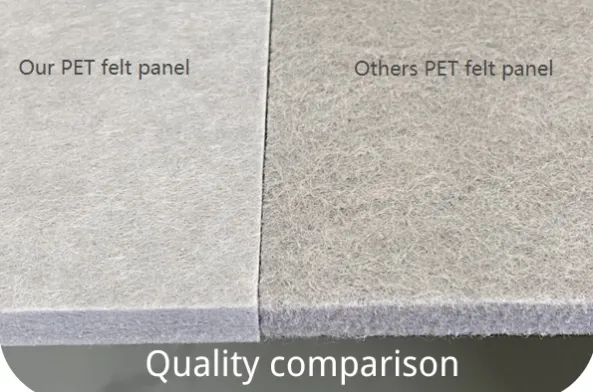
If the material does not cut cleanly, moves during CNC cutting, or behaves differently from batch to batch, the low material price may not save money in the end.
CNC results can also depend on the machine, blade, cutting parameters and design.
So we normally prefer customers to test the actual PET felt sample before placing a large order, especially for more complicated processing.
This is much more useful than simply saying:
“Our GSM is higher, so our material is better.”
Higher GSM does not automatically mean better for every application.
Total cost is more important than unit price
Another point that is sometimes missed is transportation.
A PET felt quotation is normally only one part of the purchasing cost.
The final cost can also include:
- inland transportation
- export handling
- sea freight
- import costs
- packaging
- processing loss
- rejected material
- additional production time
This is why I prefer to understand the customer's actual purchasing situation before simply saying that one price is better than another.
Sometimes a standard sheet size is more practical than a custom size.
Sometimes a stock specification is enough and there is no need to develop a new one.
Sometimes spending a little more on the material can make processing easier.
And sometimes the lower-priced option really is the better choice.
There is no fixed answer.
What should you ask a PET felt supplier?
If you are comparing several suppliers, I would suggest asking each supplier for the same information.
At minimum:
1. Thickness
Confirm the actual thickness, not only the product name.
2. GSM
Check the material weight and understand whether the number is actual or only a nominal specification.
3. Sheet size
Make sure the dimensions are the same.
4. Construction
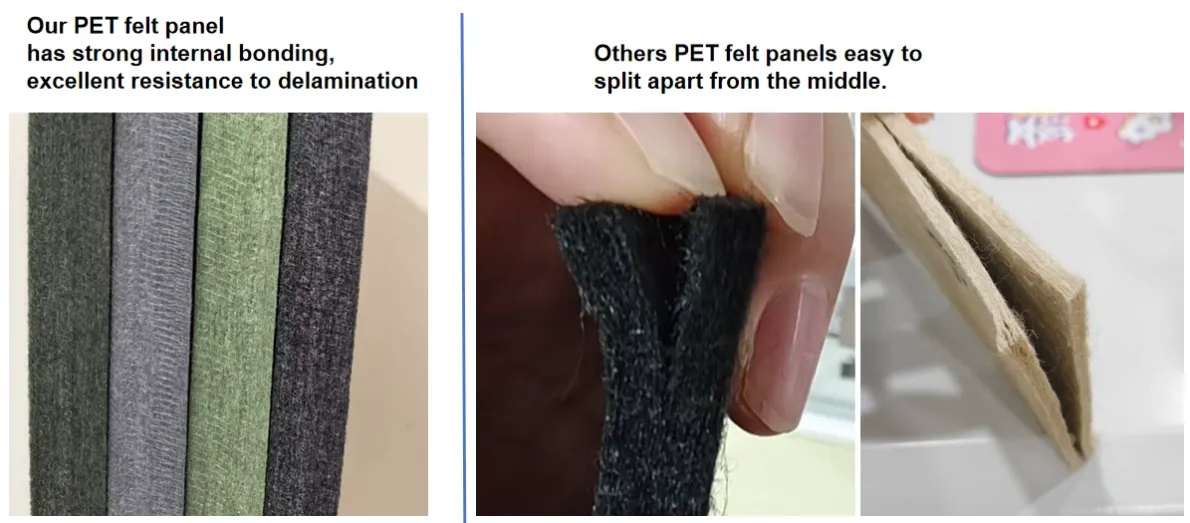
Especially for thicker PET felt, ask whether it is single-layer or laminated.
5. Testing
If your market or project has fire or acoustic requirements, ask which specification was tested and whether the report matches the material you are buying.
6. Sample
If processing is involved, test the actual material before a large order.
7. Lead time and availability
A lower price is not very useful if the material cannot arrive when you need it.
This gives you a much clearer comparison than looking at the price alone.
A good supplier should help you compare
From the supplier side, of course we want to sell our products.
But I don't think every quotation should become a discussion about how to make the customer accept a higher price.
Sometimes the better question is:
“What are you actually comparing?”
If the specifications are different, the price comparison is not fair yet.
If the specifications are the same, then the supplier should be able to explain what is included and why the price is different.
And if there is no meaningful difference, the customer may simply have found a better price.
That is also part of a normal B2B purchasing decision.
For us, the goal is not to say that our PET felt is always the cheapest or always the best.
The goal is to help customers choose a specification that makes sense for their application, processing and business.
Because a good purchasing decision is not always about finding the lowest price.
It is about finding the right material at the right total cost.
Comparing PET felt suppliers?
If you are currently comparing PET felt quotations and are not sure whether the suppliers are offering the same specification, you can send us the details you have.
You can simply send:
thickness + GSM + sheet size + color + quantity + application
If there is a drawing or processing requirement, you can send that as well.
We can check the specification with you and point out which details are worth comparing before you make the decision.
Sometimes the best way to reduce cost is not to ask for a lower price, but to make sure you are buying the right material in the first place.
More related pages:
📩 Send us your project drawings or specifications, and we will respond with a clear quotation and production suggestion within 24 hours.
Email: info@hengmy.com