Aug 24, 2026Services Overview
Why 2400gsm PET Felt Is a Popular Choice for Custom Acoustic Panels
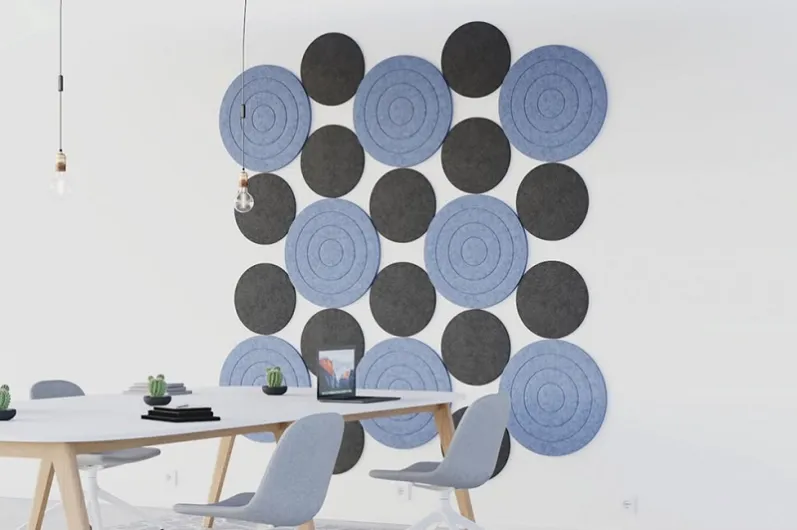
2400gsm PET felt offers a practical balance of firmness, surface quality, CNC processing and cost for many custom acoustic panel applications.
Why 2400gsm PET Felt Is a Popular Choice for Custom Acoustic Panels
When customers ask us about PET felt for a custom acoustic panel, one specification often comes up:
2400gsm.
This does not mean 2400gsm is the best choice for every PET felt panel.
It is not.
PET felt is available in different thicknesses and GSM levels, and the right specification depends on the application, processing method and budget.
But in many custom projects, 2400gsm can provide a useful balance between material firmness, appearance, processing and cost.
This is why it has become one of the specifications we regularly work with.
So, what makes 2400gsm practical for custom PET acoustic panels?
First, What Does 2400gsm Mean?
In the PET felt industry, GSM usually means grams per square meter.
A 2400gsm PET felt panel weighs approximately 2400 grams per square meter before considering any other construction or processing.
GSM should not be looked at separately from thickness.
For example:
- 9mm / 2400gsm
- 12mm / 2400gsm
- 24mm / 2400gsm
are different products with different physical characteristics and applications.
This is why we normally discuss thickness + GSM + application together when recommending a PET felt specification.
If you are comparing different GSM levels, our guide How to Choose PET Felt Panel Density goes into this in more detail.
1. 2400gsm Gives the Panel a Firmer Feeling
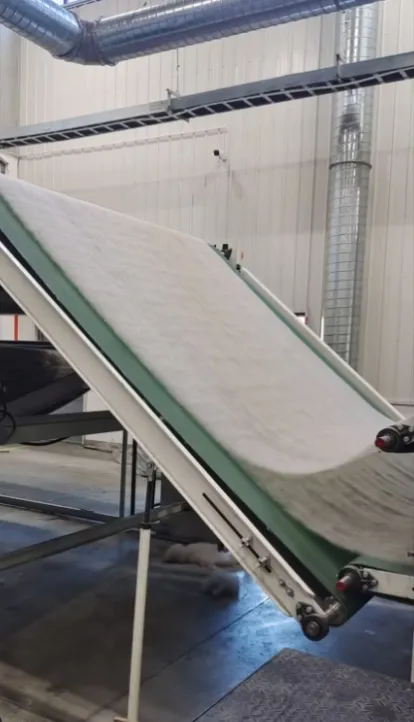
One of the most noticeable differences is the material feeling.
Compared with a lower GSM PET felt of the same thickness, 2400gsm generally feels firmer and more substantial.
This can be useful when the PET felt panel needs to:
- keep its shape
- be handled during installation
- be CNC cut
- become part of a furniture component
- have a more solid surface feeling
For a simple wall-mounted acoustic panel, this difference may not always be important.
But for a customized product, the physical feeling of the material can become part of the final result.
For example, if a PET felt panel will be cut into a specific shape and installed as a visible design element, a firmer material can be easier to handle and may give the finished product a more substantial appearance.
2. It Can Be a Good Balance for CNC Processing
CNC cutting is one of the reasons 2400gsm is often considered for custom PET felt panels.
PET felt is a relatively flexible fiber material. When cutting customized shapes, the material needs to stay stable enough during processing.
A firmer panel can be helpful for some CNC applications.
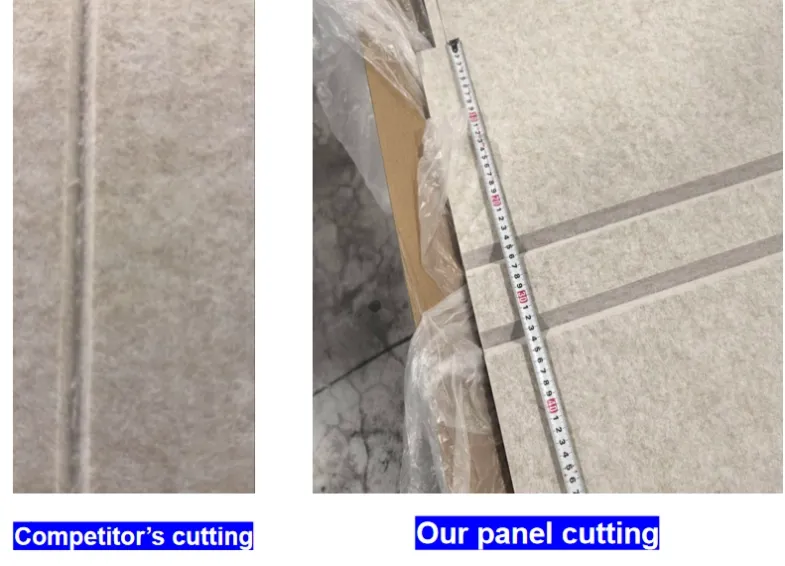
Edge quality is also important when the finished panel will be visible. See our guide to PET felt CNC cutting problems such as flaking and burrs.
This does not mean that 2400gsm automatically produces better CNC results.
CNC cutting also depends on:
- thickness
- fiber structure
- blade condition
- cutting design
- material positioning
- machine setup
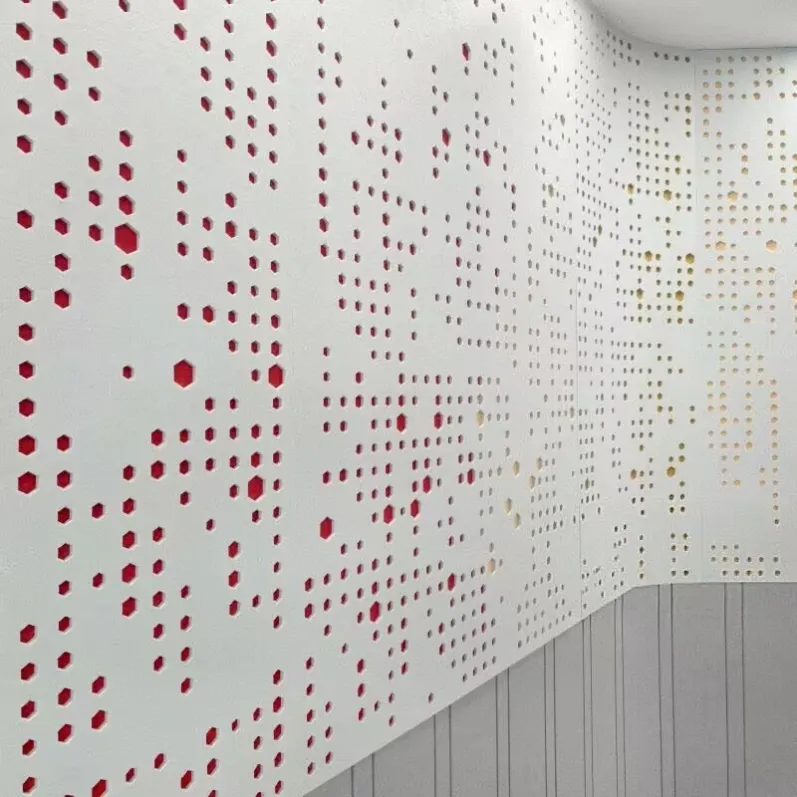
But when a project includes complicated shapes, holes, slots or furniture components, material firmness becomes one of the factors worth considering.
For more information, see our guide:
3. The Surface Can Feel More Compact
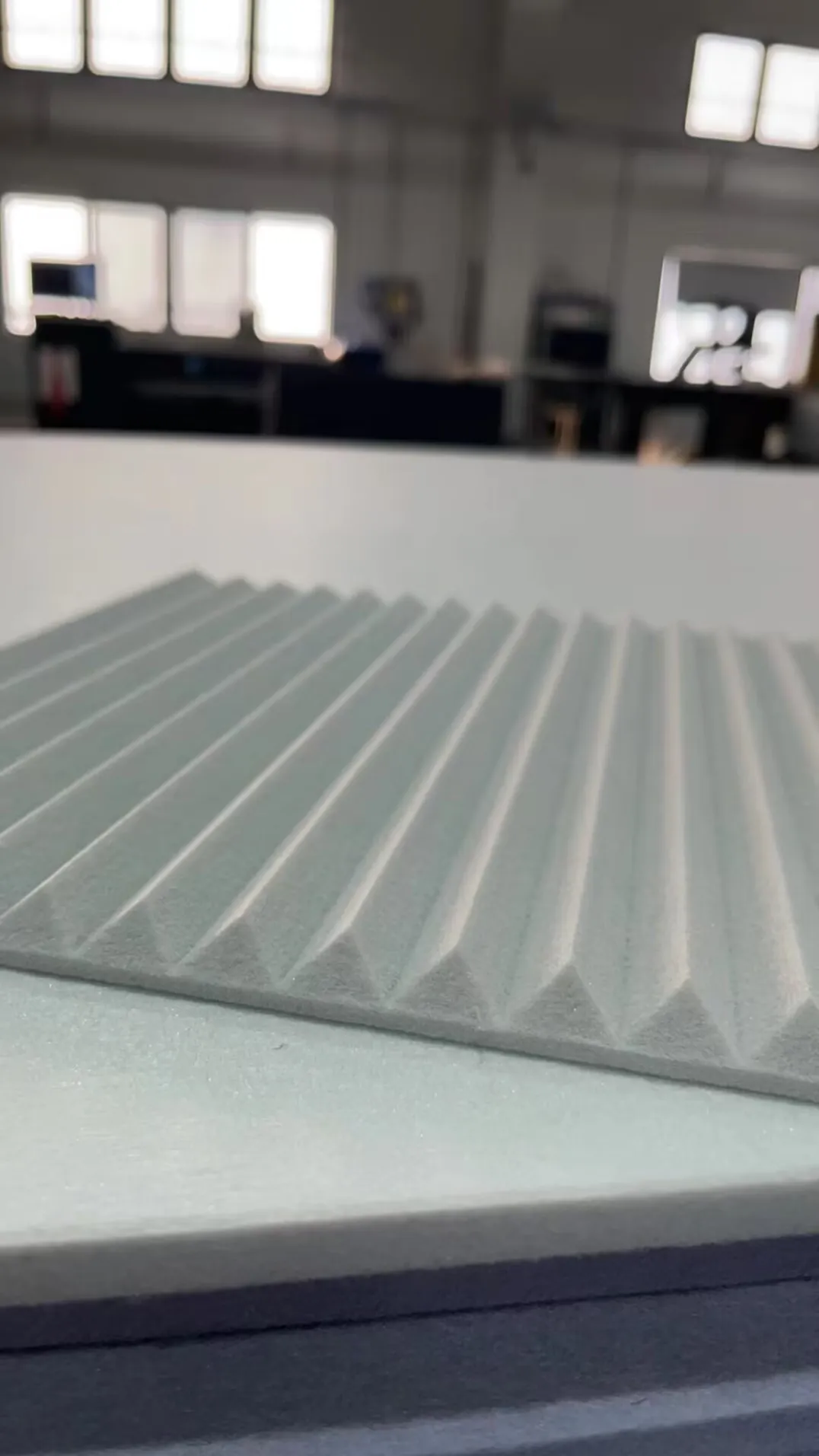
Another reason customers may prefer 2400gsm is the surface feeling.
A higher GSM PET felt can feel more compact and firm compared with a lower GSM material of the same thickness.
This can be useful for visible interior products.
For example:
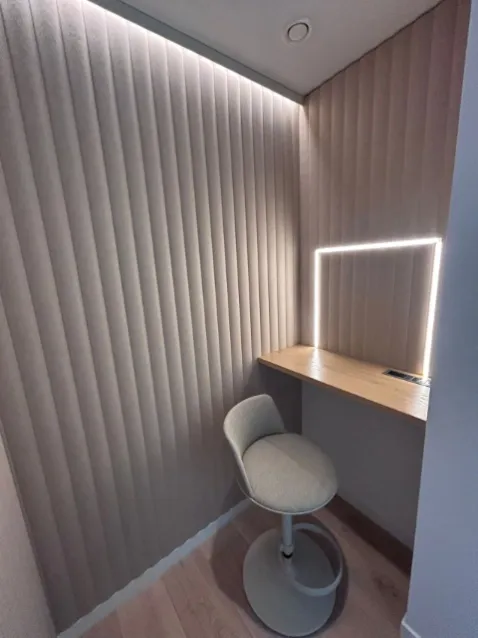
- acoustic wall panels
- office partitions
- furniture screens
- decorative acoustic panels
- custom acoustic shapes
However, surface quality is not determined by GSM alone.
Two 2400gsm panels from different manufacturers may not look or feel exactly the same.
Fiber quality, production process, pressing conditions, thickness tolerance and surface control can all affect the final result.
So when comparing suppliers, it is better to compare actual samples rather than only comparing the GSM number.
4. 2400gsm Works Well for Many Custom Shapes
Custom acoustic panels are often different from standard flat rectangles.
Customers may ask for:
- special shapes
- CNC-cut patterns
- holes and slots
- curved elements
- furniture components
- 3D designs
- custom dimensions
When a material needs to be cut, handled and installed as a finished component, a certain level of firmness can be useful.
This is one reason we often see 2400gsm used in customized PET felt products.
It gives the material enough substance for many applications without simply moving to a much heavier specification.
The goal is not to use the highest possible GSM.
The goal is to find a material that is firm enough for the application without adding unnecessary material cost.
5. It Can Make Sense When Cost and Material Feeling Both Matter
When buyers choose materials, they normally have to balance several things.
They want:
- good appearance
- suitable firmness
- reliable processing
- stable quality
- reasonable cost
Choosing a very low GSM only because it is cheaper may create problems if the finished product needs more firmness.
But choosing a very high GSM may also increase material cost without providing a meaningful benefit.
This is where 2400gsm can be practical for some applications.
It is often used as a middle ground between:
“I need a light and economical panel”
and
“I need a very heavy and firm panel.”
The exact balance still depends on the thickness and final application.
6. How 2400gsm Is Used in Thicker PET Felt Panels
One important point is that 2400gsm cannot simply be applied to every PET felt thickness.
For our production, 2400gsm is the highest GSM we normally produce for PET felt up to around 15mm thickness. When it comes to thicker panels such as 24mm, the material structure needs to be considered differently.
For 24mm PET felt, we currently have two main options:
1. Laminated 24mm PET Felt: 12mm + 12mm
We can laminate two layers of 12mm / 2400gsm PET felt together.
The final 24mm panel therefore has a total material weight of approximately 4800gsm.
This construction can be useful when a project requires a 24mm panel while maintaining the material characteristics of the 12mm / 2400gsm layers.
2. Single-Layer 24mm PET Felt
We also produce single-layer 24mm PET felt.
For this construction, our regular specification is around 4300gsm. Depending on the project requirements, a lower specification such as 3800gsm can also be considered.
But 2400gsm is not a suitable density for a single-layer 24mm PET felt panel.
This is a good example of why PET felt thickness and GSM should always be considered together. A GSM specification that works well for one thickness does not automatically work for a much thicker panel.
So when discussing a 24mm PET felt project, it is important to first confirm whether the customer needs:
single-layer 24mm or laminated 12mm + 12mm.
The two constructions have different material structures and should not be treated as the same product.
7. Different Factories Have Different “Standard” Specifications
This is something buyers sometimes find confusing.
One supplier may tell you:
“Our standard 9mm is 1800gsm.”
Another may offer:
“Our standard 9mm is 1500gsm.”
Another factory may mainly stock 9mm at 2000gsm.
Why?
Because different manufacturers have different production lines, processes, customer groups and historical order patterns.
Their machines and production methods may also make some specifications easier or more economical for them to produce regularly.
So when a supplier says:
“This is our standard density.”
it is useful to understand that this may mean:
“This is the specification we normally produce and keep in stock.”
It does not necessarily mean:
“This is the only standard density in the market.”
For buyers, this is an important difference.
8. Why We Keep 2400gsm in Regular Stock
For our factory, regular stock has developed from actual customer demand and the applications we have been serving over the years.
For 9mm PET felt, we regularly keep 1500gsm and 2000gsm in stock.
For 24mm PET felt, 2400gsm is one of our regular stock specifications.
We also work with other specifications when a project requires them.
The reason for keeping these materials available is simple:
They are frequently used and give us a practical starting point for many projects.
This also helps us respond faster when customers need standard material or customized processing.
For a custom project, we can then discuss whether the regular specification is suitable or whether a different GSM should be produced.
9. 2400gsm Does Not Automatically Mean Better Acoustic Performance
This point is very important.
If the main purpose of your PET felt panel is sound absorption, you should not choose the panel based on GSM alone.
Acoustic performance is influenced by several factors, including:
- thickness
- material structure
- installation method
- air gap
- coverage
- room conditions
- frequency
For example, a thicker PET felt panel with an air gap can perform differently from a thinner panel installed directly on the wall.
So:
2400gsm ≠ automatically better acoustic performance.
If your main concern is NRC, we recommend looking at the complete acoustic solution rather than comparing GSM numbers alone.
You can read more about this in our article:
And our article about:
10. 2400gsm Can Also Be Useful for 3D and Custom Processing
PET felt is not limited to flat acoustic panels.
It can also be used for:
- CNC-cut decorative panels
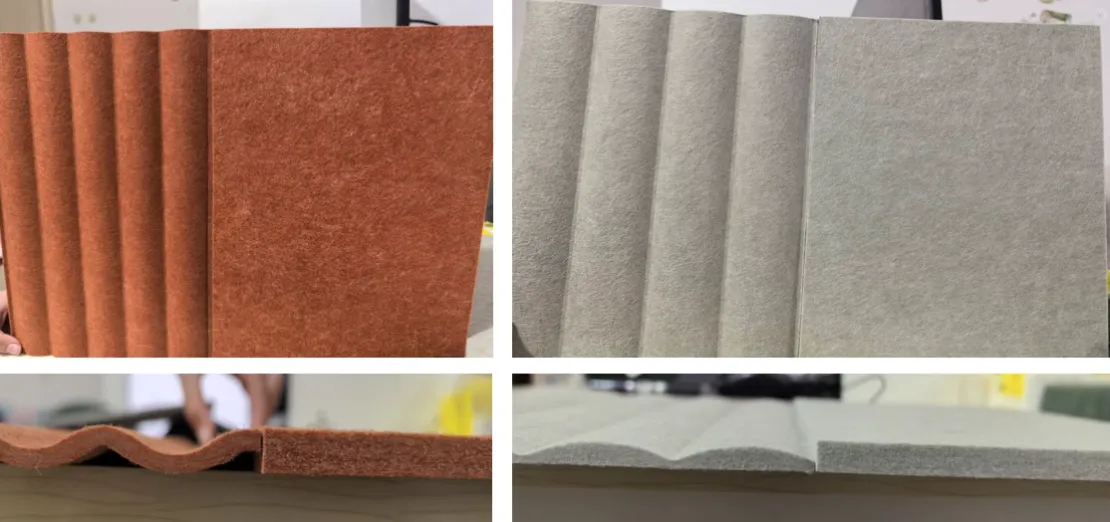
- 3D thermoformed panels
- acoustic screens
- custom furniture components
- architectural acoustic elements
For thermoforming in particular, the base PET felt material needs to be suitable for the pressing process.
For our 3D thermoforming products, we currently use different base specifications depending on the design. For example, our product information lists 9mm/2000gsm and 12mm/2400gsm as reference materials for thermoformed panels.
This is another good example of why thickness and GSM should always be considered together.
A specification that works well for one manufacturing process does not automatically become the best specification for every product.
11. When Should You Consider Something Lower Than 2400gsm?
2400gsm is not necessary for every project.
A lower GSM may make more sense when:
- the application does not require a firm panel
- lower material weight is preferred
- the project has a strict cost target
- the design is relatively simple
- the panel does not need to be handled heavily
- the selected thickness already provides enough firmness
For these projects, choosing 2400gsm simply because it is a higher number may not create enough additional value.
This is why we always prefer to understand the application first.
12. When Is 2400gsm Worth Considering?
2400gsm may be worth considering when you need a PET felt panel that is:
- relatively firm
- stable during handling
- suitable for many CNC applications
- visually substantial
- suitable for customized products
- balanced between material performance and cost
It can be particularly interesting for furniture manufacturers, acoustic brands and interior product companies developing customized PET felt products.
But the final decision should still be based on the actual thickness, design and application.
2400gsm Is a Practical Choice, Not a Universal Rule
After working with different PET felt specifications, we have found that customers often do not need the highest possible GSM.
They need a specification that works.
That may be 1500gsm.
It may be 1800gsm.
It may be 2000gsm.
Or it may be 2400gsm.
For many custom applications, 2400gsm provides a useful balance of firmness, processing, appearance and cost.
That is why it remains a popular specification for us.
But we would not recommend 2400gsm to a customer simply because the number is higher.
The right PET felt specification should be selected according to the final product, not only according to the GSM.
Need Help Choosing the Right PET Felt Specification?
If you are developing a custom acoustic panel, furniture component, CNC-cut PET felt product or 3D acoustic panel, you can send us your basic requirements.
It is helpful to include:
- required thickness
- approximate GSM, if you already have one
- panel size
- application
- estimated quantity
- CNC or other processing requirements
If you are not sure whether 2000gsm, 2400gsm or another specification is suitable, that is also fine.
We can review the application with you and suggest a practical starting specification.
If you already have a drawing or sample requirement, send it to us. We can discuss the material specification before production and help you avoid choosing a higher GSM simply because it sounds better.
Contact us to discuss your custom PET felt panel project or request samples.
We are currently preparing new sample boxes including our 2400gsm 24mm stock colors. If you need one, let us know.
More related pages:
📩 Send us your project drawings or specifications, and we will respond with a clear quotation and production suggestion within 24 hours.
Email: info@hengmy.com