Aug 11, 2026Services Overview
Why PET Acoustic Panels Sometimes Do Not Improve Room Acoustics
PET felt panels can improve room acoustics, but results depend on material selection, installation, panel quantity and room design. Learn why some projects do not achieve expected acoustic performance

Why PET Acoustic Panels Sometimes Do Not Improve Room Acoustics
When customers choose PET acoustic panels for a project, they usually expect one simple result:
The room should become quieter and more comfortable.
However, sometimes after installation, the acoustic improvement is not as obvious as expected.
Does this mean PET acoustic panels do not work?
Not necessarily.
In many real projects, the problem is not the PET panel itself. The final acoustic performance depends on several factors, including panel quantity, installation method, room structure, and the actual acoustic problem that needs to be solved.
Understanding these factors can help designers, contractors, and buyers make better decisions before starting a project.
1. Choosing the Wrong Solution for the Actual Acoustic Problem
The first thing to understand is:
Sound absorption is not the same as soundproofing.
PET acoustic panels are designed mainly for sound absorption.
They help reduce:
- echo
- sound reflection
- excessive reverberation
- uncomfortable room noise
They do not block sound transmission through walls, ceilings, or floors.
For example:
An open office with many hard surfaces may have problems with speech reflection and background noise.
PET acoustic panels can help improve the room environment.
But if the problem is noise coming from another room, the solution may require building structure improvements, not only acoustic panels.
Choosing the right product starts with understanding the real acoustic problem.
2. Installing Too Few Panels
One common situation we see is:
A customer installs a small number of acoustic panels in a large room and expects a significant change.
However, acoustic treatment works as a system.
A few decorative panels may improve the appearance of the space, but the acoustic effect may be limited if the total absorption area is not enough.
The required amount depends on:
- room size
- wall and ceiling materials
- furniture condition
- room usage
- expected acoustic target
For example:
A meeting room with glass walls, concrete floors, and a high ceiling usually requires more acoustic treatment compared with a smaller office filled with soft furniture.
The right question is not only:
“How many panels do we need?”
It is:
“How much sound absorption does this space require?”
3. Ignoring Installation Method
Many buyers focus on:
- thickness
- density
- NRC value
But installation method can also influence acoustic performance.
The same PET acoustic panel can perform differently depending on whether it is:
- directly mounted on the wall
- installed with an air gap
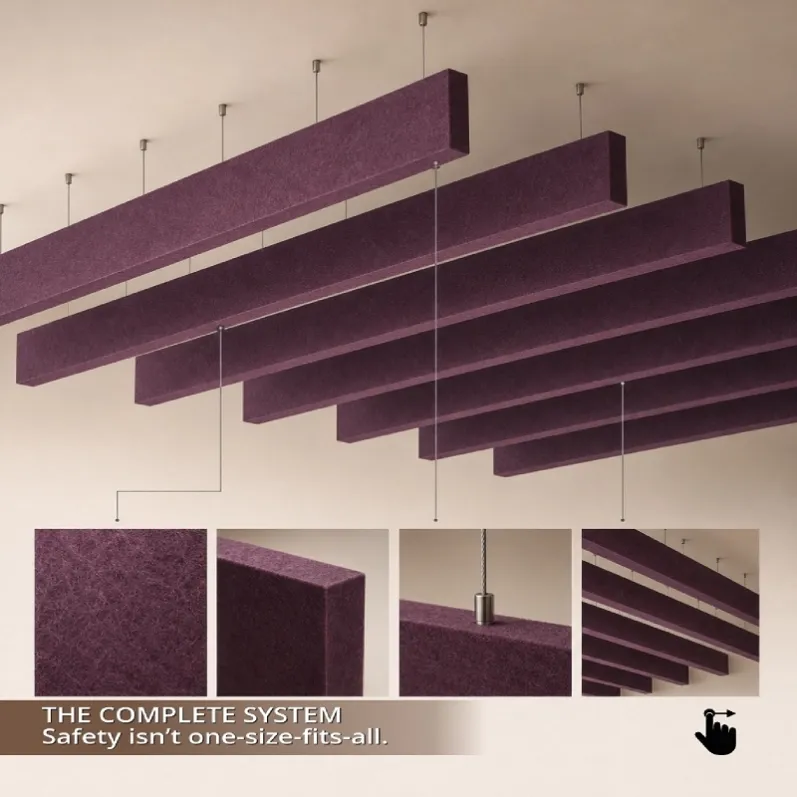
- used as a ceiling baffle
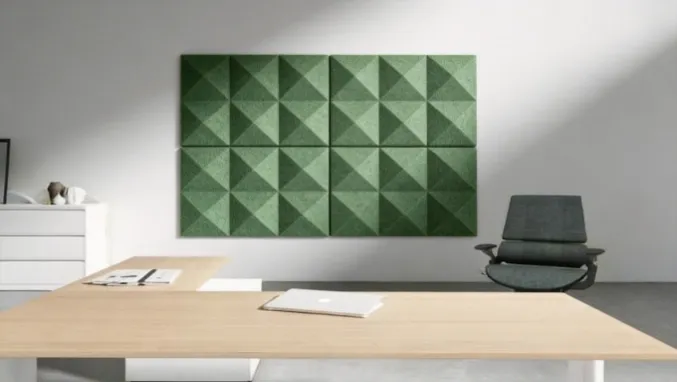
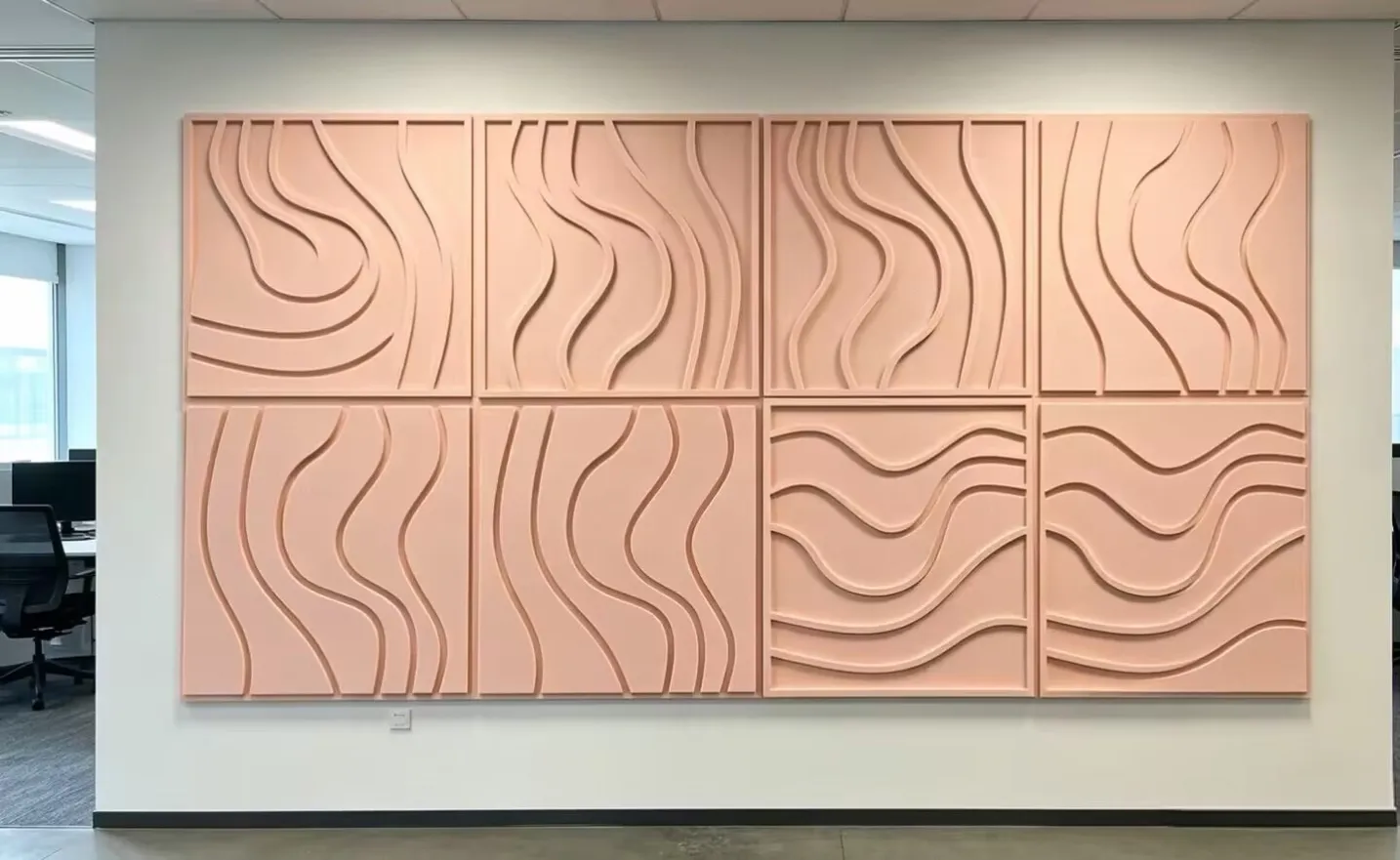
Direct mounting is a practical solution for many office and commercial projects.
However, adding space behind the panel can improve sound absorption, especially when the project requires better performance across a wider frequency range.
This is why acoustic design should consider the complete installation system, not only the panel specification.
4. Focusing Only on Panel Thickness
A common misunderstanding is:
“Thicker panels always mean better acoustic performance.”
In reality, thickness is only one part of the solution.
A thicker PET panel may provide more material for sound absorption, but the final result also depends on:
- installation method
- air space behind the panel
- room conditions
- target frequency range
For some projects, improving the installation structure can be more effective than simply increasing panel thickness.
This is why professional suppliers should understand the application instead of only recommending the thickest product.
5. Selecting Materials Without Considering the Application
Different spaces have different acoustic requirements.
A product suitable for an office may not be the best choice for every environment.
For example:
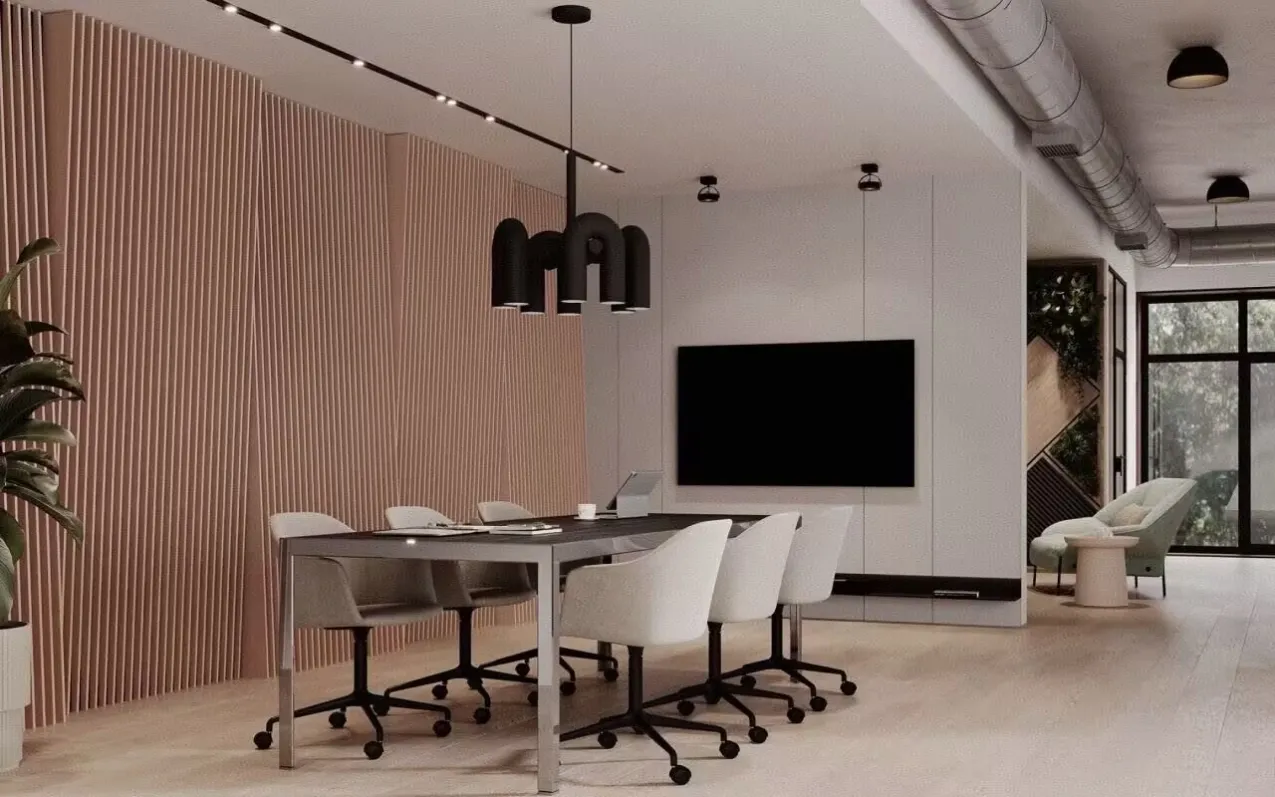
Office Spaces
Main concern:
- speech clarity
- reducing echo
- improving working comfort
Meeting Rooms
Main concern:
- clear communication
- controlling reflections
Restaurants
Main concern:
- reducing overall background noise
Commercial Interior Projects
Main concern:
- balancing acoustic performance and visual design
The best acoustic solution is not always the most expensive one.
It is the one that matches the actual application.

6. Expecting Acoustic Panels to Solve Every Noise Problem
This is probably the most important point.
Acoustic panels improve the sound quality inside a room.
They do not make a room completely silent.
A successful acoustic project usually combines:
- correct material selection
- suitable installation method
- enough coverage area
- proper room planning
Before recommending PET acoustic panels, it is important to understand:
- What type of noise is the customer experiencing?
- Where does the reflection happen?
- What is the expected improvement?
A reliable supplier should help customers choose a practical solution instead of simply selling more panels.
How to Get Better Results from PET Acoustic Panels?
Before starting a project, we recommend checking:
1. Understand the acoustic goal
Is the goal:
- reduce echo?
- improve speech clarity?
- create a more comfortable environment?
2. Review the room condition
Consider:
- room size
- wall materials
- ceiling height
- furniture
3. Choose the correct panel specification
Consider:
- thickness
- density
- design
- installation method
4. Discuss the application with your supplier
A good supplier should understand not only the product, but also how the product works in real spaces.

Final Thoughts
PET acoustic panels are an effective solution for many modern interior spaces.
However, good acoustic results do not come from choosing a panel alone.
The best performance comes from combining:
the right material + the right quantity + the right installation method + the right application understanding.
From our experience working with global customers, many acoustic problems can be avoided when suppliers and buyers communicate clearly before production.
Need Help Choosing the Right PET Acoustic Panel Solution?
Every acoustic project is different. The best solution depends on the room size, application, installation method, and expected acoustic performance.
If you are planning an office, commercial interior, furniture, or custom acoustic project, we are happy to discuss your requirements and suggest a suitable PET felt panel solution.
You can share:
- project application
- panel size and thickness requirements
- installation method
- estimated quantity
Our team will review your requirements and provide practical suggestions based on your project needs.
Contact us to discuss your PET acoustic panel project or request samples.
More related pages:
📩 Send us your project drawings or specifications, and we will respond with a clear quotation and production suggestion within 24 hours.
Email: info@hengmy.com