Jun 26, 2026News & Insights
CNC Cutting PET Felt Problems: Why Vacuum Suction Fails and How to Stabilize Material Position
PET felt sheets are often unstable during CNC cutting due to air permeability and vacuum suction loss. Learn why this happens and how to stabilize material positioning effectively.

Why PET Felt Sheets Move During CNC Cutting: Vacuum Holding Problem Explained
Introduction
In CNC cutting of PET acoustic panels or fiber-based sheets, one common issue is material movement during processing.
Operators often report that:
- vacuum suction is not strong enough
- sheets are not fully held by the machine table
- material slightly shifts during cutting
- positioning becomes unstable
This problem is especially common with PET felt materials.
Why Vacuum Suction Does Not Always Work
In a CNC machine, vacuum holding depends on airtight surface contact.
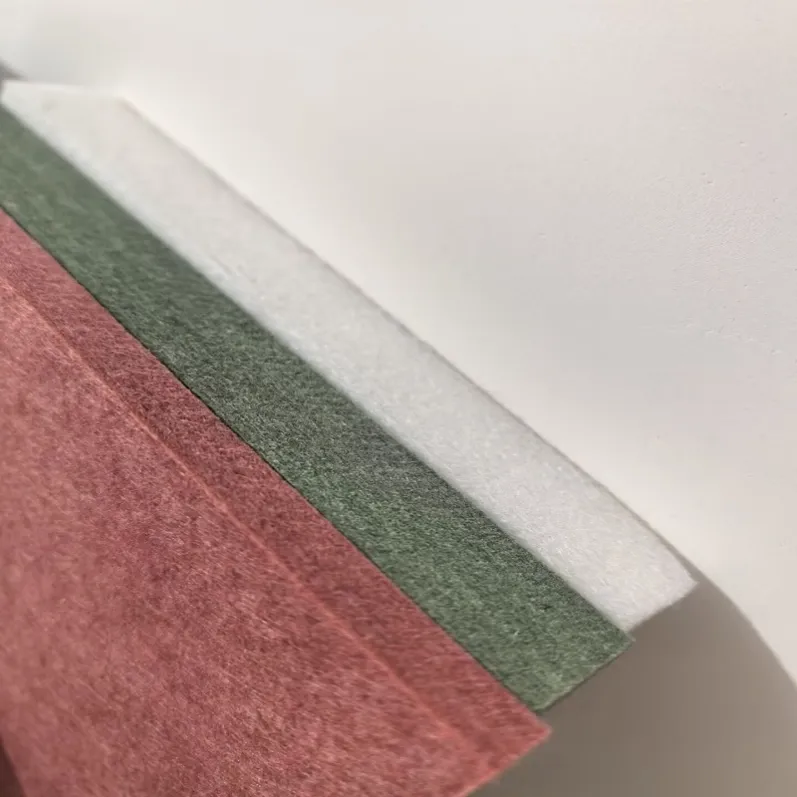
However, PET felt materials are:
- not fully opaque in structure
- partially air-permeable
- made of compressed fibers with micro air gaps
This means air can still pass through the material.
When this happens:
- vacuum pressure is reduced
- suction cups lose efficiency
- material cannot stay fully fixed
So even if the machine is working normally, holding performance may still be weak.
Why Film Lamination Is Sometimes Considered
One possible suggestion is applying a film layer on one side of the panel.
The idea is:
- block air passage
- increase vacuum efficiency
- improve suction stability
This can work in some cases.
However, it also introduces additional considerations:
- extra processing step
- surface change
- cost increase
- potential impact on cutting behavior
So it is not always the preferred solution in production environments.
A More Practical Workshop Solution
In real CNC production practice, sometimes the solution is not changing the material.
Instead, it is improving positioning control on the machine table.
A very simple but effective method is:
Add an L-shaped fixed stopper on the table corner
This allows operators to:
- place the sheet
- push it to a fixed reference point
- ensure repeatable positioning
This reduces dependency on vacuum holding alone.
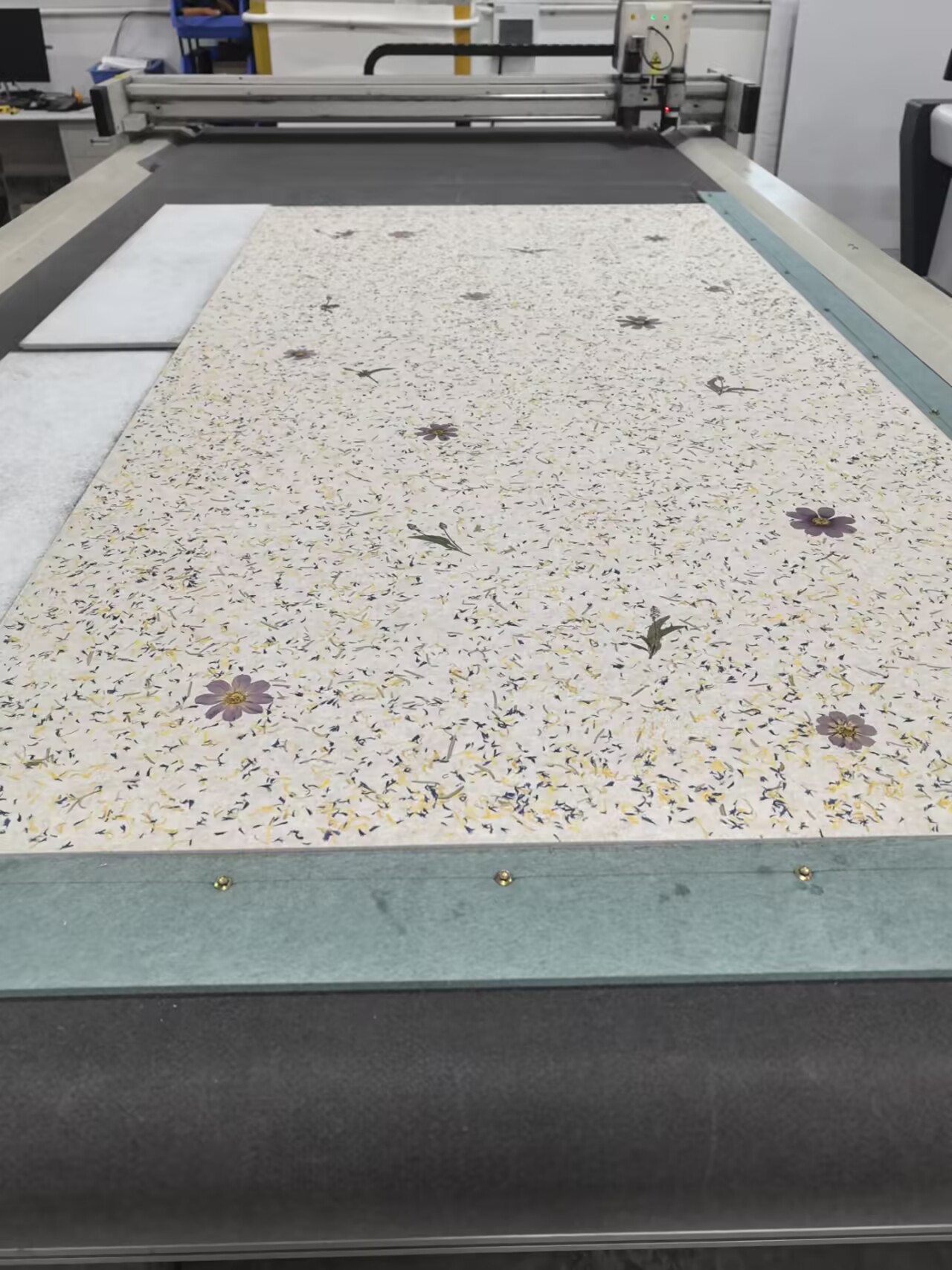
Additional Stabilization for Thicker Panels
For thicker PET felt sheets or more sensitive cutting jobs:
A secondary flexible stopper can be added on the opposite side.
This stopper:
- does not need to be permanently fixed
- can be made of PET board or fiber acoustic material
- can be adjusted based on sheet size
This creates a simple dual-reference positioning system.
Why This Works Better in Real Production
Compared to modifying material or vacuum systems, this approach has advantages:
- no change to material structure
- no additional processing step
- low cost implementation
- easy operator use
- stable repeatability
In CNC production environments, simplicity often leads to higher stability.

Final Insight
CNC cutting issues with PET felt are not always machine problems.
In many cases, the real challenge is:
👉 how material, vacuum system, and positioning method work together
When one part is not ideal, mechanical positioning can often compensate effectively.
If you are working on CNC cutting projects with PET felt or fiber acoustic panels, and face material movement or vacuum holding issues, we can share practical setup suggestions based on your machine type and panel thickness.
Sometimes the solution is not changing the material.
It is improving the positioning system.
Email: info@hengmy.com Will respond in 24 hours.