Oct 8, 2026Services Overview
Why Two 12mm PET Felt Panels May Not Process the Same
Two PET felt panels can both be called 12mm but still behave differently during CNC cutting and installation. Here are the material factors behind the difference.

Why Two 12mm PET Felt Panels May Not Process the Same
When buying PET felt panels, it is common to compare materials by thickness.
For example:
12mm PET felt.
Two suppliers may both offer 12mm panels. On quotation sheet, they may look almost the same.
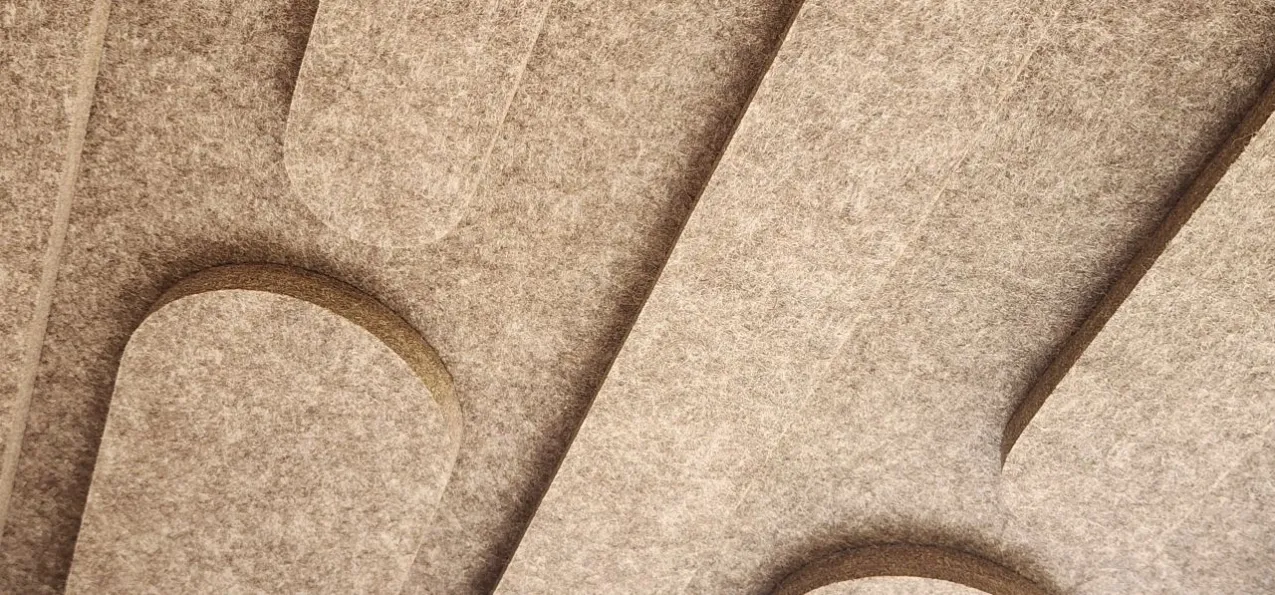
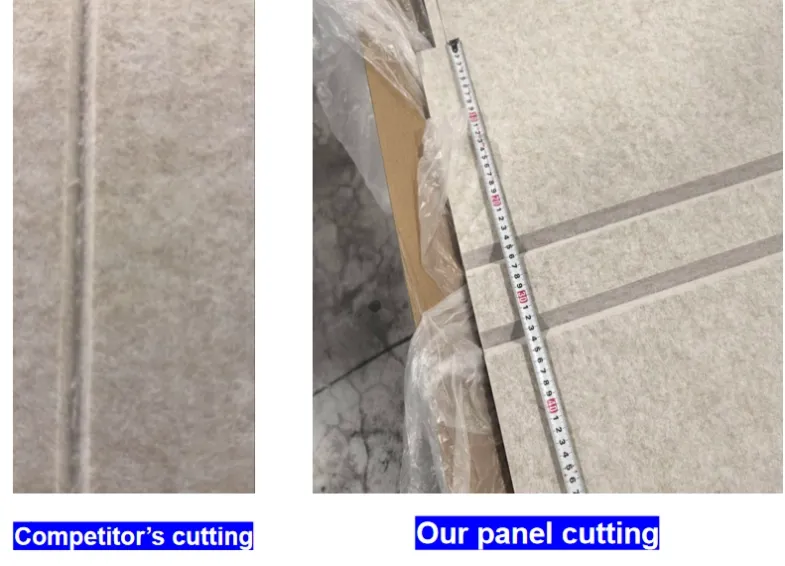
But when you put the material on a CNC machine, you may find that the cutting result is different.
One panel cuts cleanly.
The other may produce more loose fibers, rougher edges, flakes, or a different cutting result.
Why does this happen if both materials are called 12mm?
Because thickness is only one part of PET felt performance.
Thickness does not tell the whole story
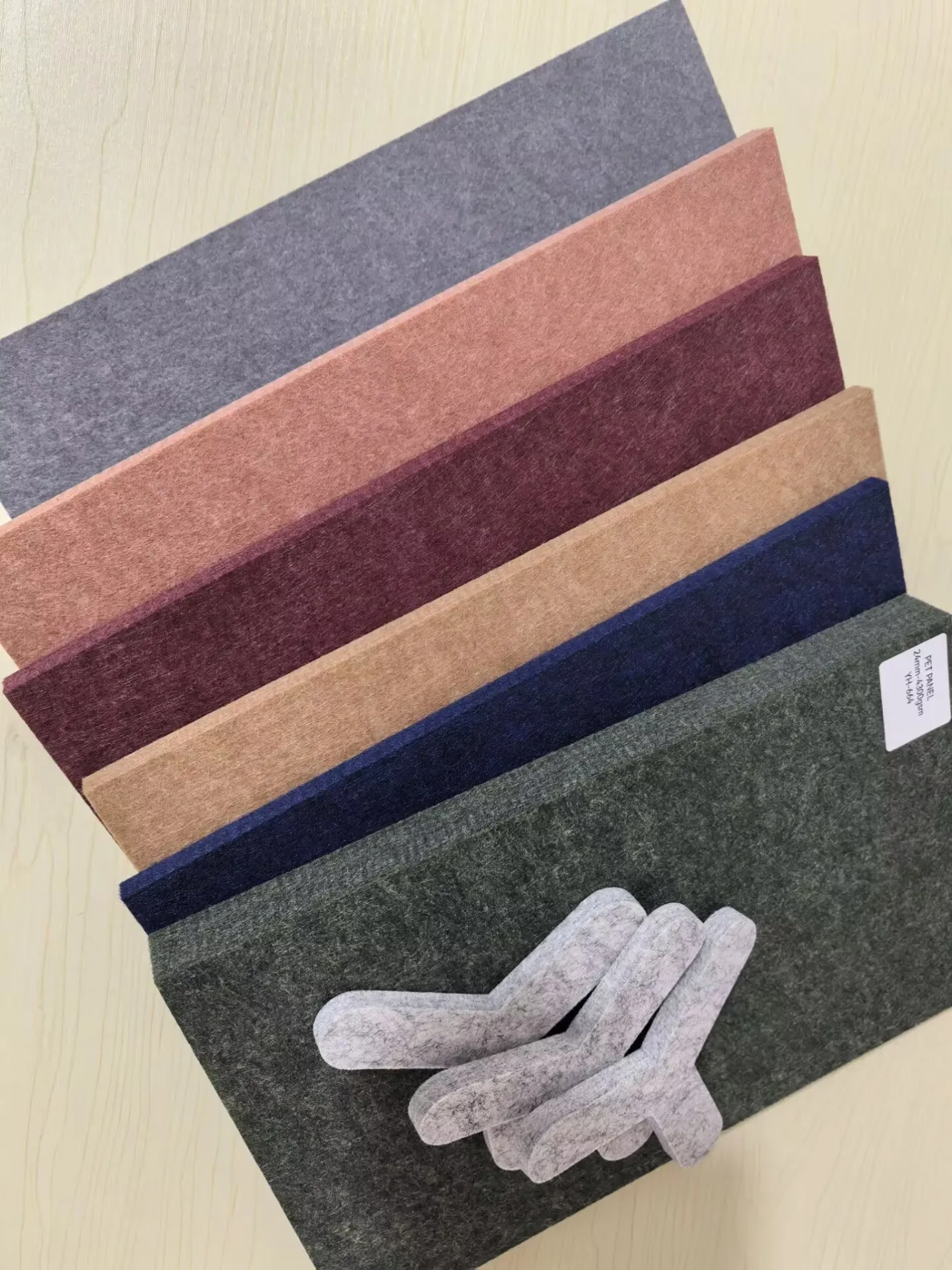
PET felt is made from polyester fibers that are bonded and compressed into a panel.
So when we talk about a 12mm PET felt panel, we are not talking about a solid material with exactly the same structure throughout.
The material also has characteristics such as:
- density
- fiber bonding
- hardness
- surface compression
- fiber structure
These factors can affect how the panel behaves during processing.
This is one reason I do not recommend choosing PET felt only by thickness or GSM.
The same thickness can have different densities
For example, two PET felt panels can both be 12mm, but their density may be different.
A higher-density panel is not automatically better for every application.
For CNC processing, what matters is how the fibers are bonded and how the material responds to the cutting tool.
If the material is harder or more tightly bonded, the cutting result can be different from a softer material with a more open fiber structure.
This is particularly noticeable when the design includes small holes, narrow slots, grooves or detailed shapes.
So when the application of ther buyer is to do CNC cutting for projects, it is better to give the supplier more information than simply:
“We need 12mm PET felt.”
The required density or GSM, CNC design and finished application are also useful information.
Surface compression can also matter
PET felt panels are compressed during production.
The surface condition can therefore be different from the internal structure of the material.
This can affect the way the cutting tool enters and passes through the panel.
For simple straight cuts, you may not notice much difference.
But for more detailed CNC patterns, the difference can become more visible.
This is one reason why a sample cut is useful before mass production, especially when the customer has a new design or a tight visual requirement.
Why a previous CNC file may not give exactly the same result
This is something customers sometimes discover only after they start production.
Then you order the same specification again and expect exactly the same result.
But if the material has changed in density, hardness, fiber bonding or surface compression, the cutting result can also change.
The file has not changed.
The machine may not have changed.
The material has.
For repeat production, material consistency is therefore very important.
This does not mean every production batch must be completely identical in every physical characteristic. It means the supplier should have reasonable control over the important material parameters.
Why this matters beyond CNC cutting
The same principle applies to other applications.
If PET felt is being used for wall panels, furniture components, acoustic products or thermoformed parts, the material needs to work with the customer's production method.
For example, a furniture manufacturer may care about clean edges and dimensional consistency.
A thermoforming project may be more sensitive to how the material responds to heat and pressure.
A decorative wall panel may be more focused on surface appearance and fitting.
The “best” PET felt is therefore not simply the thickest, heaviest or hardest one.
It needs to be suitable for the process.
What information should you give your supplier?
If you are buying PET felt for a standard flat panel, thickness and size may be enough to start a discussion.
But if you are going to CNC cut, thermoform or otherwise process the material, I recommend sharing:
- required thickness
- required density or GSM
- sheet size
- CNC design or cutting requirements
- finished application
- whether the material will be processed further
If possible, send a sample of your actual cutting design.
This allows the supplier to understand what you are trying to achieve instead of only quoting a material specification.
A small difference in material can become a big difference in processing
This is why PET felt should not be treated as only a number such as 12mm or 2400gsm.
Those numbers are important, but they describe only part of the material.
For customers who use PET felt as a raw material for further processing, how the material behaves can be just as important as how it is specified.
If you have a PET felt project involving CNC cutting, thermoforming or other processing, send us your thickness, density, sheet size and application. If you have a CNC drawing, you can also send it to us. We can review the material requirement with you before production.
More related pages:
📩 Send us your project drawings or specifications, and we will respond with a clear quotation and production suggestion within 24 hours.
Email: info@hengmy.com