Aug 5, 2026Services Overview
PET Felt Panel Quality Control: Hidden Density Defect Found Before Shipment
Learn how a hidden density defect in a PET felt acoustic panel was discovered during pre-shipment inspection. See why thickness and dimensions alone are not enough to ensure quality.
Why Thickness and Dimensions Are Not Enough: A Hidden PET Felt Panel Quality Issue We Found During Inspection
When sourcing PET felt acoustic panels, most buyers focus on visible specifications:
- Thickness
- Length and width
- Color consistency
- Surface flatness
These are certainly important. However, during a recent pre-shipment inspection, we encountered a less common but potentially serious quality issue that would not have been detected through basic visual checks alone.
This case highlights why density verification and weight inspection are critical parts of quality control for PET felt panels.
The Panel Looked Perfect at First
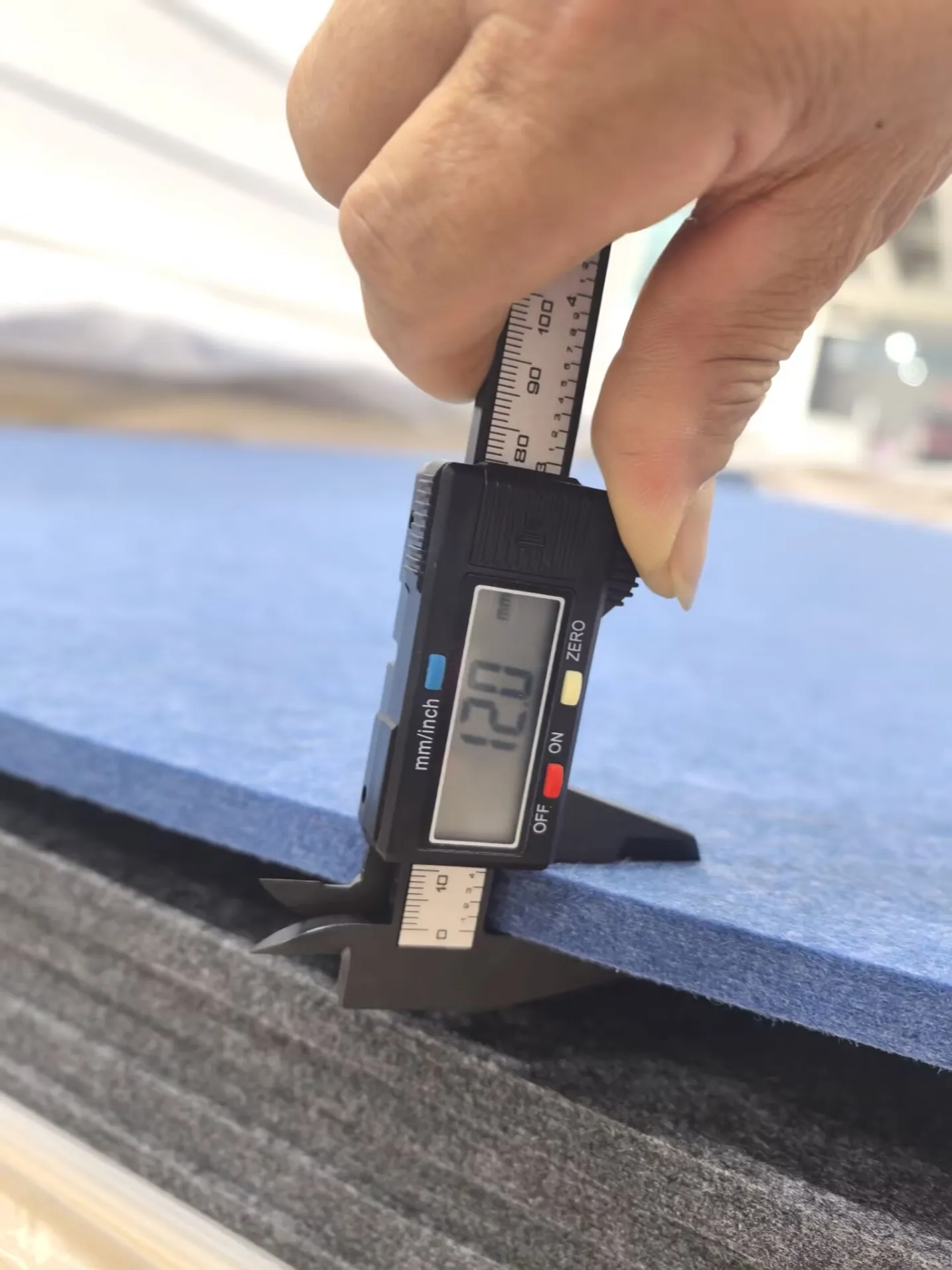
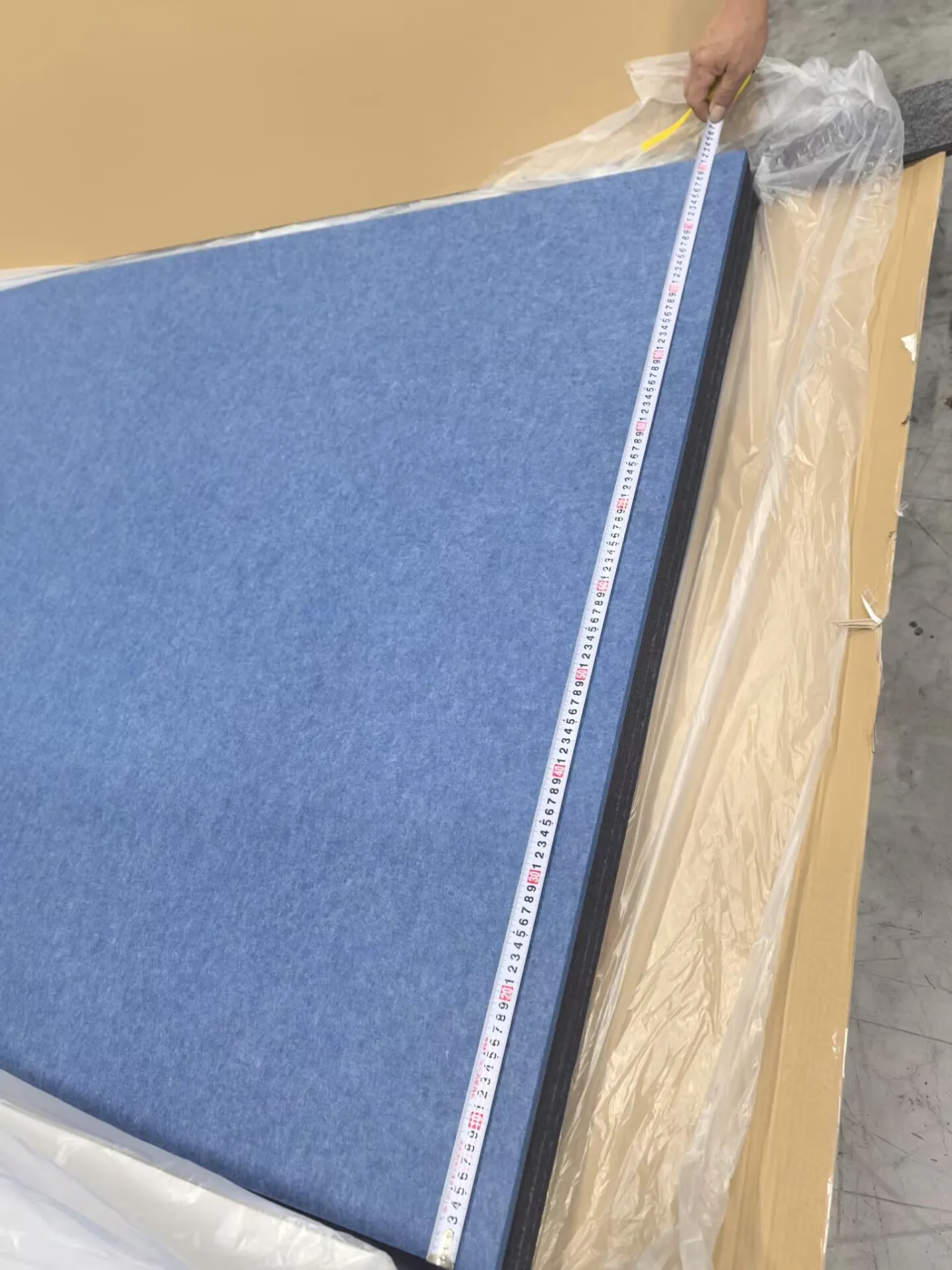
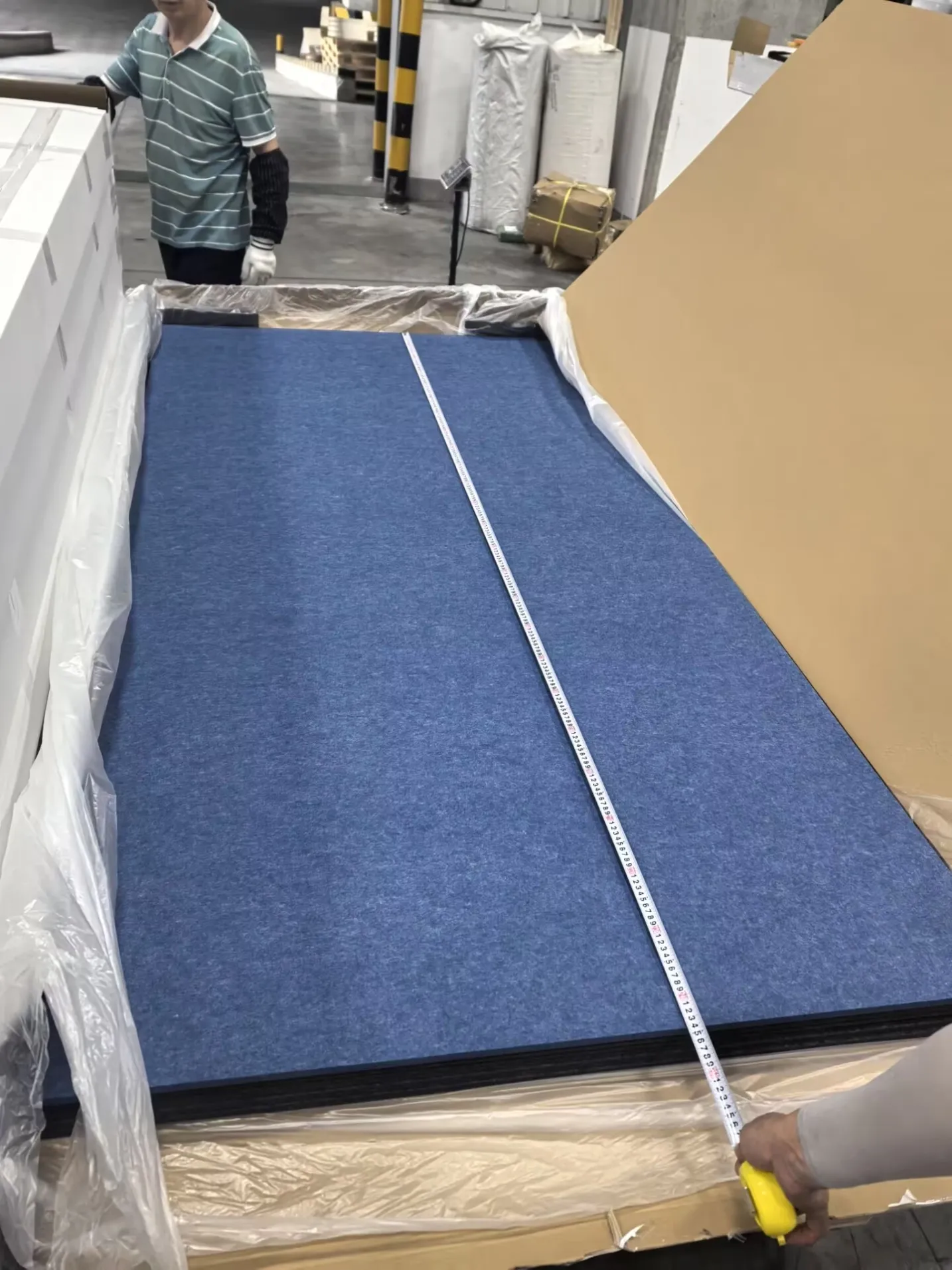
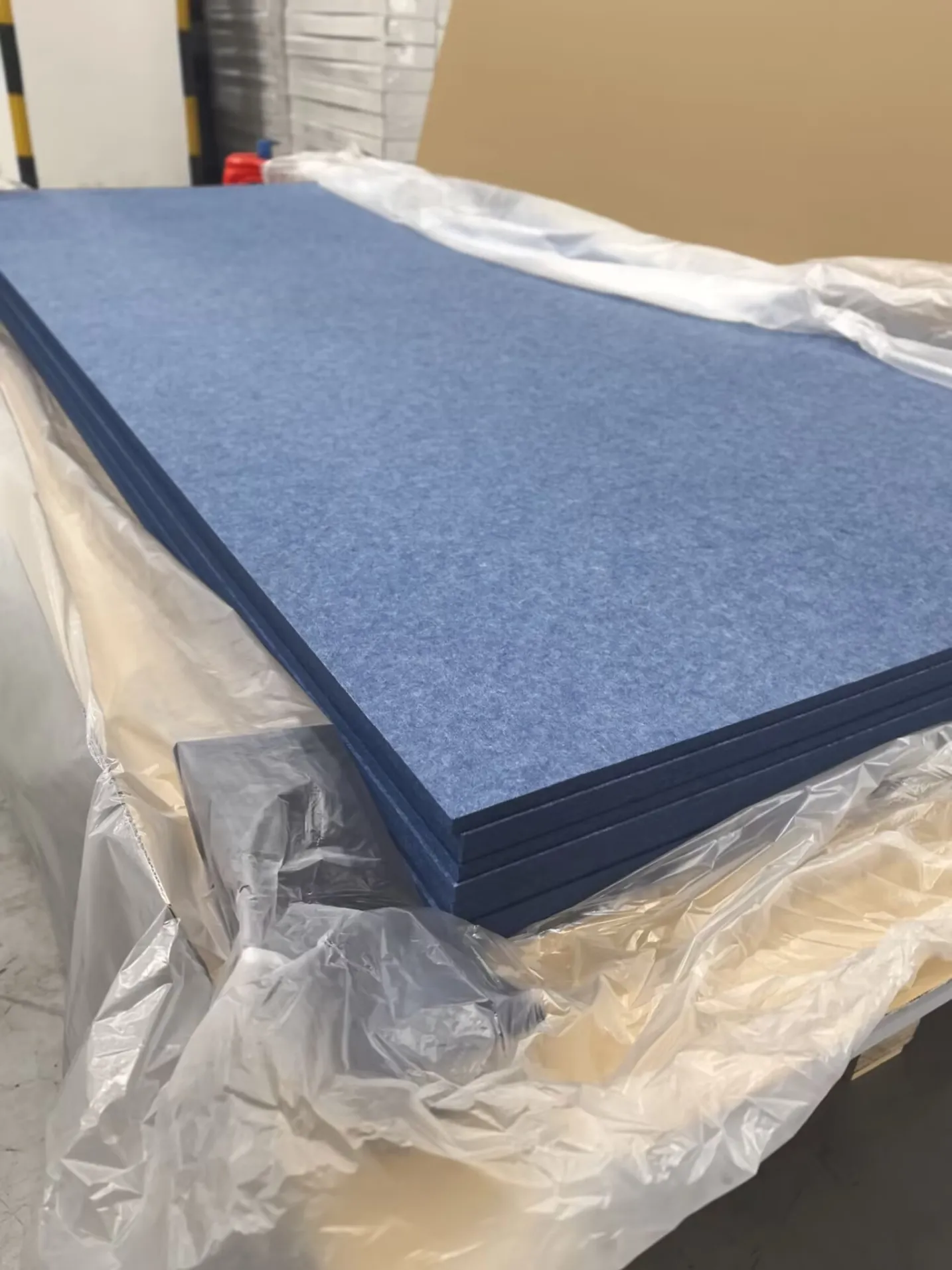
The product being inspected was a standard PET felt panel measuring:
- 1220 × 2440 mm
- 12 mm thickness
- Specified density: 2400 gsm
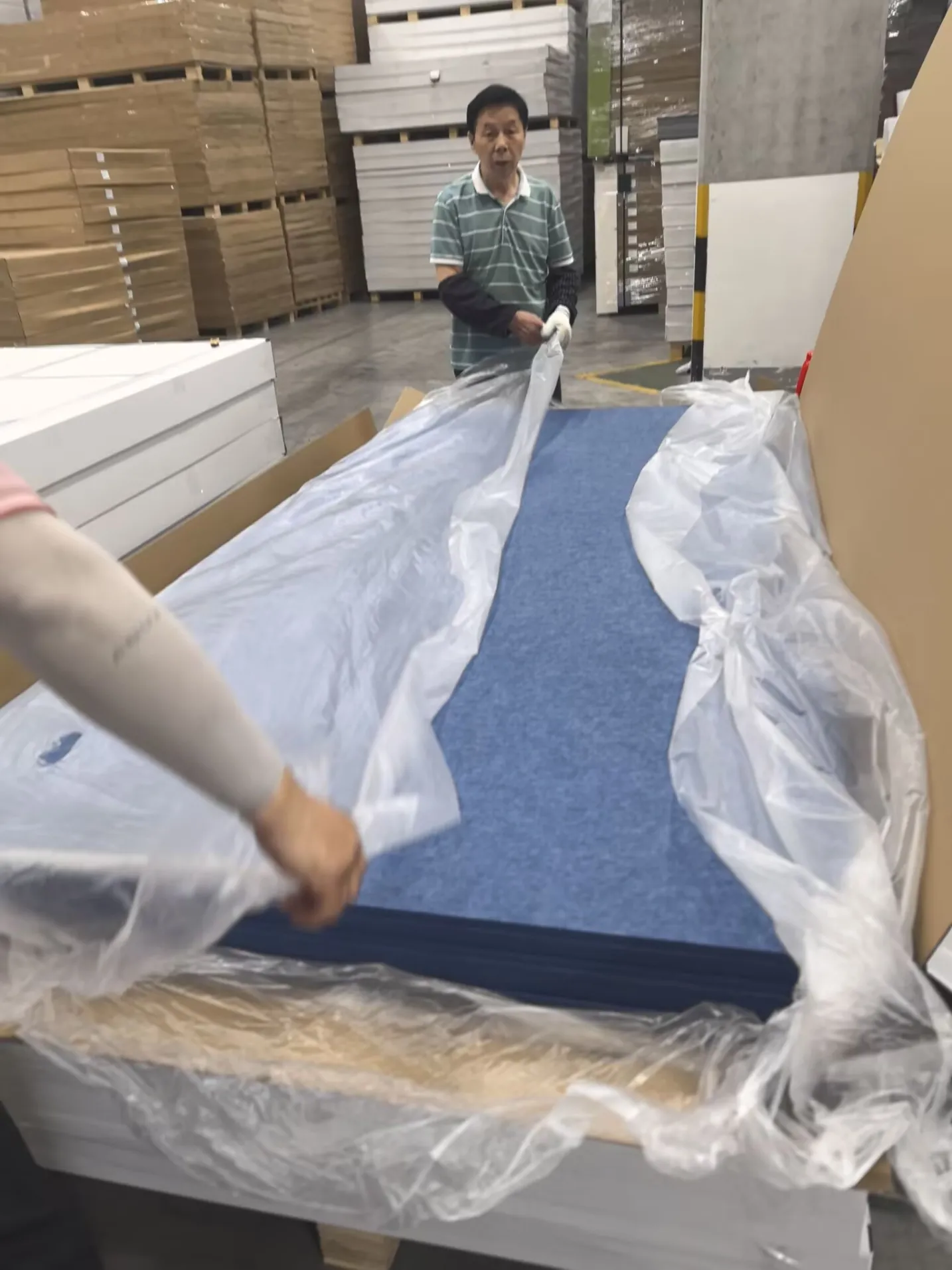
As part of our routine inspection process, we checked:
- Thickness tolerance
- Length and width
- Surface flatness
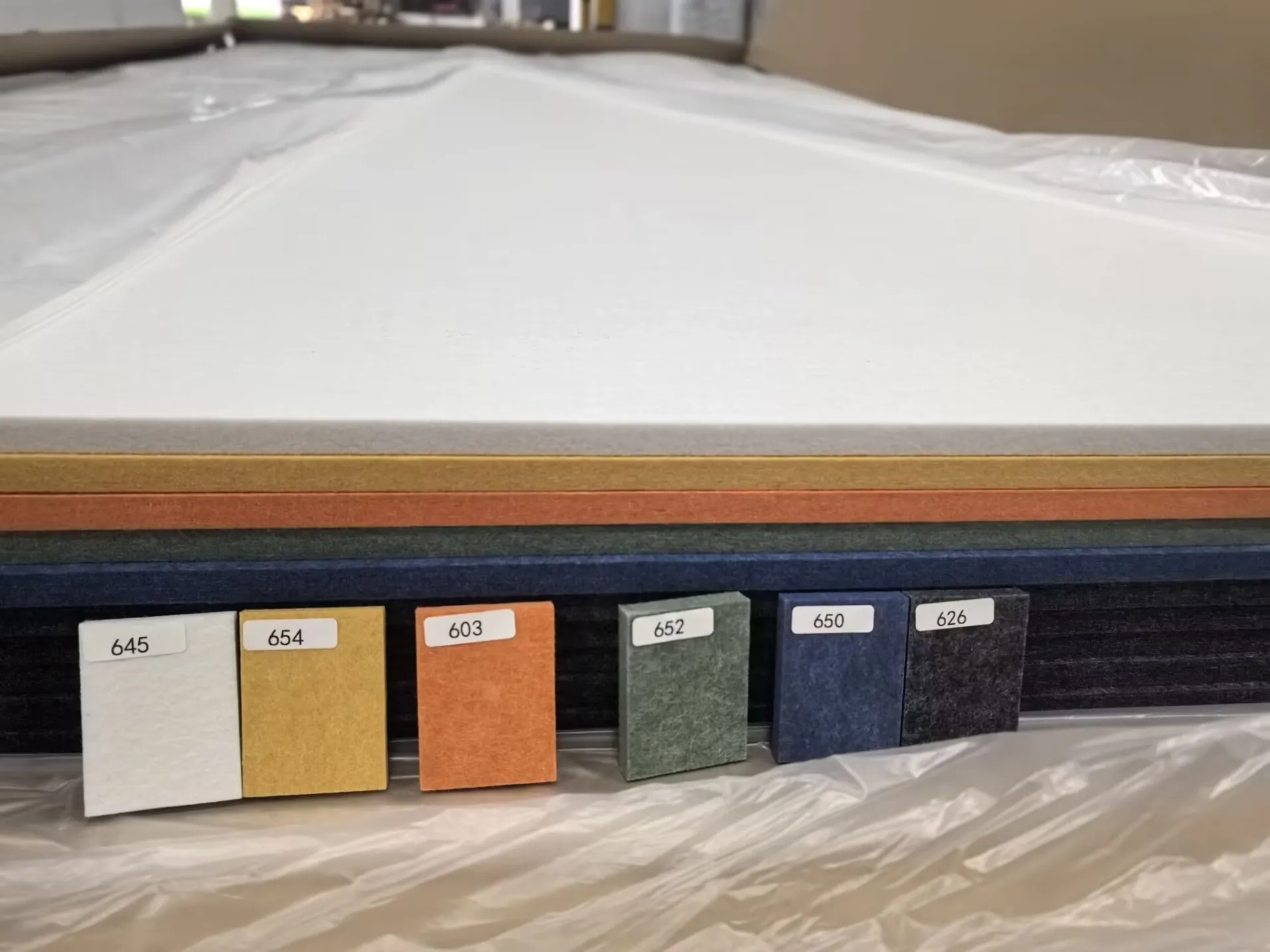
- Color consistency against approved samples and color swatches
Everything appeared normal.
The panel passed all visual inspections.
However, when we moved to weight verification, something unexpected appeared.
A Weight Difference Revealed the Problem
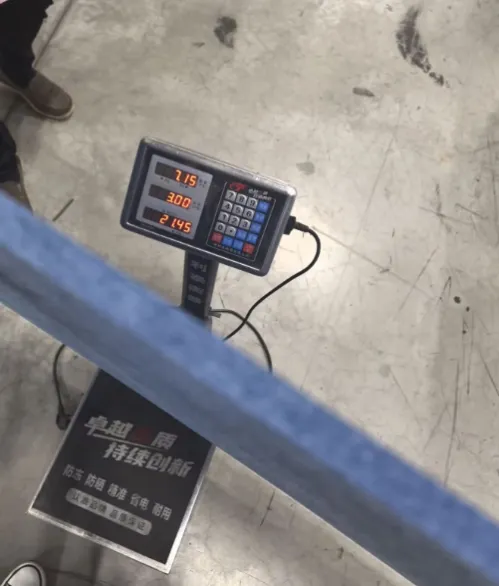
The panel weighed approximately 1 kg less than expected.
A difference of 1 kg on a single sheet is significant enough to warrant further investigation.
Upon closer examination, we discovered that:
- One half of the panel had normal density
- The other half had noticeably lower density
The low-density section felt much softer.
When pressed by hand, it showed:
- Excessive compression
- Visible bending
- Reduced rigidity
The panel did not meet the required quality standard and was immediately classified as a defective sheet.
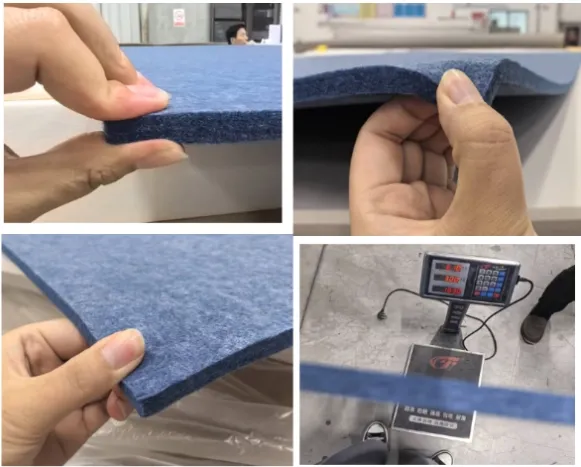
For standard PET felt panel, 1220 x 2440 x 12mm, 2400gsm, each panel should weight around 7.1kg. But this piece PET felt panel only weighted 6.10kg.
How Can One Panel Have Two Different Densities?
Many buyers assume density inconsistency only occurs between different production batches.
In reality, density variation can sometimes occur within a single sheet.
Although uncommon, there are several possible causes.
1. Production Transition Between Different Density Orders
This is one of the most common reasons.
For example:
- Previous production run: lower-density PET felt
- Next production run: 2400 gsm PET felt
During the transition period, machine settings are adjusted to meet the new density requirement.
Several sheets produced during this changeover may not yet be fully stabilized.
As a result, density distribution across the sheet can become uneven.
In extreme cases, different sections of the same panel may have different density levels.
2. Machine Adjustments During Production
PET felt manufacturing involves multiple process parameters.
Changes to any of the following can affect final density:
- Fiber feeding rate
- Fiber laying speed
- Needle punching frequency
- Needle punching speed
- Production line calibration
Even small adjustments can influence material distribution and panel consistency.
If not properly controlled, localized density variations may occur.
Why This Problem Is Difficult to Detect
This type of defect is particularly challenging because:
- Thickness may remain within specification
- Dimensions remain correct
- Surface appearance looks normal
- Color remains consistent
Many suppliers only check visual appearance.
Without weight verification and physical handling tests, these panels can easily pass inspection and be shipped to customers.
The issue often becomes visible only during installation or after project completion.
Why Density Matters
For PET felt acoustic panels, density directly affects:
Acoustic Performance
Inconsistent density can lead to variations in sound absorption performance.
Structural Stability
Lower-density areas are more likely to:
- Bend
- Warp
- Compress during installation
Product Appearance
Soft sections may deform over time, affecting the finished visual result.
Customer Satisfaction
Even if only a few sheets are affected, replacement costs on overseas projects can be far higher than the value of the panel itself.
Our Inspection Method
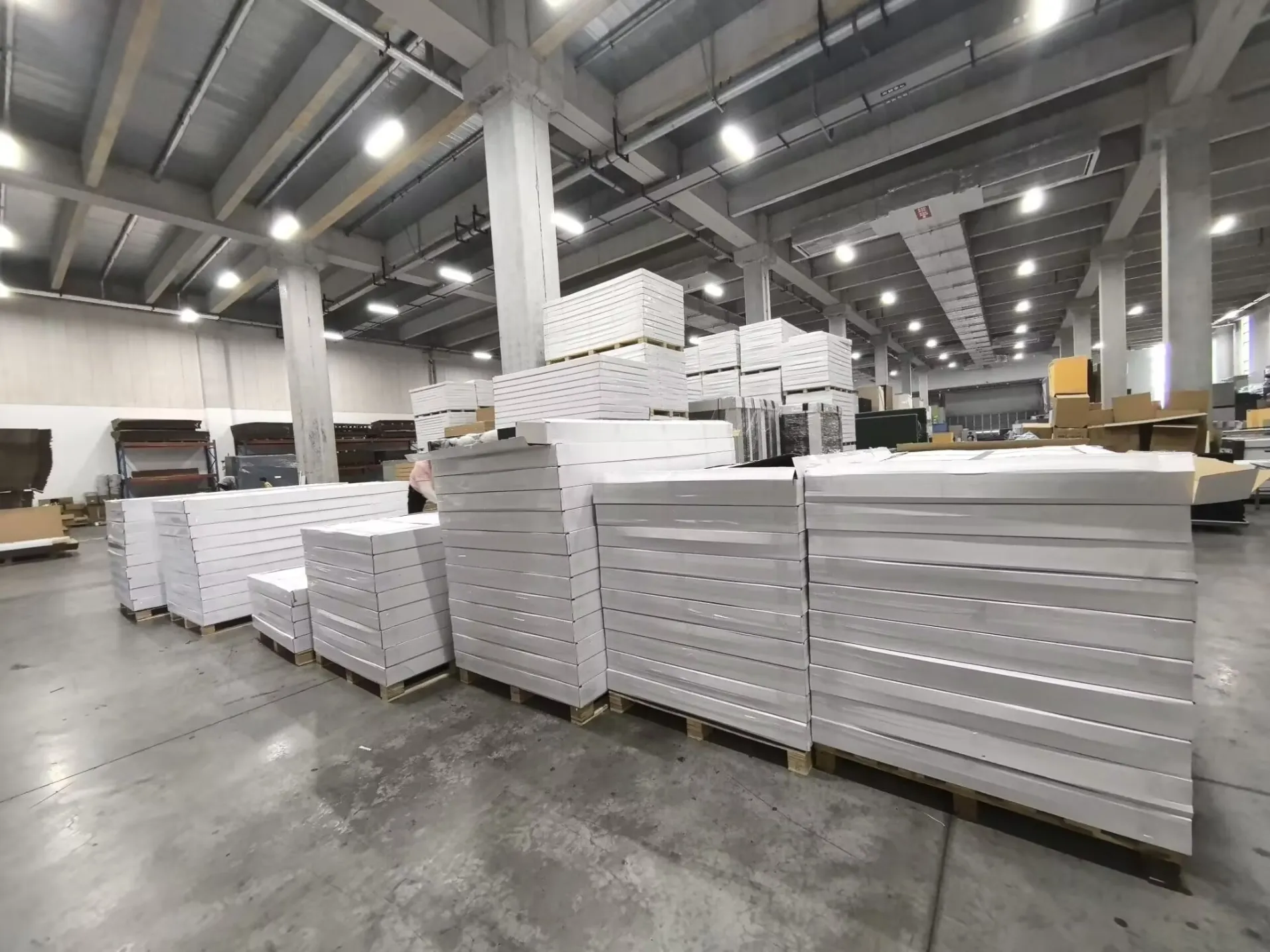
To reduce the risk of these hidden defects reaching customers, we conduct random inspections on approximately 20% of panels from each color batch.
Inspection includes:
- Dimension verification
- Thickness measurement
- Weight verification
- Density consistency assessment
- Surface quality inspection
- Color comparison against approved standards
During this inspection, the defective panel was successfully identified and removed before shipment.
After checking additional cartons from the same color batch, all other tested panels met specifications and showed consistent density and weight.
What Buyers Should Ask Their Supplier
When purchasing PET felt acoustic panels, consider asking:
- Do you verify panel weight during inspection?
- How do you control density consistency between production batches?
- What percentage of panels are randomly inspected before shipment?
- How are machine changeovers managed when different densities are produced?
The answers often reveal far more about a supplier's quality management system than product brochures ever can.
Final Thoughts
In PET felt panel manufacturing, not all quality issues are visible.
A panel may appear perfect in terms of thickness, dimensions, color, and surface finish, yet still contain hidden density inconsistencies that affect performance and durability.
This recent inspection serves as a reminder that effective quality control goes beyond visual checks.
For importers, distributors, architects, and project contractors, thorough inspection before shipment remains one of the most effective ways to reduce risk and ensure consistent project results.
Avoid Costly Quality Problems Before Shipment
Hidden defects such as density inconsistency often cannot be detected through visual inspection alone.
Our team performs random inspections covering:
✓ Thickness & dimensions
✓ Weight verification
✓ Density consistency
✓ Surface quality
✓ Color matching
✓ Packaging inspection
to help clients reduce quality risks before shipment.
If you are importing PET felt acoustic panels and would like to discuss quality requirements for your next project, feel free to contact us.
Email: info@hengmy.com
WhatsApp: 0086 15050649788
More related pages:
Email: info@hengmy.com Will respond in 24 hours.