Sep 29, 2026Services Overview
Why PET Felt CNC Cutting Results Change Between Different Batches
Why can the same CNC machine and settings produce different results with another PET felt batch? Learn what density, hardness, thickness and structure can change.

Why PET Felt CNC Cutting Results Change Between Different Batches
Sometimes a CNC machine is not the problem.
The machine is the same.
The cutting tool is the same.
The program is the same.
The cutting speed and settings are the same.
But after changing to another batch of PET felt, the cutting result is suddenly different.
The edge may look rougher. Small details may not come out as cleanly. Some areas may show more fibre pulling, while another batch cuts more smoothly.
This can be confusing, especially for furniture manufacturers and other customers who process PET felt regularly.
So why does this happen?
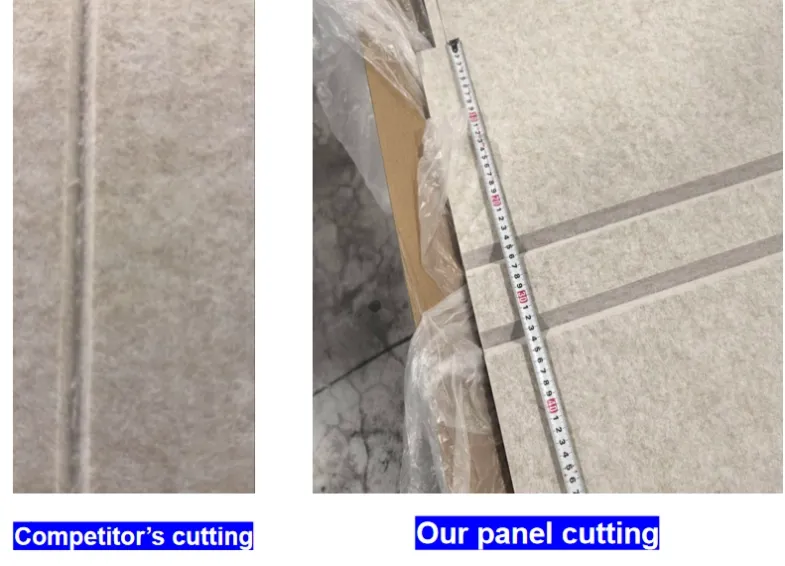
The Same Specification Does Not Always Mean the Same Material Behaviour
When buyers order PET felt, they usually look at specifications such as thickness, GSM, colour and sheet size.
These are important, but they do not describe everything about how the material will behave during CNC cutting.
For example, two batches may both be specified as 12mm and 2400gsm, but their actual material characteristics can still have some variation.
The cutting result can be affected by several factors.
1. Actual Density
GSM is normally used to describe the weight of the material per unit area. However, the actual fibre structure inside the panel also matters.
If the material structure is slightly different from one batch to another, the cutting resistance can also change.
This does not mean that a higher GSM is always better for CNC cutting. It means that the material needs to be consistent enough for the cutting process being used.
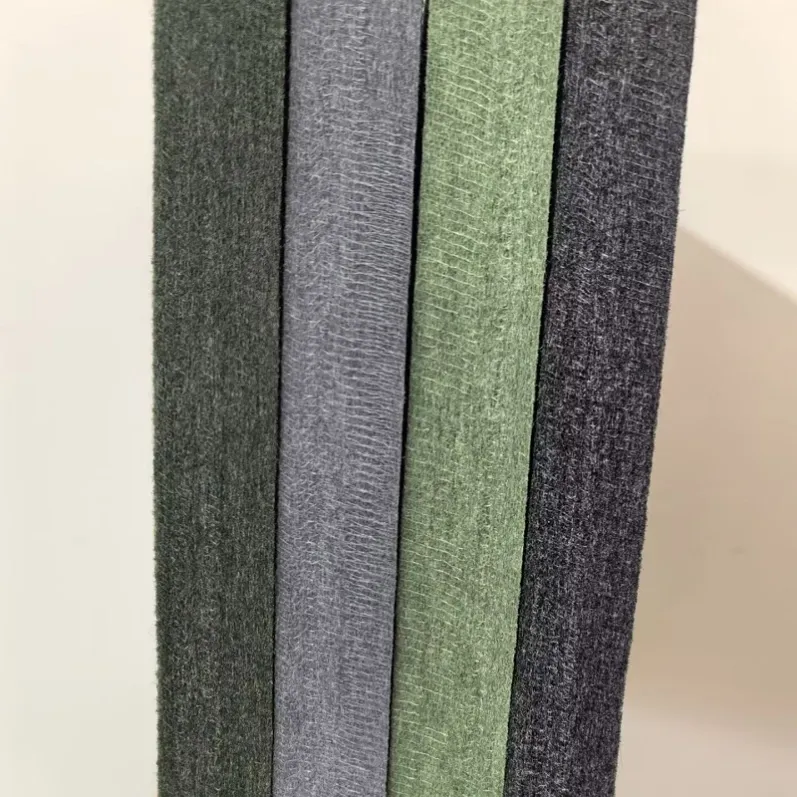
2. Hardness and Fibre Bonding
PET felt is made from polyester fibres that are bonded together to form a panel.
The way these fibres are bonded can affect how the material reacts when a cutting tool passes through it.
A harder and more stable panel may hold a small edge or groove differently from a softer panel.
This is especially noticeable when the design contains narrow slots, small holes, sharp corners or detailed patterns.
3. Thickness Tolerance
A panel may be sold as a nominal thickness such as 9mm, 12mm or 18mm.
But actual thickness can have some tolerance.
For simple straight cuts, a small difference may not be very noticeable. For CNC routing, V-grooves, slots or other detailed processing, thickness consistency can become more important.
The machine is following the same program, but the material itself is not exactly the same at every point.
4. Surface Compression
The surface of PET felt can also affect the cutting result.
Some panels have a more compact and stable surface, while others may feel softer or show more loose fibres.
During CNC cutting, this can influence how cleanly the tool enters and exits the material.
This is one reason why checking only the colour and thickness of a sample is sometimes not enough for a CNC project.
What About the CNC Machine?
Of course, material is not the only possible reason.
Before blaming the PET felt, it is better to check the machine side as well:
- Is the cutting tool still sharp?
- Is the tool suitable for the material?
- Is the vacuum suction stable?
- Is the panel properly fixed?
- Are the cutting parameters unchanged?
- Is the CNC machine working normally?
If these factors are stable and the cutting result changes after changing the material batch, then the PET felt itself should be checked.
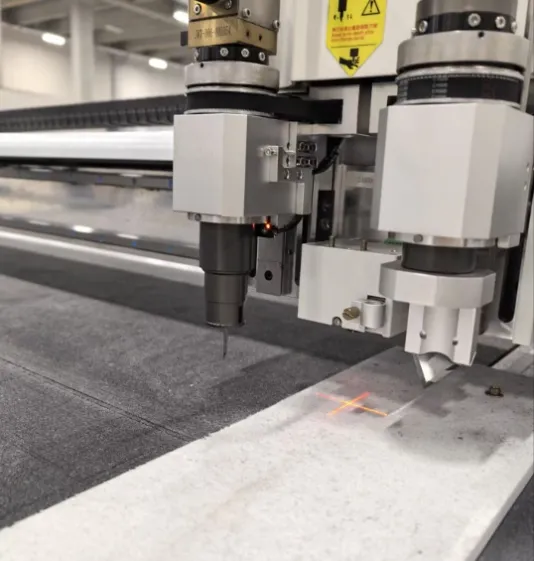
This is also why we normally suggest testing the actual material before starting a larger CNC production run, especially when the design contains many small or detailed cuts.
A Sample Test Can Tell You More Than a Specification Sheet
For a standard flat panel, checking colour, thickness and appearance may be enough for a first material evaluation.
For CNC production, I would look at more.
Try the actual design, or at least the most difficult part of the design.
Check:
- edge smoothness
- small holes and slots
- narrow grooves
- corners
- surface fibre condition
- material movement during cutting
- whether the finished dimensions are stable
A small test can show whether the material and the cutting process work well together before you put a larger quantity into production.
This is especially important when a project involves repeated CNC processing. A material that works well on one batch should ideally give a similar result on the next batch. Good batch consistency helps the customer keep the same production settings instead of adjusting the machine every time the material changes.
The Goal Is Not to Find a “Perfect” PET Felt Batch
In real production, no material is completely free from variation.
The more practical question is whether the material is consistent enough for your application.
For a simple decorative cut, small differences may not matter much.
For furniture components, acoustic panels with detailed CNC patterns, or parts that need to fit together accurately, material consistency becomes much more important.
So if your CNC result suddenly changes, don't immediately change the machine settings.
First ask:
Did anything change in the material?
If you are planning a CNC PET felt project, you can send us your required thickness, panel size, quantity and cutting design. We can check the material specification and the processing requirements together before production.
That can help identify potential problems earlier, rather than after the full order has already been produced.
More related pages:
📩 Send us your project drawings or specifications, and we will respond with a clear quotation and production suggestion within 24 hours.
Email: info@hengmy.com