Jun 26, 2026News & Insights
Air Gap vs Direct Mount: Maximize PET Acoustic Panel Performance
Air Gap vs Direct Mount: Maximize PET Acoustic Panel Performance
Air Gap vs Direct Mount: How Installation Changes the Acoustic Performance of PET Panels
In many projects, clients focus only on the panel specification.
They ask:
- What thickness?
- What density?
- What NRC?
But sometimes the most important factor is not the panel itself.
It is how you install it.
I have seen many situations where the same PET acoustic panel gives very different results, just because of installation method.
So let’s talk clearly about:
Direct mount vs air gap — what is the real difference?
What Is Direct Mount Installation?
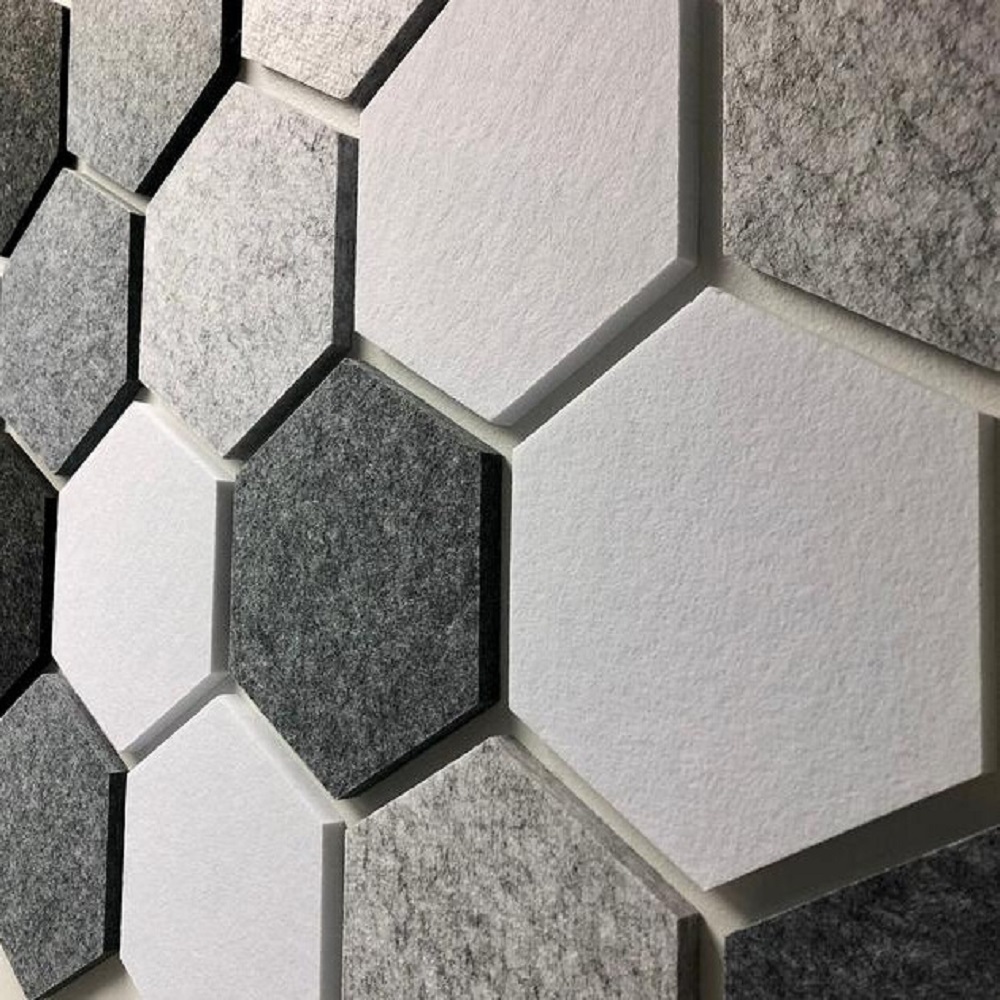
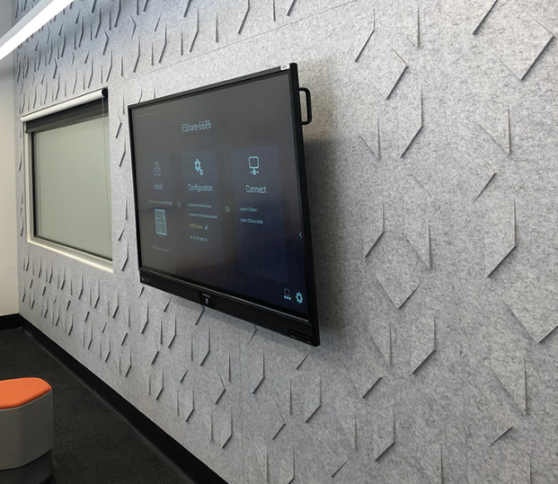
Direct mount means:
The PET acoustic panel is fixed directly onto solid wall surface.
Usually:
- Gypsum board
- Concrete wall
- MDF board
- Wooden surface
There is no cavity behind the panel.
Advantages:
- Simple installation
- Lower cost
- Clean visual finish
- Suitable for fast projects
Acoustic Performance:
Direct mount works very well for:
- Mid frequency
- High frequency
- Echo control in meeting rooms
- Office speech clarity
But for low frequency control, performance is more limited.
Because sound wave does not have enough space to move behind the panel.

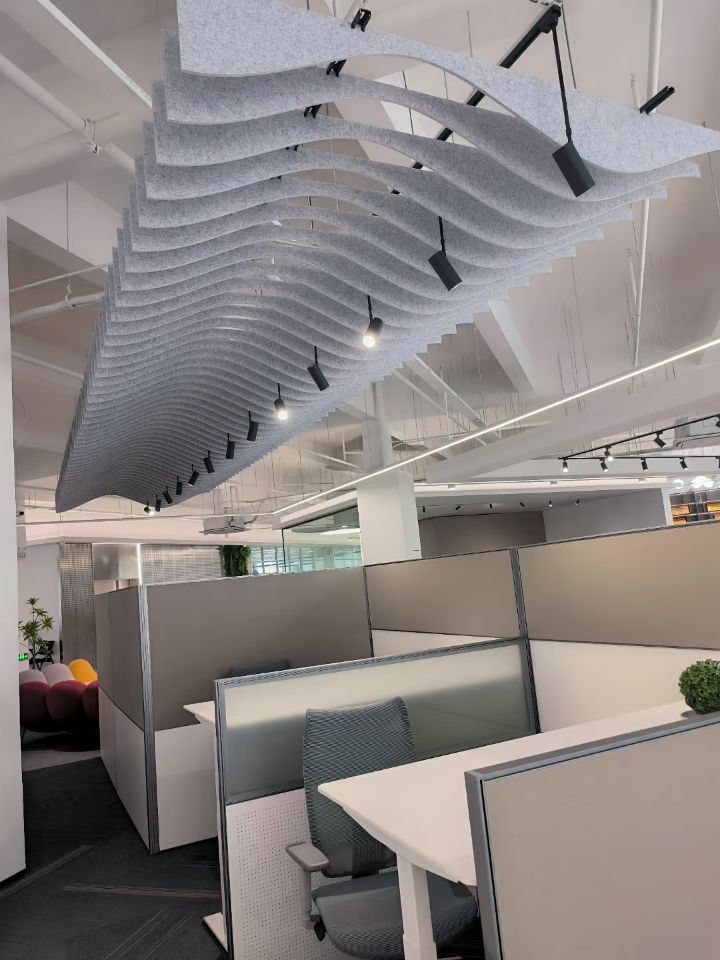
What Is Air Gap Installation?
Air gap means:
There is space between the panel and the solid wall.
Usually:
- 10mm
- 20mm
- 50mm
- Sometimes more
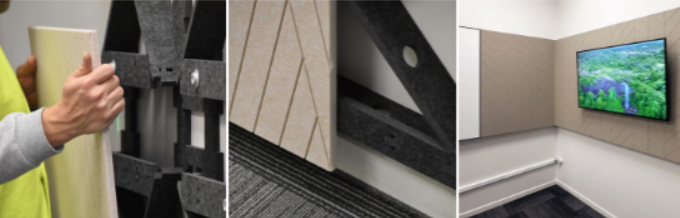
This space can be created by:
- Slim metal clips
- Narrow support rails
- Simple wooden strips
It does not need big structure.
Even small hidden gap can make difference.
Why Air Gap Improves Low Frequency Absorption
This is simple physics.
When sound hits the panel:
Part of energy enters the fiber structure.
If there is air cavity behind:
- Sound wave can continue to vibrate inside cavity
- Energy loss increases
- Low frequency absorption improves
Especially below 500Hz, air space helps a lot.
Same 12mm PET panel.
Different mounting method.
Different acoustic result.
That is why laboratory test reports always show mounting condition.
Real Example (From Practical Experience)
In one office project, client required Class A absorption.
Initially they planned direct mount.
After simulation and small test, we suggested adding 20mm hidden air cavity.
Result:
- NRC improved significantly
- Speech comfort improved
- No visual change
- Very small extra cost
Sometimes small technical adjustment avoids big acoustic problem later.

When to Choose Direct Mount?
Direct mount is suitable when:
- Budget is limited
- Installation must be very simple
- Project mainly needs mid/high frequency control
- Space depth is very limited
For many meeting rooms, direct mount 12mm PET works very well already.
When to Choose Air Gap?
Air gap is better when:
- Open office with more low frequency noise
- Large space with echo problem
- Higher NRC requirement (Class A)
- Stronger overall comfort needed
Even 20mm air gap can improve performance clearly.
In many Nordic and European projects, small hidden support system is common practice.
It looks minimal.
But technically smarter.
My Personal View on Installation Strategy
Sometimes I feel clients focus too much on panel thickness.
They think:
“Maybe 24mm is enough.”
But if installation is wrong, thicker panel alone will not solve everything.
In many cases:
A correct 12mm panel + small air cavity
works better than
thick panel directly mounted.
Good acoustic design is about system thinking.
Panel + installation + room condition.
Sustainability Perspective
Another reason I prefer PET system with air gap support:
- Lightweight
- Less structural load
- Less material waste
- Easy maintenance
- Recyclable panel
If future renovation happens, panels can be removed and reused.
For me, sustainable building is not only material selection.
It is also smart installation method.
What You Should Check Before Final Decision
Before confirming installation method, I recommend checking:
- Required NRC level
- Room size and ceiling height
- Noise type (speech / HVAC / mixed)
- Mounting surface condition
- Fire & VOC requirements
If you are unsure, it is better to discuss early.
Small adjustment in installation stage is much cheaper than fixing acoustic problem later.
Conclusion
Air gap vs direct mount is not about right or wrong.
It is about project goal.
Direct mount → simple and effective for many cases.
Air gap → better low frequency and higher overall performance.
Same PET panel.
Different installation.
Different result.
Understanding this difference helps you make smarter decision.
Need Technical Advice or Test Report?
If you are evaluating PET acoustic panels for your project, we can provide:
Feel free to contact us.
We are happy to support your project with practical advice, not only numbers.
Response in 24 hours!
More pages related
NRC guide article