Sep 10, 2026Services Overview
PET Felt and Wood Slat Panels: How They Work Together
PET felt and wood slat panels are not always competing products. Learn how PET felt can be used as acoustic backing and what manufacturers should check before sourcing.
PET Felt and Wood Slat Panels: Why They Work So Well Together
When people talk about acoustic wall panels, wood slat panels and PET felt panels are sometimes treated as two different choices.
But from what I see in the market, they are not always competitors.
In many wood slat acoustic panels, PET felt is actually part of the product.
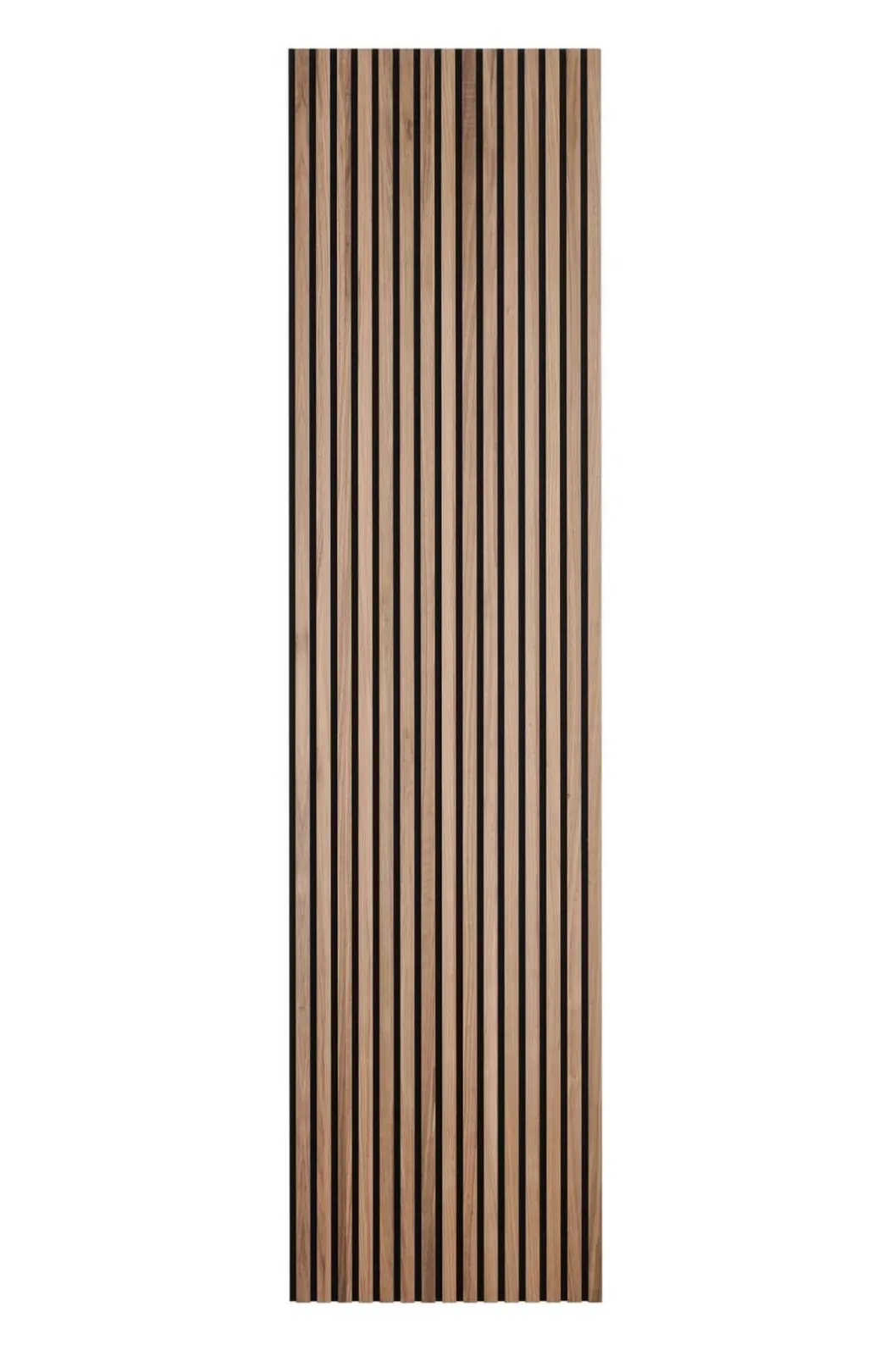
The wood creates the visible slat design.
The PET felt is used behind the slats as an acoustic backing.
This is an interesting part of the PET felt business because we don't produce wood slat panels ourselves.
We focus on PET felt panels and PET felt boards.
But some of our customers buy our PET felt specifically to use as the backing material for their own wood slat acoustic panels.
And this requires a different way of looking at the product.
PET Felt Is Not Always the Finished Acoustic Panel
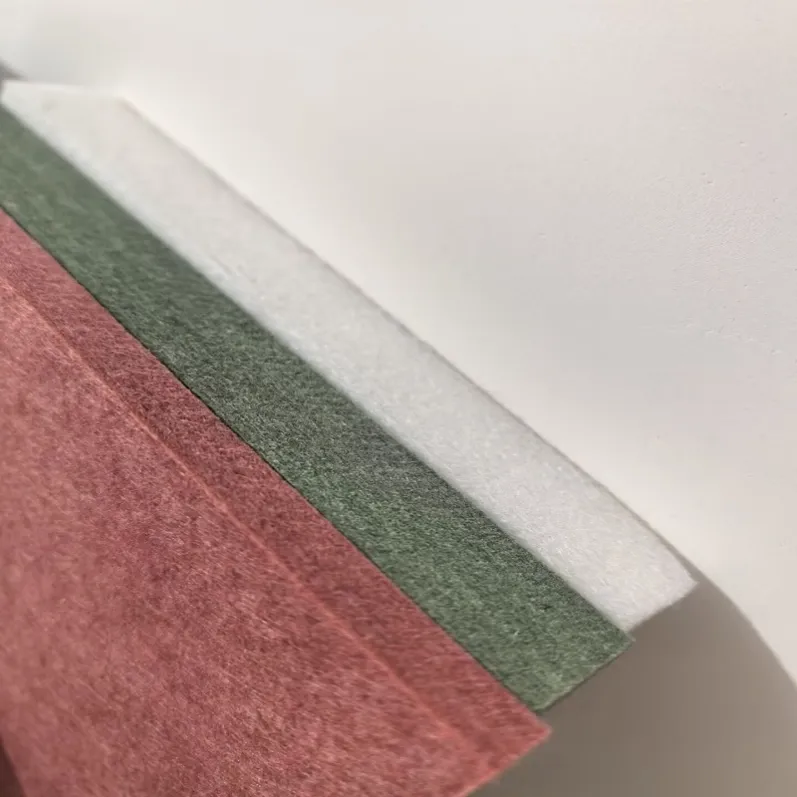
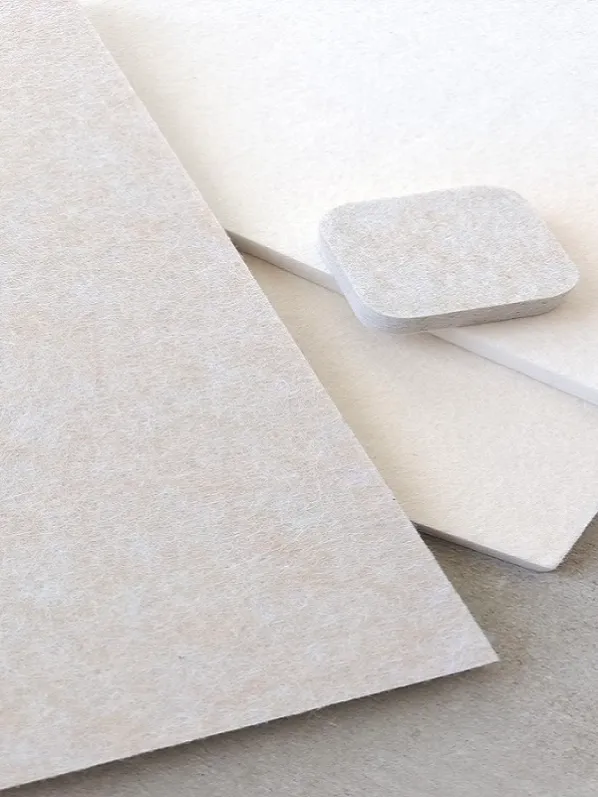
When you hear “PET felt acoustic panel,” you may think of a finished colored panel installed directly on a wall.
That is one important application.
But PET felt can also be used as a component material.
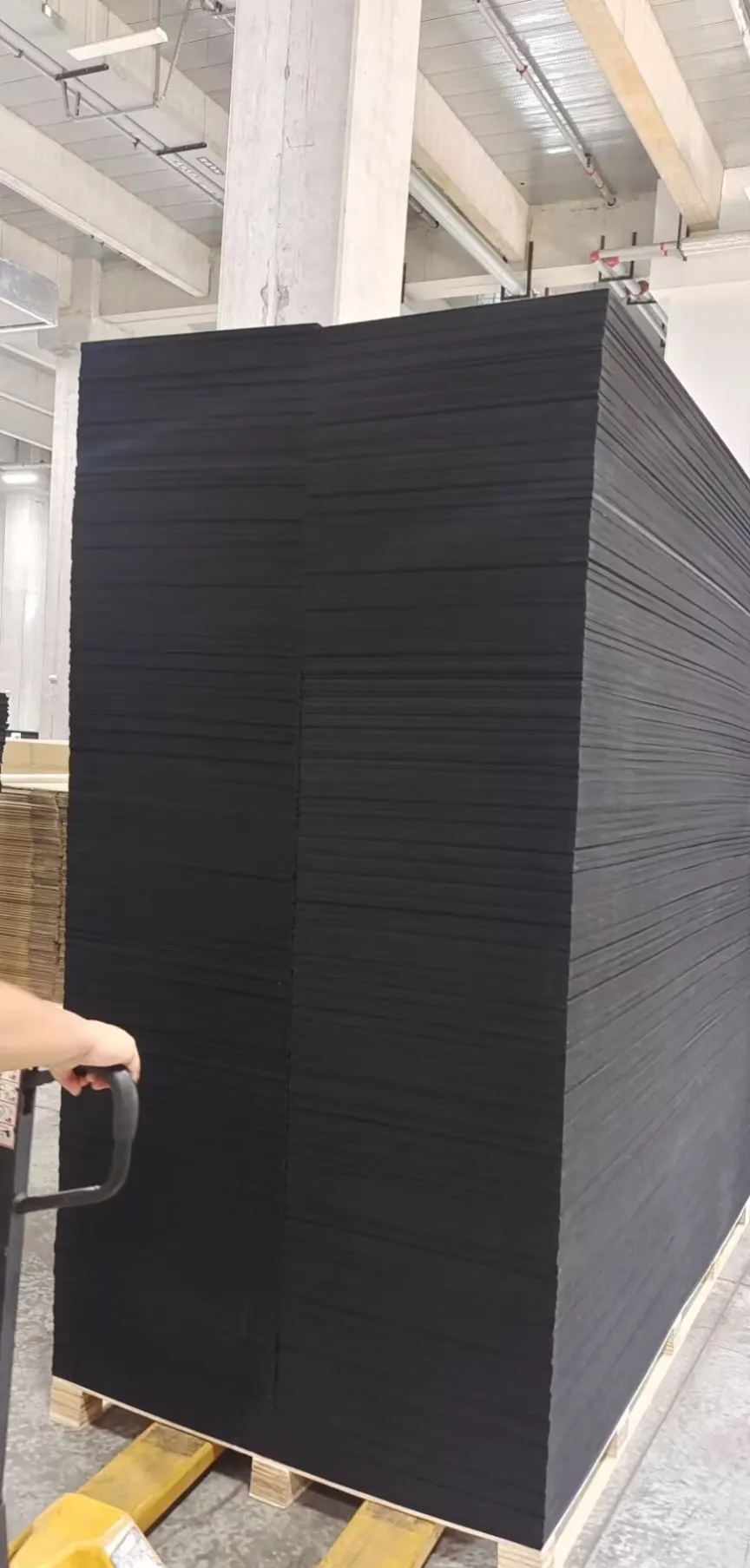
For wood slat acoustic panels, a piece of PET felt can be placed behind the wooden slats.
The wood slats provide the visual finish.
The felt backing becomes part of the acoustic construction.
This means the PET felt supplier does not always sell directly to the final installation project.
Sometimes the customer is another manufacturer.
They may buy PET felt boards, cut or process them as needed, and then combine them with their own wood slat system.
For us, this is an important part of the business.
Why Do Wood Slat Manufacturers Use PET Felt?
There is a simple reason.
Wood slats are relatively hard surfaces.
The acoustic performance of a wood slat system depends on the complete construction, not simply on the wood itself.
The open spaces between the slats allow sound to reach the acoustic layer behind them.
That is where the backing material becomes important.
PET felt is one material that can be used for this purpose.
It also gives the manufacturer another practical advantage:
the backing can be produced as a separate, consistent component.
The wood slats and the PET felt backing can then be assembled together during the customer's own production process.
So instead of thinking:
PET felt or wood slat?
It can be more useful to think:
PET felt + wood slat.
The Backing Material Is More Important Than It Looks
When you look at a finished wood slat acoustic panel, your eyes naturally go to the wood.
You see the color.
You see the grain.
You see the spacing.
You see the overall design.
The black or dark material behind the slats may not attract much attention.
But from the manufacturer's point of view, this backing material can be very important.
It needs to fit the production process.
It needs to have the required thickness and GSM.
It needs to be available in the required size.
And, for some manufacturers, dimensional tolerance is especially important.
This is where the requirements can become much more serious than a normal decorative PET felt panel.
Why Some Wood Slat Manufacturers Have Very Strict Tolerance Requirements
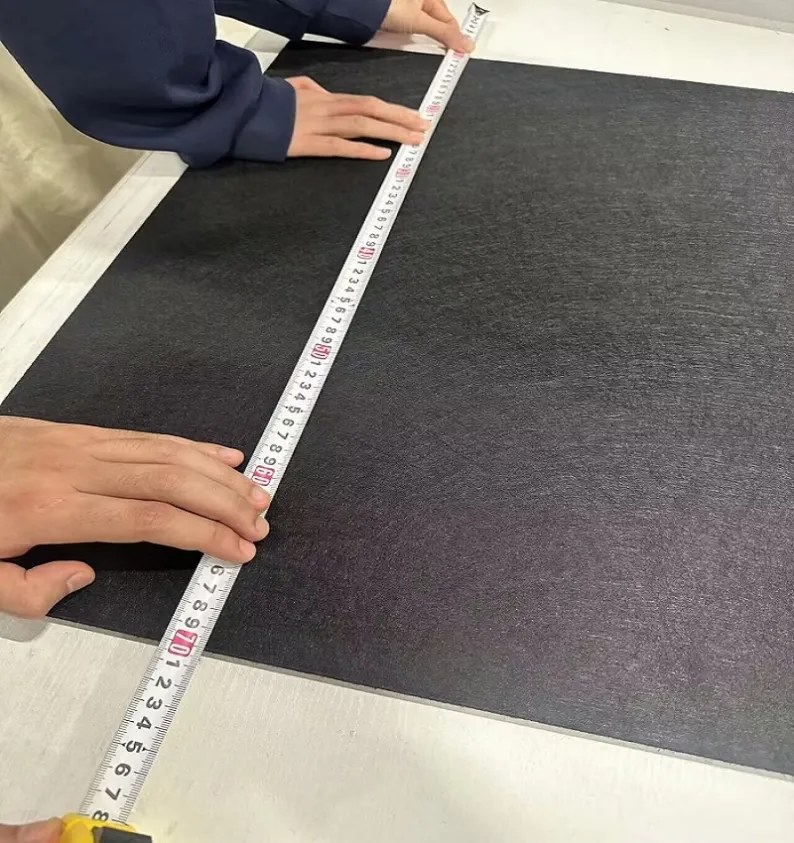
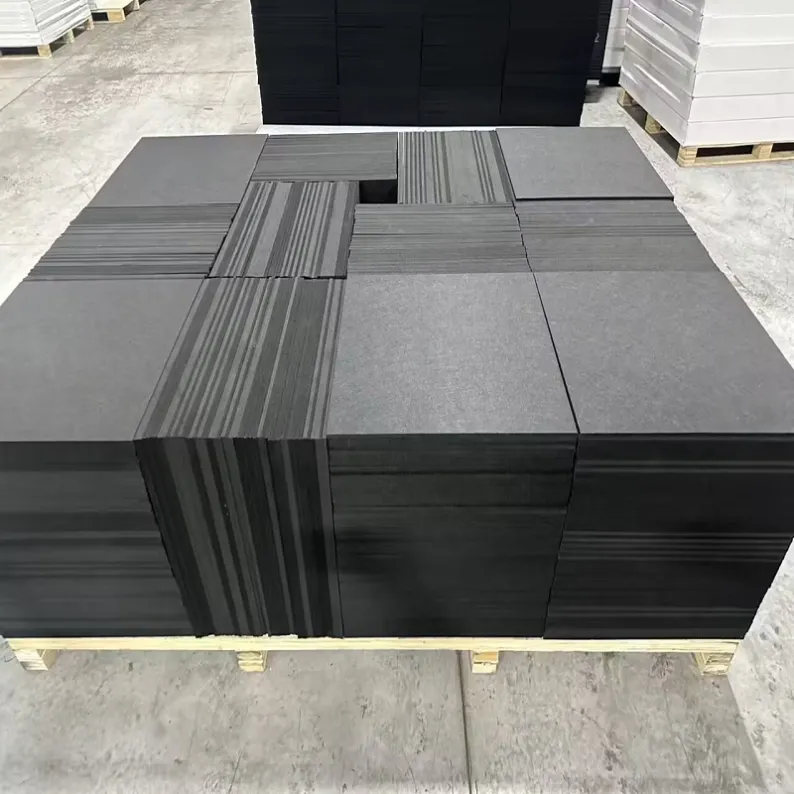
We have customers who use our PET felt boards as backing material for their wood slat production.
Their regular sizes can include:
600 × 2400mm
and
600 × 600mm
These may look like simple sizes.
But the customer may have a production system already designed around these dimensions.
Their production department may have molds, fixtures or other tooling.
When the PET felt board is used inside this process, the board cannot simply be “approximately” the right size.
If the tolerance is too large, it can affect the next production step.
This is very different from a customer buying a decorative PET felt panel and installing it directly on a wall.
For a raw material customer, dimensional consistency can become one of the most important requirements.
This Is Why “Can You Make 600 × 2400mm?” Is Not the Full Question
A customer may tell us:
“We need 600 × 2400mm black PET felt.”
That sounds like a simple specification.
But for a manufacturing customer, I would want to understand more.
What thickness?
What GSM?
What tolerance?
Is the size the exact finished size?
How will it be processed?
How will it be assembled?
How many pieces do they produce?
Do they need the same size batch after batch?
These questions matter because the customer is not simply buying a PET felt panel.
They are buying a raw material for their own production line.
And when another factory's production depends on your material, consistency becomes much more important.
Black PET Felt Is Especially Common for This Application
For wood slat acoustic panels, the backing is often not meant to become the main visual feature.
Because of this, black PET felt is a very practical choice.
The dark backing works naturally with the gaps between the wood slats.
It helps create the visual depth behind the wooden surface without competing with the wood finish.
This is one reason we receive many inquiries for black PET felt boards for wood slat applications.
In these cases, the customer may not be looking for 58 colors.
They may not need a printed surface.
They may not need a decorative CNC pattern.
They simply need:
the right material, the right size, the right GSM, the right tolerance and consistent production.
This is a very different buying requirement from a designer choosing a colorful acoustic wall panel.
Raw Material Customers Think Differently
This is something I have learned from working with different types of customers.
A designer may ask:
“What colors do you have?”
An acoustic panel distributor may ask:
“What is your NRC?”
A furniture manufacturer may ask:
“Can we CNC cut it?”
But a manufacturer using PET felt as a raw material may ask:
“What is your tolerance?”
Or:
“Will the size stay consistent from batch to batch?”
Or:
“Can you keep supplying the same specification?”
These questions may sound less exciting.
But they are very important in real production.
Because if the PET felt is being assembled into another product, a small inconsistency can move into the customer's own manufacturing process.
The PET Felt Supplier Becomes Part of the Customer's Production
This is where I think raw material supply is different from normal product sales.
If I sell a finished PET felt acoustic panel, the customer mainly cares about the final panel.
But if I supply PET felt boards to a wood slat manufacturer, my material becomes one part of their production process.
Their production may involve:
- receiving PET felt boards
- cutting or preparing the material
- assembling the wood slats
- using fixtures or tooling
- completing the acoustic panel
- packing the finished product
So if the PET felt size changes too much, it is not only a material problem.
It can become a production problem for the customer.
That is why tolerance is not just a number on a specification sheet.
It can directly affect manufacturing.
We Don't Make Wood Slat Panels — And That's OK
Some people may ask:
“If wood slat panels are such a big market, why don't you produce them yourselves?”
There is a practical reason.
Wood slat panels depend heavily on the quality and supply of MDF, veneer, wood finishes and other wood components.
For certain quality requirements, European manufacturers have strong advantages in this area.
We decided not to move into wood slat panel manufacturing.
Instead, we focus on what we know well:
PET felt.
We can make PET felt for direct acoustic applications.
We can also supply PET felt as a component material for other manufacturers.
I actually think this is a good position for us.
We don't need to make the whole product to be part of the product.
One Acoustic Product Can Have More Than One Supplier
This is also something buyers sometimes overlook.
A finished wood slat acoustic panel may involve several specialized suppliers.
One supplier provides the wood components.
Another provides the PET felt backing.
Another may provide metal profiles or installation accessories.
The final manufacturer brings everything together.
This is normal in many manufacturing industries.
The important thing is that each component needs to meet the requirements of the final product.
For the PET felt backing, that may mean:
- stable dimensions
- consistent thickness
- consistent GSM
- suitable material structure
- required color
- reliable supply
- suitable packaging
The requirements may be different from those of a finished acoustic panel.
PET Felt Can Also Be the Finished Product
Of course, this does not mean PET felt is only a backing material.
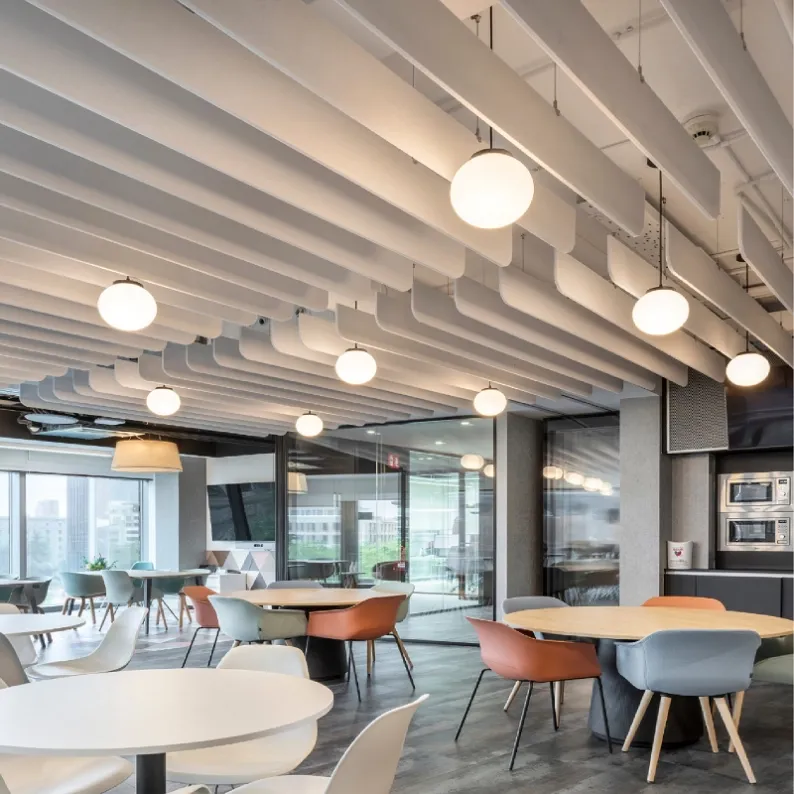
We also produce PET felt panels for direct use in:
- acoustic wall panels
- ceiling systems
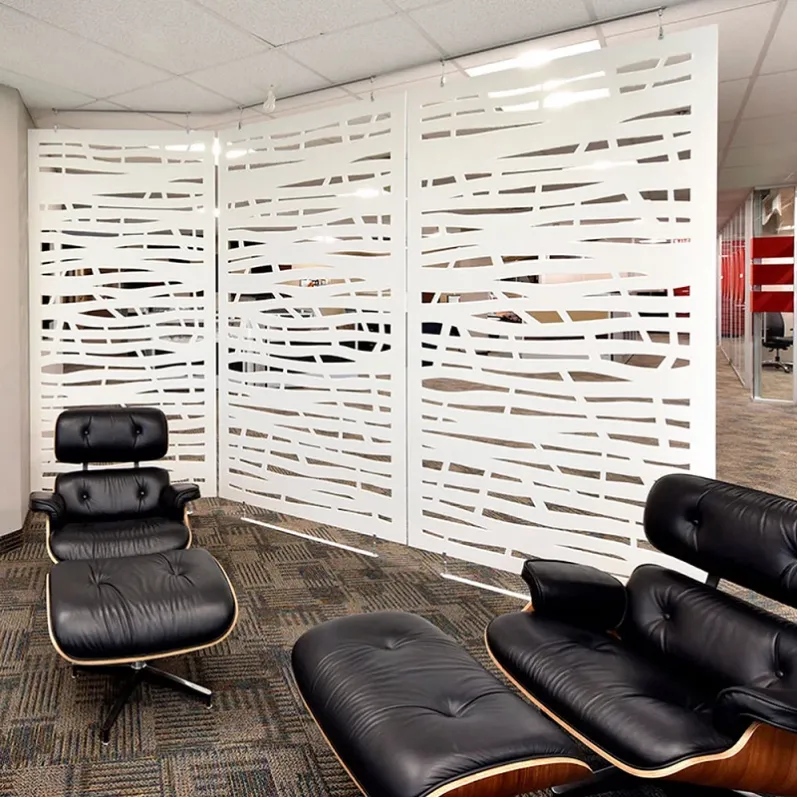
- office partitions
- workstation screens
- furniture
- decorative acoustic elements
- 3D thermoformed applications
So PET felt can have two very different roles.
As a finished product:
The PET felt itself is part of the visible interior design.
As a raw material:
The PET felt becomes one component of another manufacturer's product.
Both are important markets.
And the requirements are not always the same.
What Should You Ask When Buying PET Felt for Wood Slat Production?
If you are a wood slat manufacturer sourcing PET felt backing, I would suggest checking a few points before placing a large order.
1. Confirm the exact size
Don't only say “600mm wide.”
Confirm the complete size and required tolerance.
2. Confirm the GSM and thickness together
These two specifications should always be considered together.
3. Confirm the color
If black is required, confirm the actual color standard or sample.
4. Ask about batch consistency
Especially if the PET felt is going into a repeated production process.
5. Confirm whether the material is suitable for your production
If you have cutting, molding, pressing or assembly processes, tell the supplier.
6. Send your actual sample if tolerance is critical
A physical sample can sometimes explain the requirement much better than a long email.
This is especially useful when the material needs to fit existing tooling.
The Best PET Felt Is Not Always the Highest GSM
Another point worth mentioning is GSM.
A wood slat backing application does not automatically require the highest GSM PET felt available.
The right specification depends on the customer's production process and the final panel construction.
A thicker or higher-GSM material is not automatically better for every application.
If the material needs to fit a particular production process, the more important question may be:
Does this specification work reliably in our production?
That is a better starting point than simply asking for the highest GSM.
PET Felt and Wood Slat Are Complementary
This is probably the main point I want buyers to take from this article.
PET felt and wood slat panels do not always compete with each other.
They can work together.
The wood gives the finished panel its natural and architectural appearance.
The PET felt can provide the acoustic backing and become an important part of the panel construction.
For manufacturers, this also creates an interesting supply chain:
PET felt → backing material → wood slat assembly → finished acoustic panel
This means a PET felt manufacturer does not necessarily need to produce the final wood slat product.
We can focus on one material and become good at producing that material consistently.
Sometimes, Being a Good Supplier Means Knowing What Not to Produce
For us, this is a simple business decision.
We know PET felt.
We understand the material.
We know how thickness, GSM, cutting, tolerance and production consistency affect different applications.
Wood slat manufacturing is a different field.
So instead of trying to make everything, we prefer to focus on PET felt.
And if a wood slat manufacturer needs a reliable PET felt backing, we can become part of their production chain.
I think there is value in this kind of specialization.
If You Manufacture Wood Slat Acoustic Panels
If you are producing wood slat acoustic panels and looking for PET felt backing material, you can send me your current specification or a sample.
Especially if you have requirements for:
600 × 3000mm, 600 × 2400mm, 600 × 600mm, black PET felt, specific GSM/thickness or tight dimensional tolerance, please let us know the actual production requirement.
We can first check the material specification and production feasibility before discussing the quotation.
Because when PET felt becomes part of your manufacturing process, the question is not simply:
“How much does one sheet cost?”
The better question is:
“Can this material work consistently in our production?”
That is where a PET felt supplier can make a real difference.
More related pages:
📩 Send us your project drawings or specifications, and we will respond with a clear quotation and production suggestion within 24 hours.
Email: info@hengmy.com