Jun 26, 2026News & Insights
How to Achieve Class A with PET Acoustic Panels
Learn how to achieve Class A acoustic performance with PET panels through air gap, installation methods, and system design.
How to Achieve Class A with PET Acoustic Panels
Many projects specify one clear requirement:
“We need Class A acoustic performance.”
On paper, this sounds straightforward.
But in real applications with PET acoustic panels,
achieving Class A is not only about choosing the right material.
It is about how the entire system is designed and installed.
We have seen many projects where:
- correct panel thickness was selected
- material quality was consistent
- but final performance still did not reach Class A
In most cases, the issue is not the panel itself.
It is the structure behind it.
What Does Class A Actually Require?
Class A acoustic performance (based on ISO standards)
means very high sound absorption across a wide frequency range.
Not only mid and high frequencies —
but also low frequencies.
This is where many PET acoustic panel installations fall short.
Because low-frequency absorption requires:
- air movement
- depth
- and system design
Why PET Acoustic Panels Alone Are Not Always Enough
PET acoustic panels are porous absorbers.
They perform well in:
- offices
- meeting rooms
- open spaces
But when installed directly onto rigid walls,
their performance is limited by:
- lack of air gap
- restricted airflow
- insufficient system depth
This is why even 24mm PET acoustic panels
may not achieve Class A when directly mounted.
How to Achieve Class A with PET Acoustic Panels
From real project experience, there are several practical approaches.
1️⃣ Introduce an Air Gap Behind the Panel
This is one of the most effective and underestimated methods.
Adding a 15–50mm air gap behind PET acoustic panels can:
- significantly improve low-frequency absorption
- increase overall NRC
- help reach Class A performance
Even a small gap can make a measurable difference.
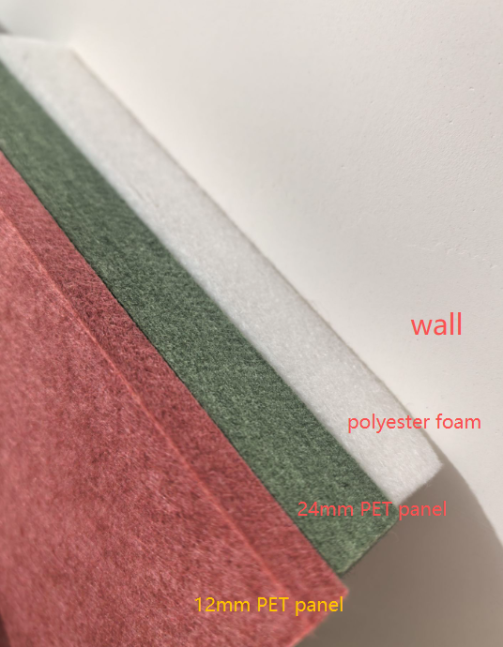
2️⃣ Use a Composite Acoustic System
Instead of relying on a single PET panel layer, combine materials to build a system.
For example:
- PET acoustic panel (front layer)
- mineral wool or fiberglass (back layer)
- air cavity
This structure allows sound energy to be absorbed more efficiently
across a wider frequency range.
3️⃣ Increase System Depth (Not Only Panel Thickness)
Many buyers try to solve the problem by increasing panel thickness:
- from 12mm to 24mm
- or even thicker
But in many cases:
Increasing thickness alone is less effective than adding depth behind the panel.
A thinner panel with proper structure
can outperform a thicker panel without it.
4️⃣ Combine Wall and Ceiling Treatments
In real spaces, acoustic performance does not depend on one surface.
To achieve Class A, consider combining:
- wall panels
- ceiling baffles or rafts
- suspended acoustic elements
This creates a more balanced absorption across the room.

5️⃣ Review Installation Before Production
This is where many problems can be avoided.
Before confirming production, it is important to check:
- installation method (direct or with gap)
- backing condition
- panel layout and coverage ratio
- target frequency performance
A short technical review at this stage
can prevent expensive adjustments later.
A Common Misunderstanding
One thing we often see:
Clients expect the test report result
to match the real installation result.
But test conditions are usually:
- optimized setup
- controlled environment
- specific mounting method
In real projects, if installation differs, performance will also change.
This is not a material issue.
It is a system difference.
From Production to Application
From our side, we try to support this earlier in the process.
We provide:
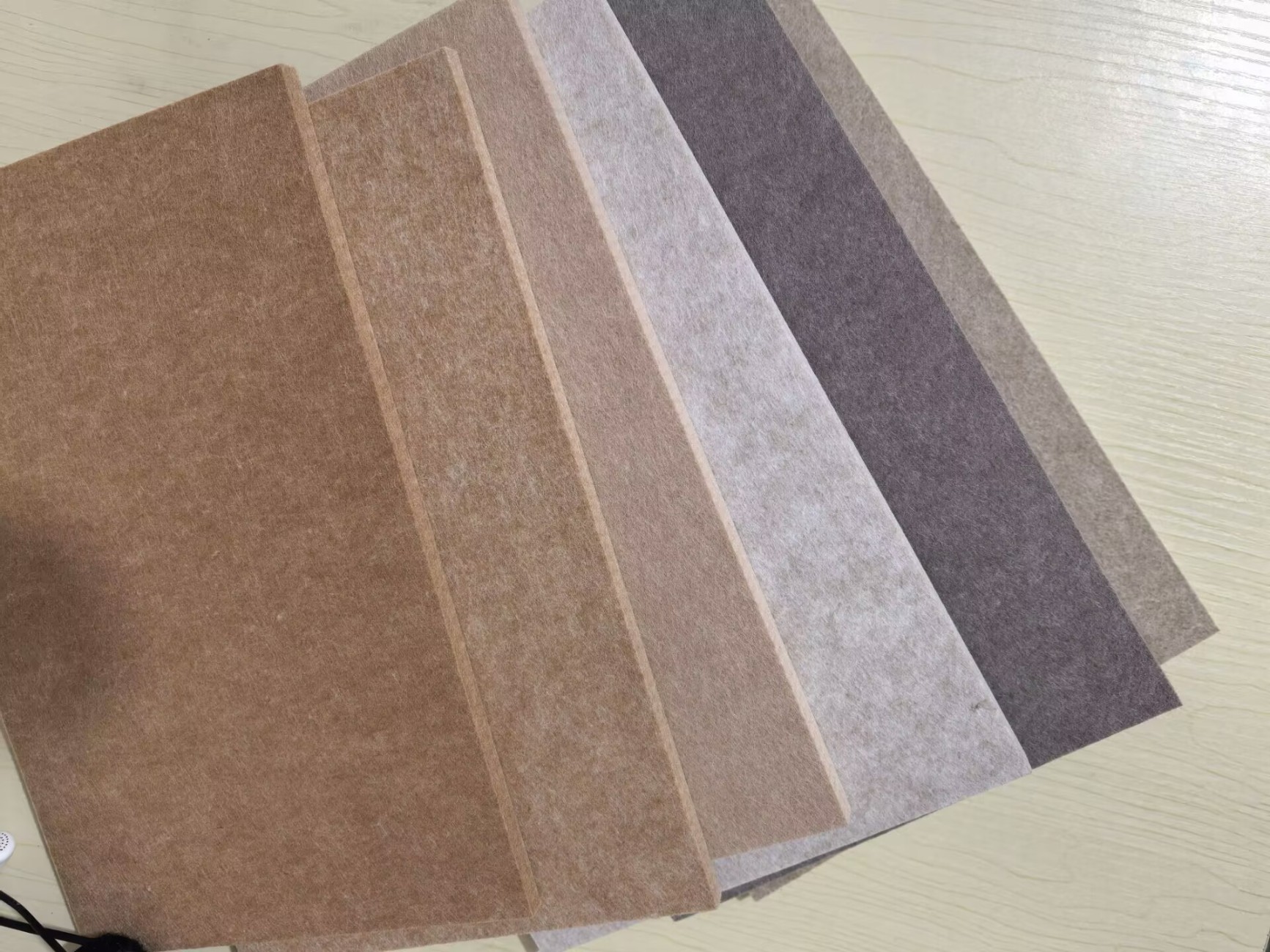
- stable supply of PET acoustic panels (9mm / 12mm / 18mm / 24mm)
- consistent quality for large projects
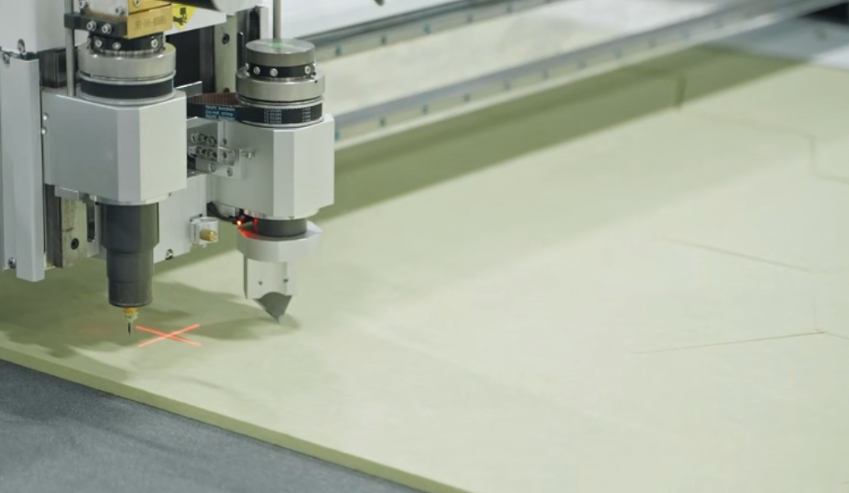
- flexible CNC cutting for complex designs
- support on panel layout and structure discussion
Because in many projects,
the challenge is not only manufacturing the panels.
It is making sure the panels work as expected after installation.
We have also seen that better planning at early stage
can reduce unnecessary material usage and rework cost.
(You can also explore our insights on reducing material waste in PET panel projects.)
Final Thought
Achieving Class A with PET acoustic panels is possible.
But it does not come from one decision.
It comes from combining:
- material
- structure
- installation method
When these elements are aligned,
performance becomes predictable.
If they are not,
even high-quality panels may not deliver expected results.
Planning a Project?
If you are working on a project with:
- Class A requirement
- limited installation depth
- or complex panel design
it is worth reviewing the structure before finalizing material choice.
We are always open to discuss practical solutions
based on your actual project conditions.
Sometimes, one small adjustment
can make a significant difference.