Sep 15, 2026Services Overview
What Happens to PET Felt After Delivery?
A PET felt supplier should understand more than production. Cutting, testing, processing and application can all affect how useful the material is to the customer.

A Good Supplier Should Understand What Happens After Delivery

When we talk about PET felt supply, it is easy to focus on what happens before the goods leave the factory.
Specification.
Color.
Quantity.
Price.
Lead time.
All of these are important.
But there is another part that is sometimes overlooked:
What happens after the PET felt arrives at the customer's side?
For a material supplier, I think this is also something we should try to understand.
Because delivery is not the end of the customer's work.
In many cases, it is only the beginning.
The material may have another job after delivery
A customer may not buy PET felt just to keep it in a warehouse.
They may need to cut it, process it, test it, install it, or use it as part of another product.
For an importer or manufacturer, the PET felt may be only one part of a much bigger process.
This means a supplier can sometimes understand the product very well, but still not fully understand the customer's actual problem.
We may know how to produce the sheet.
But do we know how the customer plans to use it?
That is an important question.
One customer reminded us of this
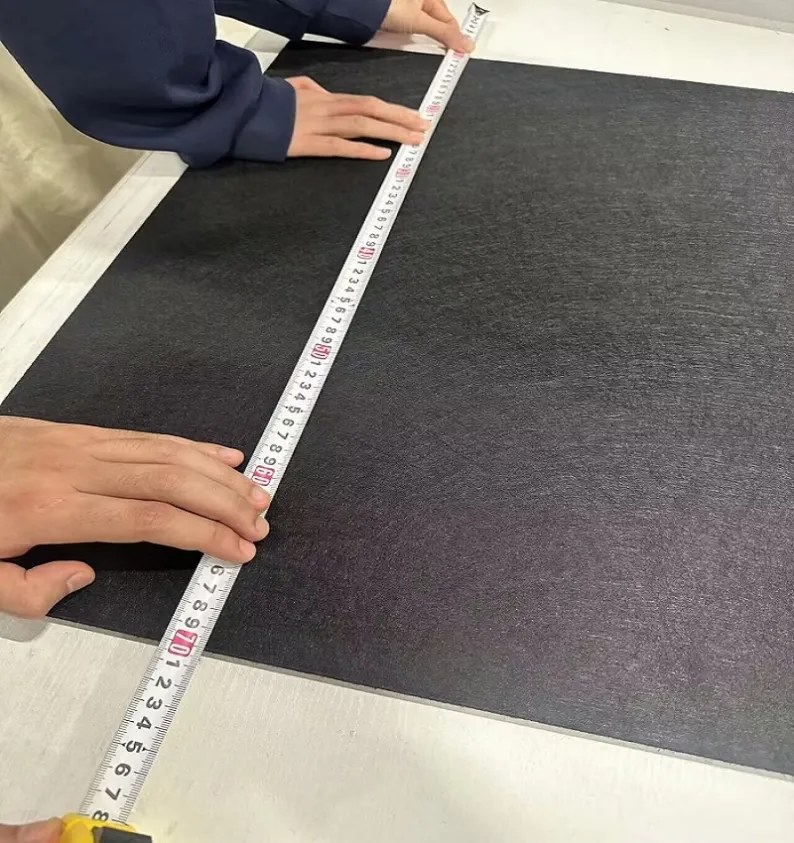
In one project, the customer was not only evaluating PET felt itself.
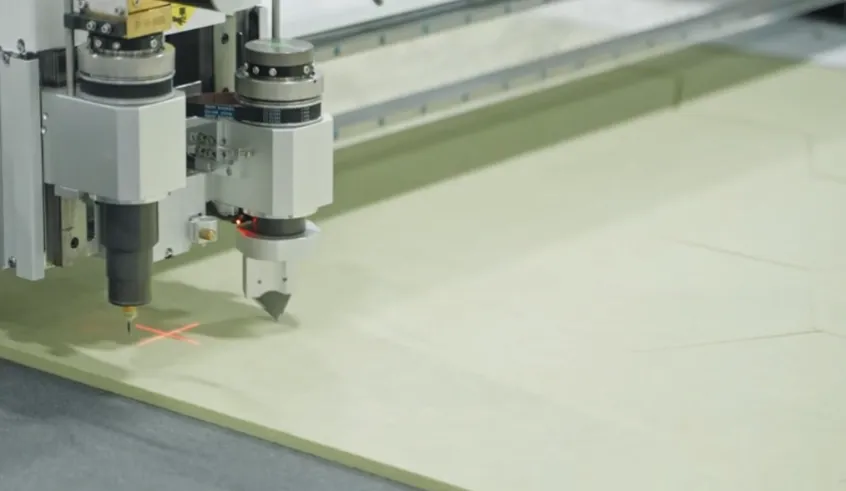
During our communication, we discussed the customer's cutting requirements and how different cutting equipment could be used with PET felt.
We also offered to provide material for testing at the cutting machine supplier.
There was nothing complicated about this.
The point was simply to make sure the material and the customer's processing method could be considered together.
For me, this was a good reminder:
Sometimes the material cannot be separated from the process around it.
A customer may have a very good material, but still have questions about how to process it.
And sometimes the supplier can help by understanding those questions before the material is purchased in larger quantities.
The right specification is not always the most expensive one
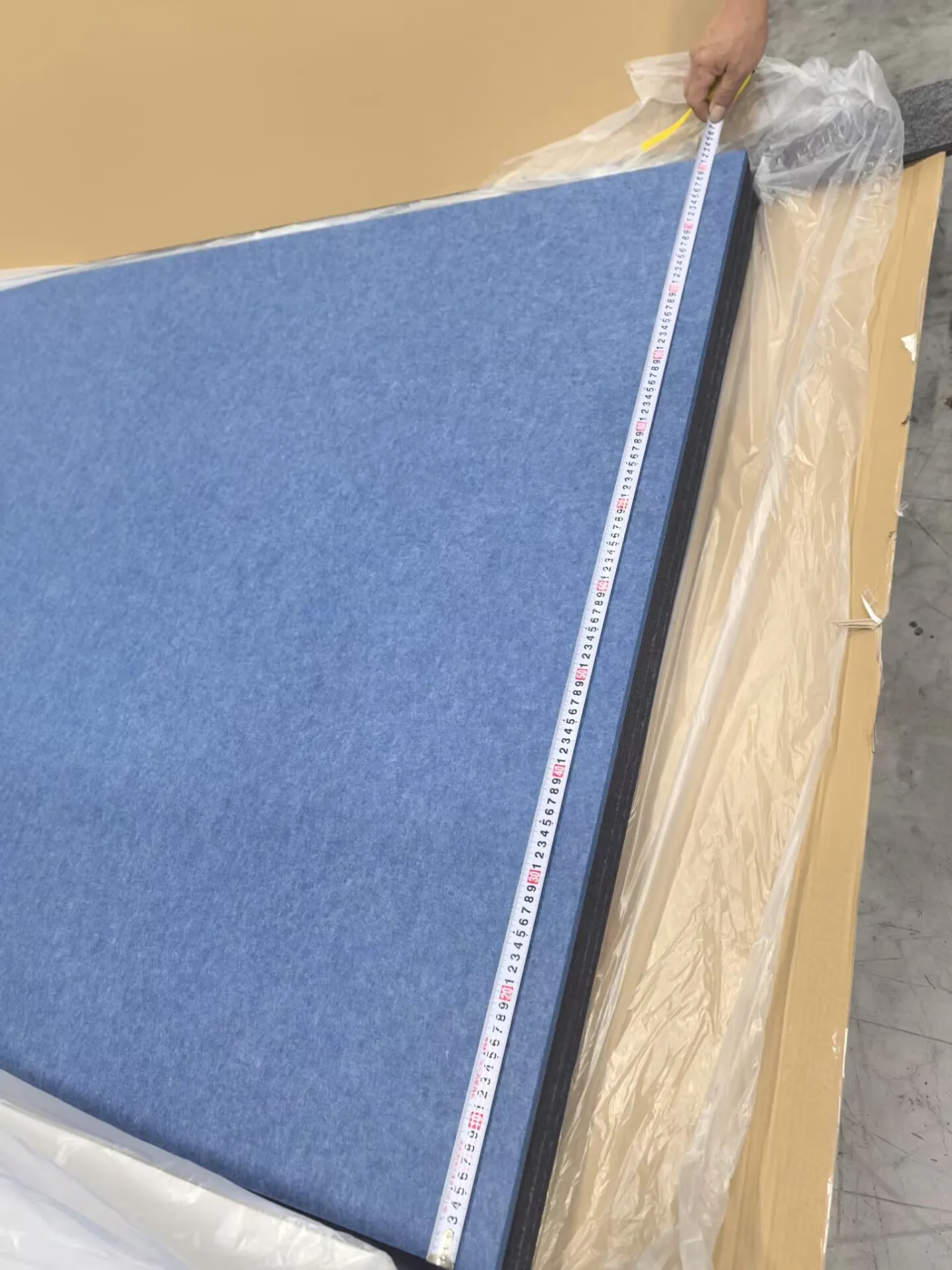
When customers ask for a quotation, they often already have a specification in mind.
For example:
“We need this thickness and this size.”
Of course, we should quote according to the customer's request.
But if we understand the application, there may also be a useful discussion behind the quotation.
Why this thickness?
Why this size?
Will the material be cut?
Will it be processed further?
Is the standard specification suitable?
Is a custom specification really necessary?
These questions do not mean that the supplier should make the decision for the customer.
The customer knows their own business better than we do.
But a supplier with enough product experience can help the customer look at the material from another angle.
Sometimes the best solution is simply the specification the customer originally requested.
Sometimes another standard option may also work.
The important thing is to have the discussion before production.
Testing can be useful before a larger order
This is especially important when the customer's processing method is different from what the supplier normally sees.
If a customer is going to cut or process the PET felt in a particular way, it can be useful to test the actual material before moving directly to a larger order.
This does not mean every order needs a complicated testing process.
It depends on the application.
But when there is uncertainty, a small practical test can sometimes answer a question much faster than a long email discussion.
For suppliers, this also means we should be willing to understand the customer's testing needs.
Not every problem can be solved from a product specification sheet.
Sometimes the customer needs to actually work with the material.
Fire performance is another example
For some PET felt applications, fire performance is an important part of the purchasing decision.
In this case, it is not enough to simply say:
“Our PET felt is fire rated.”
The customer may need to know what was tested, which specification was tested, and whether the available documentation is suitable for their project or market.
This is why I think a supplier should be careful with test reports.
A supplier can also help reduce unnecessary work
A specification needs to be changed.
A sample needs to be tested again.
A production schedule needs to be adjusted.
A shipment may need to wait.
The customer may then have to explain the problem to their own customer.
These things are not always large problems individually.
But when they happen repeatedly, they make the whole supply chain more difficult.
This is why I believe supplier support is not only about answering questions after something goes wrong.
It is also about asking the right questions before production starts.
We do not need to know everything
Of course, a material supplier cannot solve every problem.
We are not a cutting machine manufacturer.
We are not the customer's production engineer.
And we cannot know every application in advance.
But we can ask.
We can listen.
We can understand how the material will be used.
And when we do not know something, we should be honest about it and, when possible, help the customer find the right way to test or confirm it.
I think this is more useful than pretending to have an answer for everything.
The job does not end when the container leaves the factory
For me, a good supplier relationship is not only about producing the material correctly and shipping it on time.
It is also about understanding what the customer is trying to do with that material.
Maybe they are making acoustic products.
Maybe they are supplying office furniture.
Maybe they are processing the PET felt themselves.
Maybe they are buying material for a new application they have not used before.
The more we understand the customer's actual work, the more useful our support can become.
And sometimes, a simple conversation before an order can save much more time than trying to solve the same problem after production.
That is the kind of supplier relationship we want to build.
Not only:
“Here is your quotation.”
But also:
“Tell me how you are going to use the material, and let's see if there is anything we should confirm before you place the order.”
Because when a customer can use the material more smoothly, avoid unnecessary problems, and serve their own customers with more confidence, the supplier relationship becomes more valuable for both sides.
If you are currently sourcing PET felt for a new application, processing method, or product line, you are welcome to send me your specification or simply tell me how you plan to use the material.
I am happy to look at it with you and discuss what should be confirmed before production.
More related pages:
📩 Send us your project drawings or specifications, and we will respond with a clear quotation and production suggestion within 24 hours.
Email: info@hengmy.com