Jun 26, 2026News & Insights
PET Felt Panel Packaging Problems: How to Prevent Bending and Pressure Marks in Transport
PET felt panels can bend or develop pressure marks during transport if packaging does not match material behavior. Learn practical solutions for stable delivery.
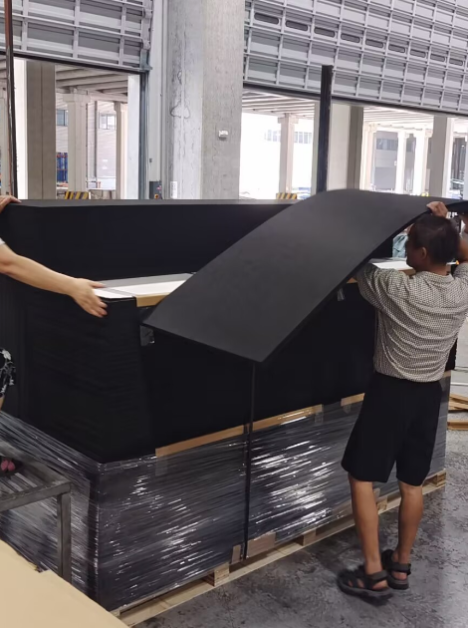
PET Felt Panel Packaging Problems: Why Bending and Pressure Marks Happen During Transport
In PET felt acoustic panel projects, most attention is usually given to
- production quality
- Thickness
- density
- color
- cutting accuracy
— all carefully checked.
But in some cases, problems do not appear in the factory.
They appear after shipping.
This is something we experienced in a recent project with a client in Europe.
1. The Situation: Everything Was Fine — At First
The product was 1350gsm PET felt panels.
They were used as backing material for wooden slat wall systems.
Production was smooth.
- Panels were flat.
- Surface was clean.
- Quality was stable.
No issues at this stage.
2. What Happened During Packing Trial
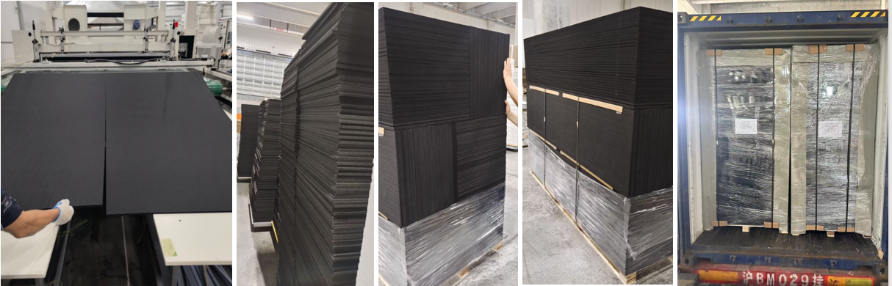
Before shipment, we did a standard packing test.
At that moment, small details started to appear:
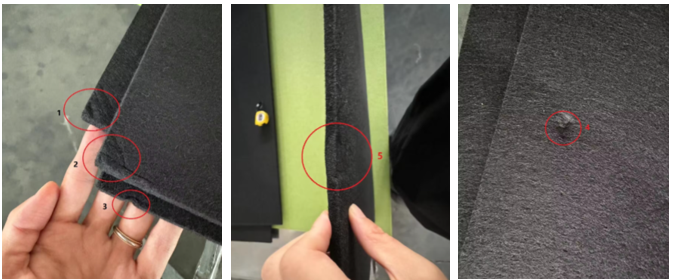
- vertical stacking caused slight bending
- uneven strapping created pressure marks on the surface
- higher pallet height increased compression risk
These were not major defects.
But they were clear signals.
3. Why These Problems Happen with PET Felt
PET felt panels are not rigid boards.
They are:
- fiber-based materials
- slightly flexible
- compressible under pressure
This means:
Under vertical stacking:
- weight from upper layers creates bending force
Under strapping:
- uneven tension leaves visible marks
Under high pallet load:
- long-time compression changes panel shape
These behaviors are normal for this type of material.
But if packaging does not consider them, problems appear during transport.
4. Why Standard Packaging Is Not Always Suitable
In many factories, standard packaging methods are used:
- vertical stacking
- tight strapping
- maximum pallet height
These methods work well for rigid materials.
But PET felt behaves differently.
If packaging follows “standard rules” instead of “material behavior”, risk increases.
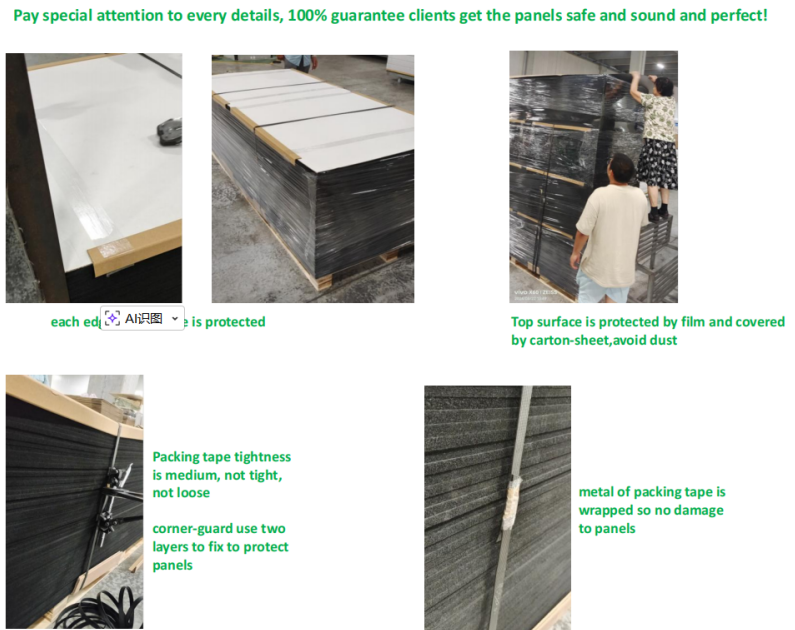
5. What We Adjusted in This Case
Instead of changing the product, we adjusted the packaging system.
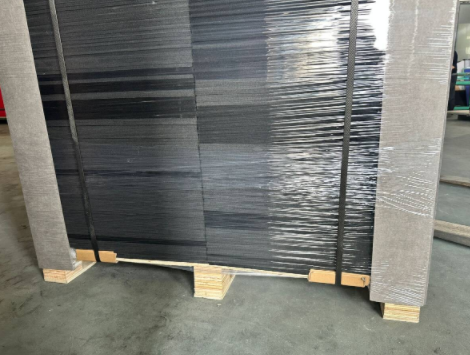
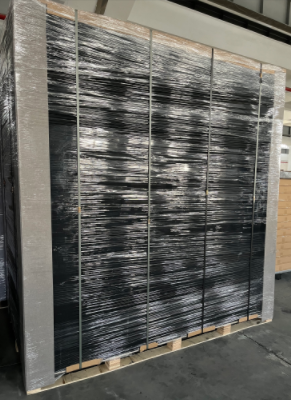
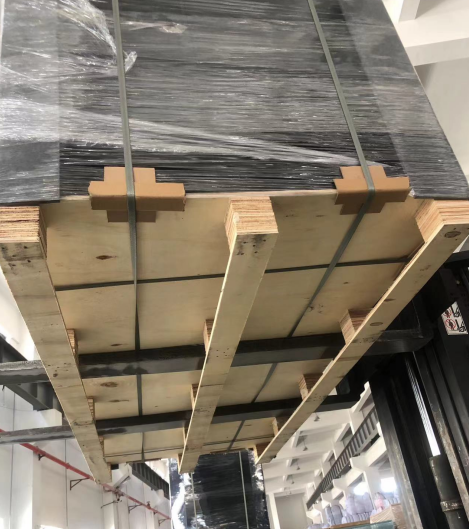
1. Pallet structure redesign
- reduced stacking pressure
- improved load distribution
2. Internal divider added
- separated layers
- reduced direct compression between panels
3. Strapping tension control
- avoided over-tightening
- reduced surface pressure marks
These changes were simple, but practical.
6. The Result
After adjustment:
- no visible bending
- no surface pressure marks
- stable condition after transport
The product itself did not change.
Only the packaging method changed.
7. What This Means in Real Projects
This case is not unusual.
In many PET felt projects:
- production is correct
- material quality is stable
- but packaging is not adapted
And problems appear only after delivery.
This creates confusion, because:
- factory inspection is passed
- but client receives imperfect product
Final Insight
In PET felt panel projects, packaging is not just protection.
It is part of the product system.
Especially for fiber-based acoustic materials, structure matters.
A simple principle we follow in our daily work:
Packaging should follow material behavior, not only standard rules.
When this is considered early, many transport issues can be avoided.
Inquiry Support
If you are working with PET felt panels for wall systems or acoustic applications, packaging design can affect final delivery quality more than expected.
We can help review your panel specification and suggest suitable packing methods based on material density, thickness, and application.
This helps reduce transport risk and avoid unexpected issues after shipment.
For more related pages:
Email: info@hengmy.com will respond within 24 hours !