Jun 26, 2026News & Insights
Why 24mm PET Acoustic Panels Cannot Reach Class A (And How to Improve Performance)
Why do 24mm PET acoustic panels fail to reach Class A? Learn how air gap, installation, and structure affect real acoustic performance.
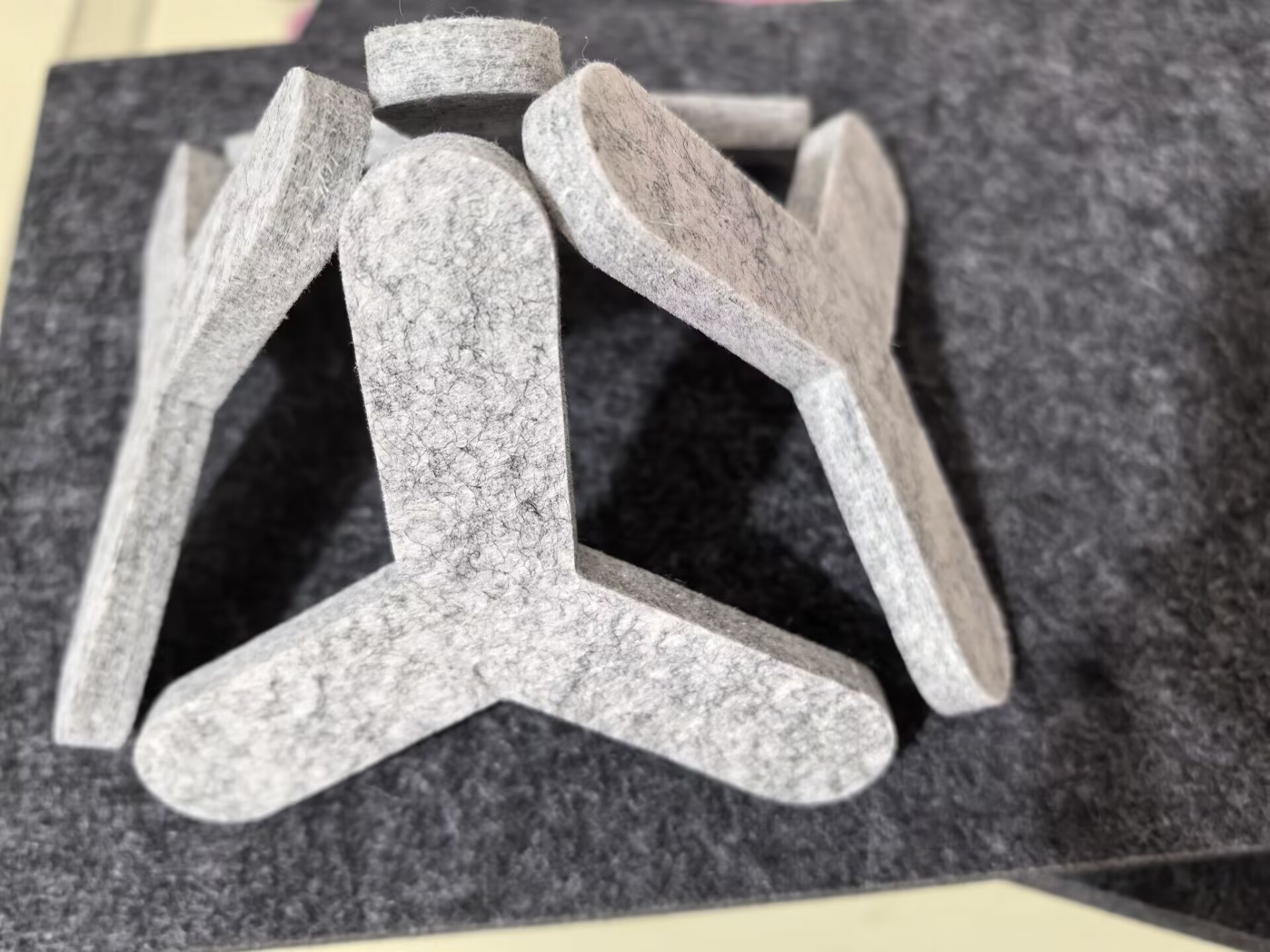
Why 24mm PET Acoustic Panels Cannot Reach Class A (And How to Improve Performance)
Many people assume one simple thing in acoustic design:
If the panel is thicker, the performance should be better.
So when 24mm PET acoustic panels are specified,
there is often a natural expectation:
|“This should reach Class A without problem.”
But in real projects, this is often not the case.
We have seen many installations where 24mm PET acoustic panels are mounted directly on the wall,
and the final result is around NRC 0.60–0.70.
Then comes the question:
|“Is there something wrong with the material?”
In most cases, the answer is no.
It is not about quality.
It is about how acoustic systems actually work.
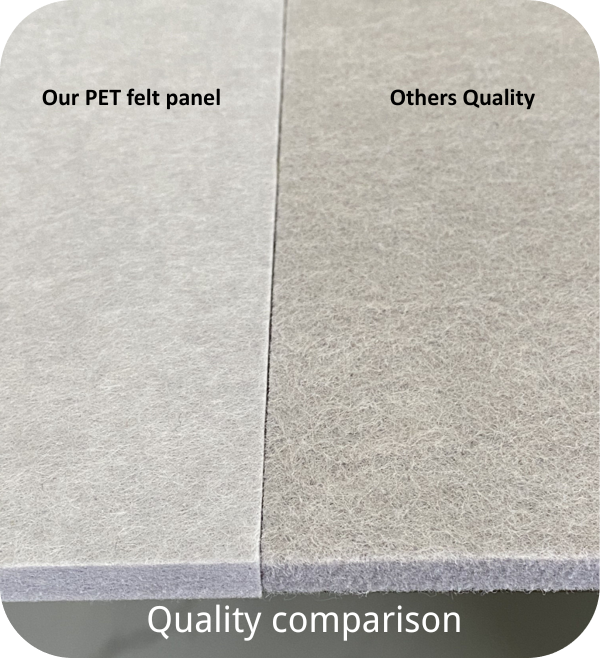
Why 24mm PET Acoustic Panels Fail to Reach Class A
PET acoustic panels are porous absorbers.
They reduce sound by allowing air movement inside the fiber structure.
This works well for:
- mid frequencies
- high frequencies
But low-frequency sound behaves very differently.
Low frequency needs space to move.
When PET acoustic panels are installed directly onto rigid surfaces like:
- concrete
- gypsum board
- MDF
there is almost no air movement behind the panel.
So instead of being absorbed,
a significant part of low-frequency sound is reflected.
This is why many 24mm PET acoustic panels, even with stable density and good material quality, still struggle to achieve Class A acoustic performance.
Thickness Is Not the Same as Performance
24mm sounds thick in specification.
But in acoustic terms, thickness alone does not define performance.
Without the right installation condition,
even thicker acoustic panels may not perform as expected.
In many projects, we see:
- correct material selected
- correct thickness specified
- but performance still below target
Because the system behind the panel was not considered.
Does Air Gap Improve Acoustic Panel Performance?
Yes — and often more than expected.
Adding a small air gap behind PET acoustic panels
can significantly improve acoustic performance, especially at low frequencies.
Even a 15–20mm air gap can:
- increase sound absorption efficiency
- reduce low-frequency reflection
- improve overall NRC rating
In some real cases,
a 24mm PET panel with an air gap performs better than a thicker panel directly mounted.
This is why we often say:
Structure matters more than thickness.
Why This Problem Happens in Real Projects
In many projects, decisions are made separately:
- Designers focus on visual effect
- Suppliers provide material data
- Installers follow drawings
But acoustic performance depends on all three working together.
We have seen projects where:
- panels were produced exactly as designed
- CNC cutting was accurate
- material quality was consistent
But because installation was direct to wall,
the final acoustic result did not match expectation.
And this issue is usually discovered too late —
after production or installation.

How to Achieve Class A with PET Acoustic Panels
If your project requires Class A acoustic performance,
there are several practical approaches:
1️⃣ Introduce an Air Gap
Even a small cavity behind the panel can improve performance significantly.
2️⃣ Use a Backing System
Adding mineral wool or acoustic backing
creates a composite system instead of a single layer.
3️⃣ Think in Systems, Not Single Panels
Instead of relying only on wall panels, consider:
- ceiling treatment
- suspended acoustic elements
- combined surface coverage
4️⃣ Review Installation Before Production
This is often the most important step.
A small adjustment in structure before production
can avoid:
- performance mismatch
- material waste
- reinstallation cost
From Production Perspective
From our experience as a manufacturer,
many acoustic issues are not caused by material itself,
but by the gap between design and production.
We support projects with:
- stable supply of PET acoustic panels (9mm / 12mm / 18mm / 24mm)
- consistent density control
- complex CNC cutting for custom designs
- panel layout and structure review before production
Because once production starts,
changes become expensive.
In some projects, optimizing layout and structure early
can also reduce material waste significantly.
You can also read more about material usage in our related article here: Why PET Felt Panels Use More Material Than Expected
Final Thought
24mm is just a number.
Acoustic performance is a system.
Material matters.
But installation and structure decide how that material performs.
If you are working on a project and not sure whether
24mm PET acoustic panels can meet your Class A requirement,
it is always better to review the installation condition early.
Sometimes, one small detail
makes a bigger difference than expected.