Aug 6, 2026Services Overview
PET Acoustic Panel Supplier: Packaging and EU PPWR Approach
Learn how PET acoustic panel packaging can balance moisture protection, recyclability, and EU PPWR requirements with a practical export solution.
PET Acoustic Panel Packaging and EU PPWR Requirements: A Practical Approach
Understanding EU PPWR Packaging Requirements for PET Acoustic Panels
When we talk about sustainable products, most people focus on the product itself.
For example:
- recycled materials;
- low carbon production;
- environmentally friendly manufacturing processes.
However, packaging is also an important part of sustainability.
PET acoustic panels are becoming one of the sustainable acoustic materials choices for modern interior spaces.
For companies importing building materials into Europe, packaging is receiving more attention because customers are not only looking at the product, but also the complete supply chain behind it.
As a PET acoustic panel manufacturer specializing in recycled polyester acoustic solutions, we have also reviewed our export packaging solution and considered one important question:
How can we protect the product during transportation while making the packaging more responsible?
Why Packaging Matters for Recycled PET Acoustic Panels
Recycled PET acoustic panels are widely used in:
- offices;
- meeting rooms;
- commercial spaces;
- educational environments;
- interior acoustic projects.
The material is lightweight and flexible, but the panels are usually large sheet products.
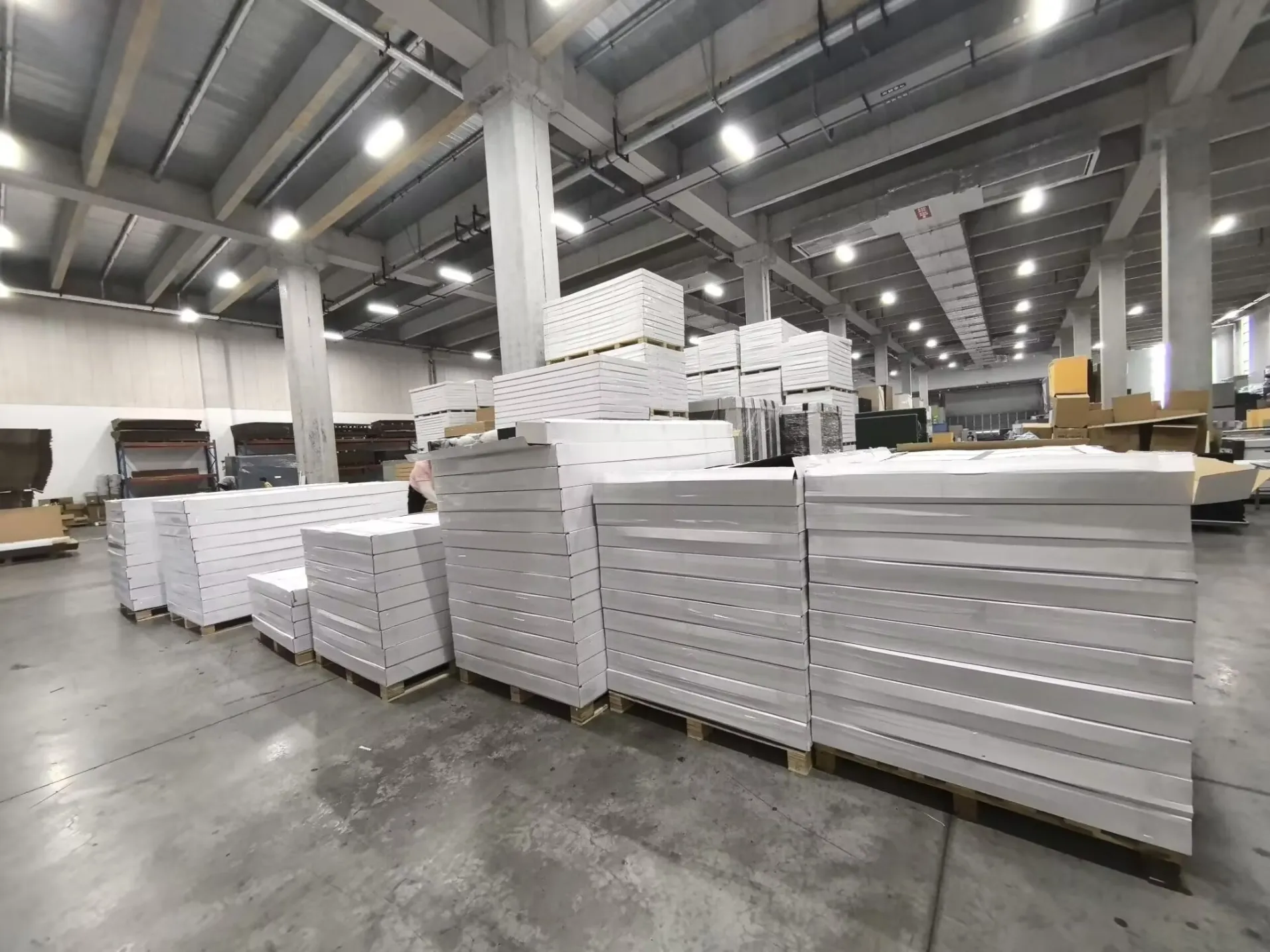
For example, our standard panel size is commonly 1220 × 2440 mm.
During international transportation, especially ocean shipping, the panels need protection from:
- moisture;
- dust;
- edge damage;
- handling impact.
A damaged product does not only create additional cost.
It also creates unnecessary material waste.
Therefore, sustainable packaging is not simply about removing all packaging materials.
A better approach is finding the right balance between:
- product protection;
- packaging efficiency;
- material selection;
- recyclability.
How We Improve Acoustic Panel Packaging for Export
For our PET acoustic panels, we currently use a practical packaging structure designed for long-distance transportation.
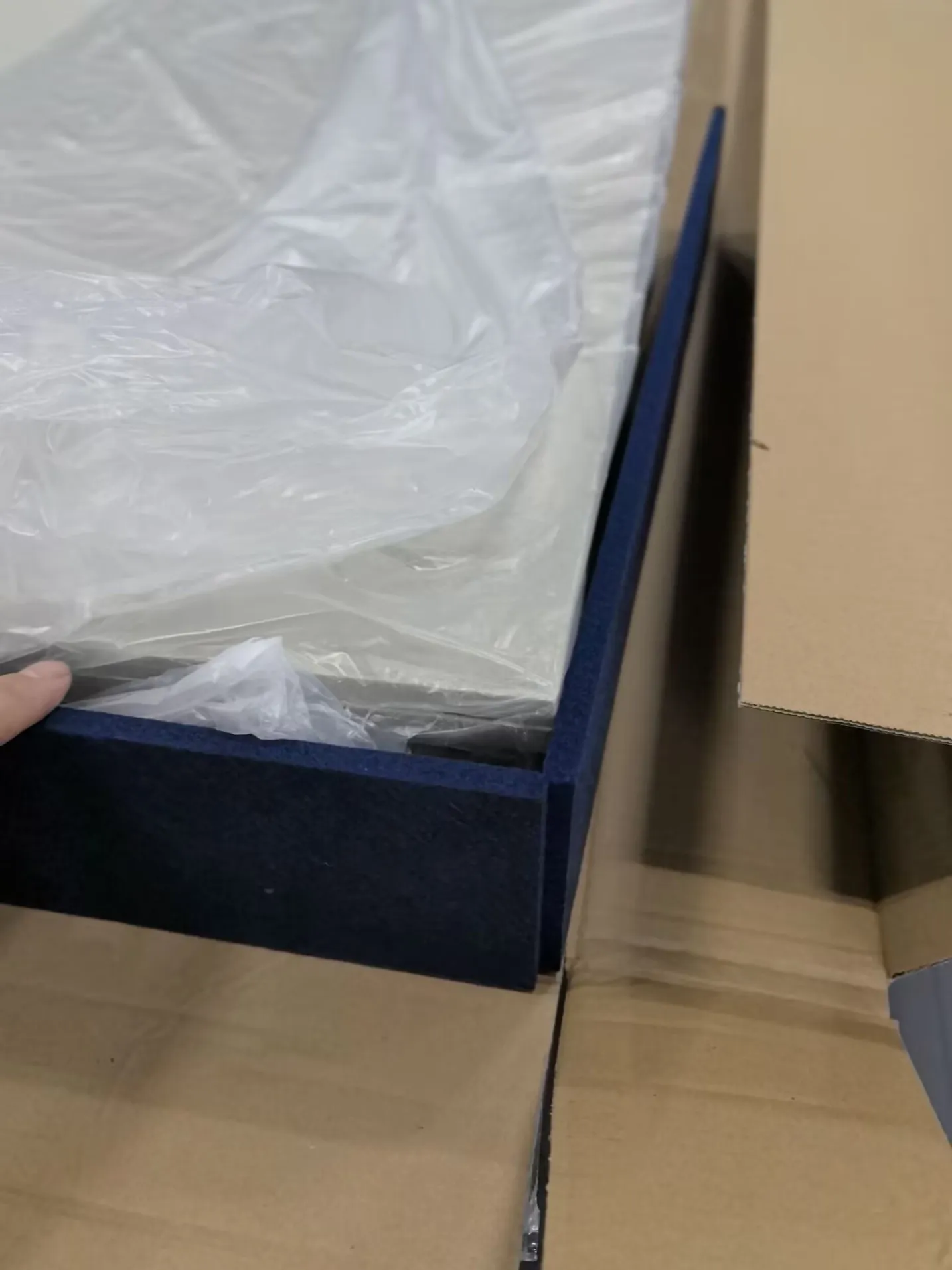
The packaging includes three main parts:
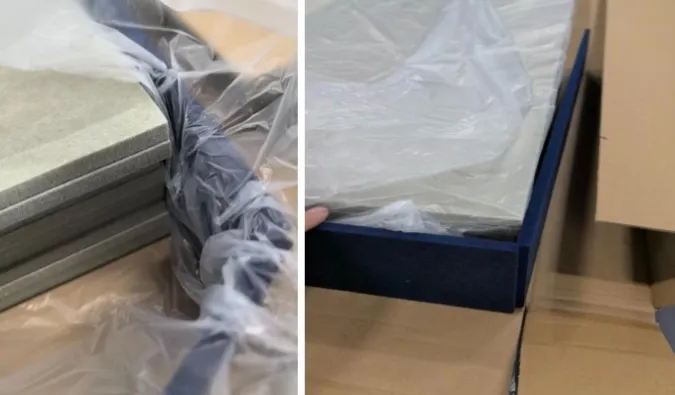
1. LDPE Protective Film for Moisture Protection
During ocean transportation, humidity can be a concern for many building materials.
Therefore, we use a thin PE protective film around the panels to provide moisture protection.
The purpose of this film is simple:
To help ensure that customers receive the panels in good condition after international transportation.
The PE film we use is made from virgin PE material.
Based on supplier information and SGS testing, the material contains no restricted substances and is recyclable.
We believe packaging materials should be used with a clear purpose.
The plastic film is not for decoration or unnecessary packaging.
It is used because it provides practical protection.
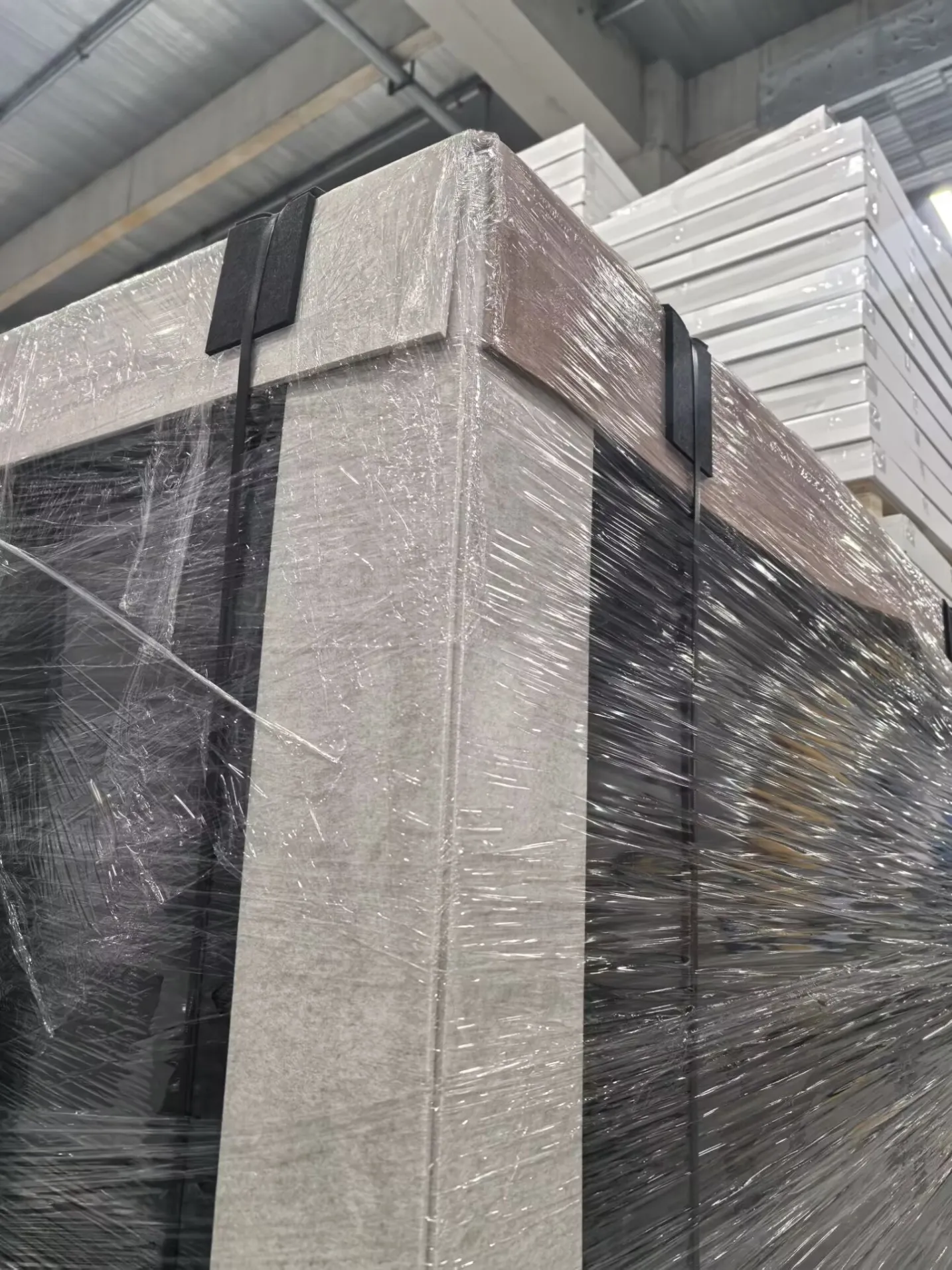
2. Recycled PET Felt Corner Protectors
One part of our packaging solution that we continue improving is edge protection.
Traditional packaging often uses foam or other mixed materials for corner protection.
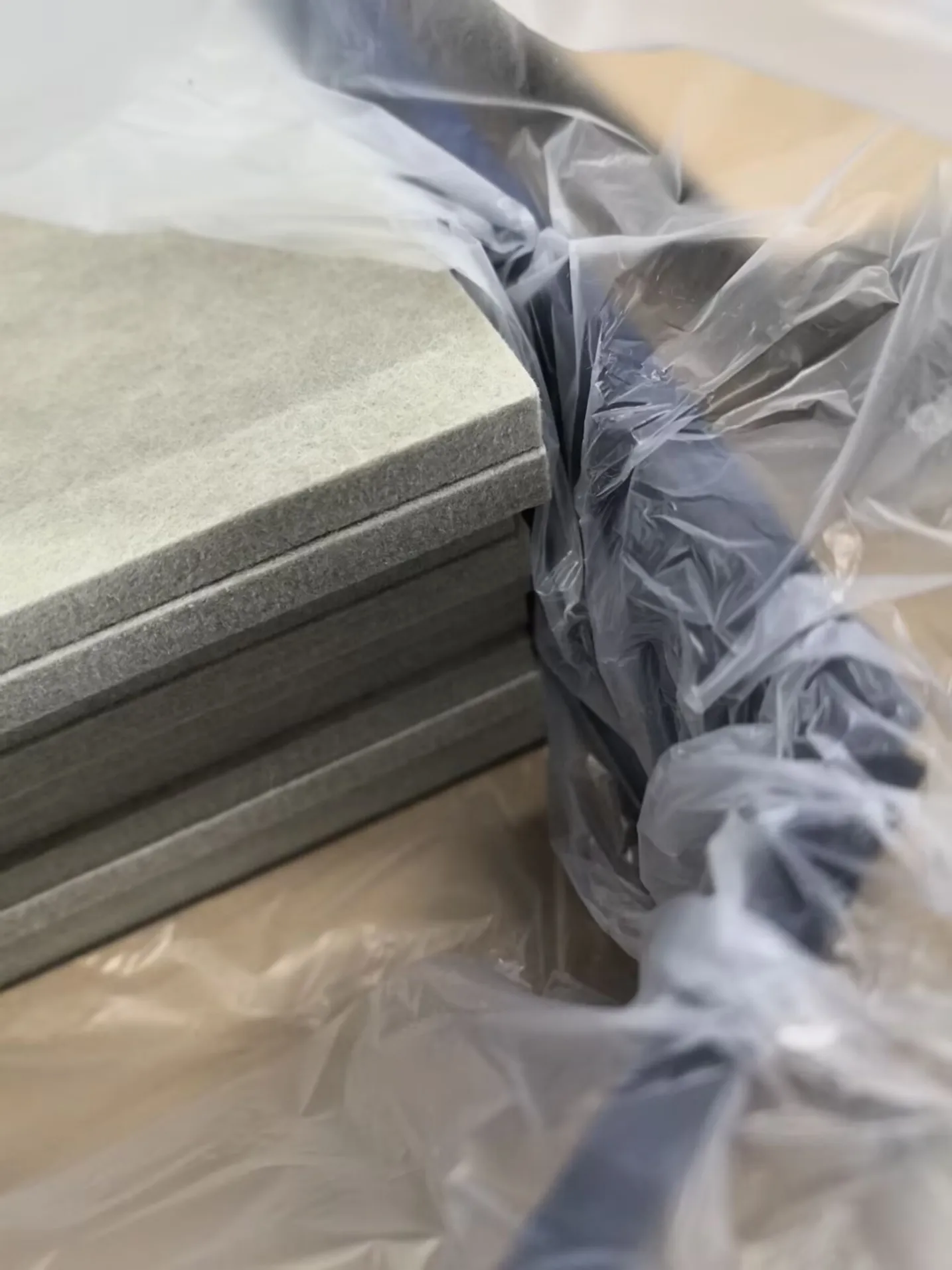
For our PET acoustic panels, we use PET felt corner protectors instead.
This solution helps us:
- reduce the use of different packaging materials;
- provide effective protection during transportation;
- keep the packaging material closer to our product material.
Since PET acoustic panels are also made from polyester fiber, using PET felt protection creates a more consistent material approach.
3. Corrugated Carton Outer Packaging
The outside packaging uses corrugated carton boxes.
Corrugated cardboard is widely used in international transportation because it is:
- lightweight;
- practical;
- widely recyclable.
For export packaging, simple and commonly recycled materials are often a better choice.
We continuously improve our acoustic panel packaging to balance product protection and material efficiency.
Understanding Sustainable Packaging Under EU PPWR
The new EU Packaging and Packaging Waste Regulation (PPWR) has encouraged companies to pay more attention to:
- packaging materials;
- recyclability;
- packaging efficiency;
- supply chain information.
For suppliers exporting to Europe, packaging management will become an increasingly important part of international trade.
However, we believe sustainable packaging should not only focus on reducing material quantity.
The more important question is:
Does the packaging use the right materials for the right purpose?
For acoustic panels, removing necessary protection may increase product damage during transportation.
And damaged products create more waste.
A responsible packaging solution should help reduce waste from the entire supply chain.
Improving Packaging Information for European Customers
As a professional supplier serving global customers, we understand that European buyers are paying more attention to transparency.
Customers want to know:
- What materials are used?
- Are the materials recyclable?
- Are restricted substances controlled?
- How is the product protected during transportation?
Therefore, we are continuously improving our packaging documentation and communicating more clearly with our suppliers.
For example, we collect information about:
- packaging material composition;
- recyclability;
- related testing information.
This helps us provide better support for customers who need more detailed product and packaging information.
Sustainability Is a Continuous Improvement Process
We believe sustainability is not only about one material or one certificate.
It is a continuous improvement process.
For PET acoustic panels, responsible manufacturing includes:
- using recycled PET materials;
- improving packaging efficiency;
- selecting suitable packaging materials;
- reducing unnecessary components;
- providing clearer information to customers.
A good product needs a responsible journey from factory to final application.
Packaging is an important part of this journey.
As the European market continues to develop, we will keep improving our products and packaging solutions to better support our customers worldwide.
If you are looking for a reliable supplier of polyester fiber acoustic panel or recycled PET acoustic panels, please feel free to contact us.
We are always happy to discuss practical solutions for your projects.
More related pages:
📩 Send us your project drawings or specifications, and we will respond with a clear quotation and production suggestion within 24 hours.
Email: info@hengmy.com