Jun 26, 2026News & Insights
What’s Inside a PET Acoustic Panel? Material, Structure & Performance Explained
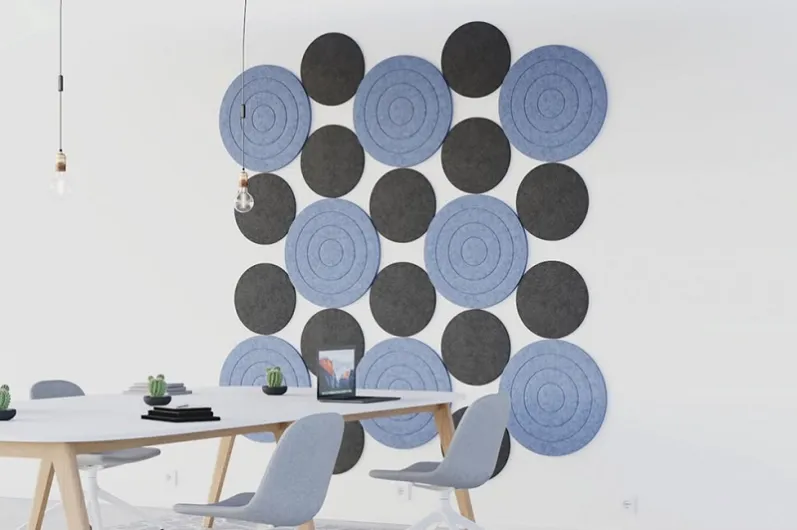
This article explains why PET acoustic panels with the same thickness can perform very differently. It shows why PET felt panels are increasingly used in offices/schools.
What’s Inside a PET Acoustic Panel? Material, Structure & Performance Explained
A practical breakdown of PET felt acoustic panels — and why panels with the same thickness can perform very differently.
Two acoustic panels.
Same thickness. Same color. Same NRC.
One costs 30% more. Why?
This article explains how PET acoustic panels are made, how internal structure affects sound absorption, and why material choice matters in real projects.
This is the question clients ask most often: “Why is your panel more expensive?”
They are not challenging the price.
They are trying to understand what they are paying for.
For PET acoustic panels, the answer is not “better quality”. That sounds vague.
The real answer is material, structure, and long-term use.
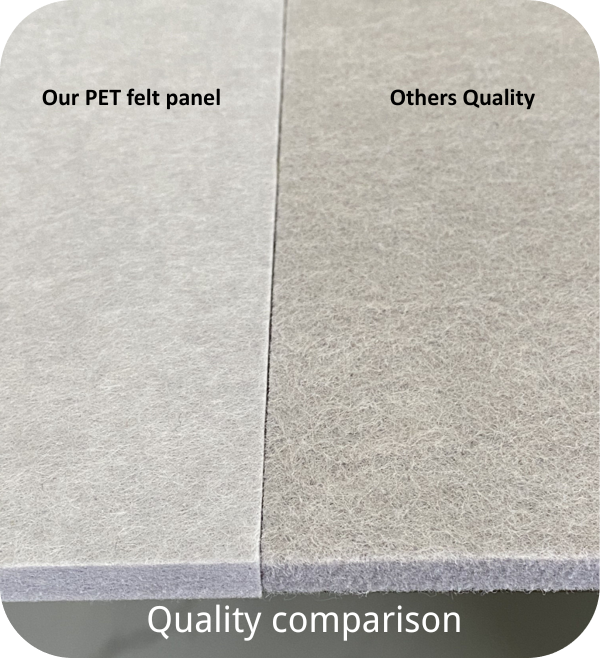
PET Felt vs Foam and Fiberglass: What’s the Difference?
PET felt acoustic panels are made from recycled polyester fibers.
This already fits many projects today where sustainability is required, not optional.
The polyester fibers we use come from leading suppliers in the industry and are certified with OEKO-TEX® Standard 100, which means the raw material is tested and safe for indoor use.
These fibers are:
- thermally bonded, not glued
- no formaldehyde
- no added chemicals
- non-toxic
- no loose fibers
In offices and schools, this matters.
People don’t want:
- dust
- smell
- health concerns
This is why PET felt panels feel cleaner and safer in daily use. So PET felt acoustic panels are often chosen for office and school environments decorations.
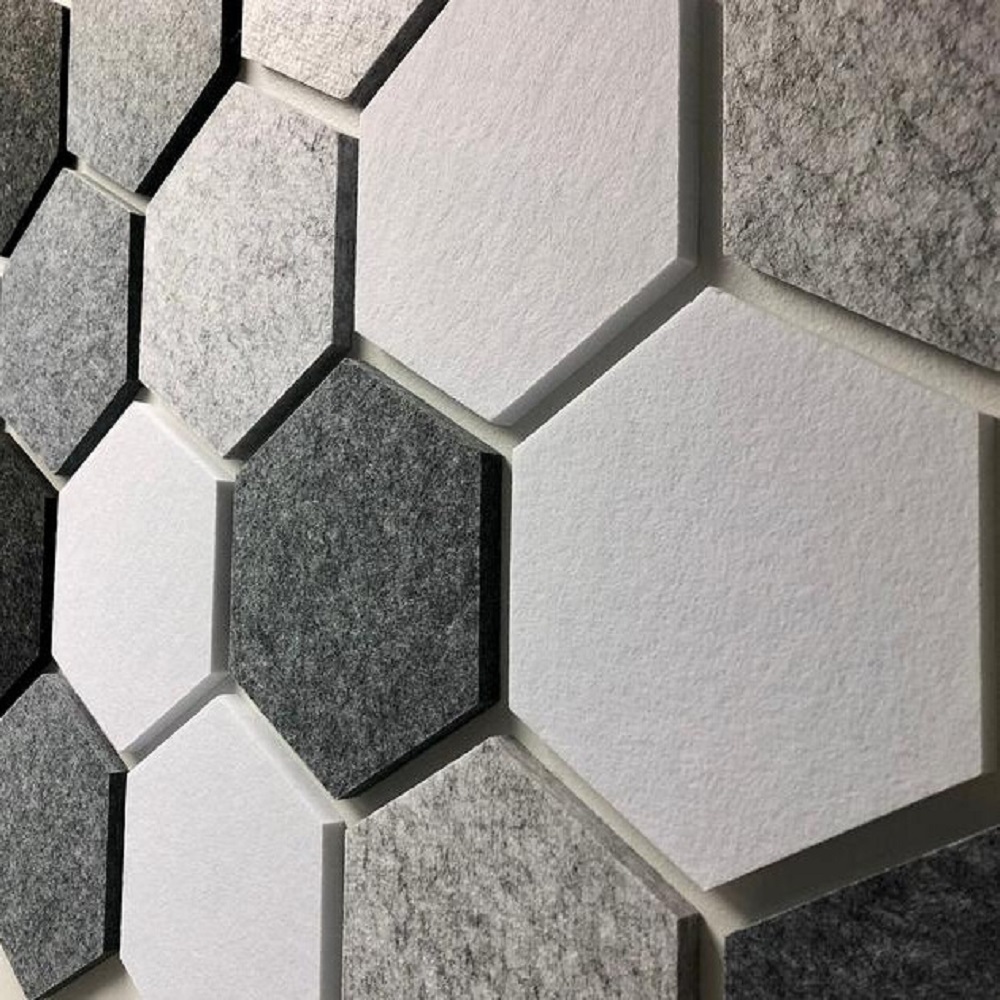
How PET Felt Acoustic Panel Structure Affects Acoustic Performance ?
Inside PET felt, there are millions of small air pockets.
Sound enters the panel, gets trapped, loses energy, and does not reflect back.
This is how sound absorption works.
But density must be balanced.
If density is too low:
- the panel is too soft
- shape is unstable
- CNC processing becomes difficult and damages tools
If density is too high:
- sound absorption performance drops
This is why two panels with the same thickness can perform very differently on site.
How to Read Acoustic Panel Data Sheets (Density, NRC)?
Clients often see data sheets:
- density
- elongation
- NRC
But numbers alone don’t help decisions.
So instead of only listing values, I explain what they mean:
- “This density keeps the panel rigid enough for wall and ceiling use.”
- “This NRC works well for speech noise in offices and meeting rooms.”
Understanding reduces risk for the client.
Why designers like working with PET felt
Many designers tell me:
“I like PET felt because it’s easy to work with.”
PET felt panels can be:
- CNC cut
- V-grooved
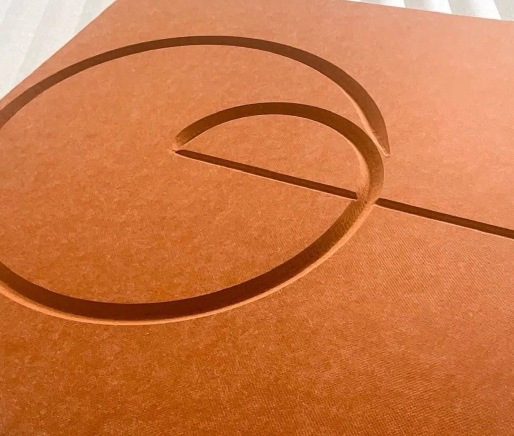
- thermoformed into 3D shapes
- UV printed
Cutting is clean.
No dust.
No smell.
No fibers on the table.
Compared with foam or fiberglass, PET felt may cost slightly more per square meter,
but it:
- lasts longer
- is non-toxic and odor-free
- is easier to cut and process
- creates less waste on site
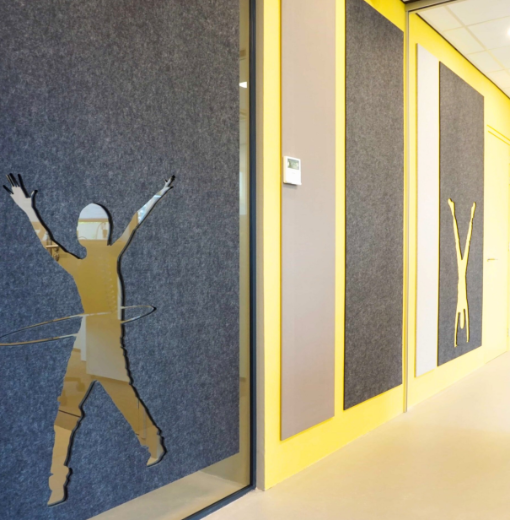
PET felt acoustic panels made from recycled polyester fibers and certified with OEKO-TEX® Standard 100 are widely used in offices and schools due to their non-toxic and odor-free properties.
- Sustainability and Indoor Safety
- recycled polyester fibers
- OEKO-TEX® Standard 100
- non-toxic / no odor
- suitable for offices and schools
Compared with traditional foam acoustic panels and fiberglass panels, this is the reason more and more design studios and fit-out companies are slowly replacing foam and fiberglass with PET felt.
Not because it looks better.
But because it works better in real projects.
Written from hands-on experience with PET felt acoustic panels used in commercial interior projects.

If you’re evaluating PET acoustic panels for offices, schools, or commercial interiors, this breakdown may help you make a clearer material decision.
#PETfelt #Acoustics #OfficeAcoustic #polyester #RecycleMaterial